
Customer Acquisition
Published:
Customer Acquisition
Qasim Farooq
Share
Let's face it: figuring out customer acquisition costs (CAC) in the SaaS industry can feel like trying to solve a Rubik's Cube blindfolded. You're not alone if you've found yourself scratching your head, wondering how much you should really be spending to attract those precious new users.
Take Marc Benioff, the mastermind behind Salesforce. Even he didn't have it all figured out from the get-go. Imagine him, fresh-faced and bright-eyed, trying to balance his books while figuring out just how much he should shell out to reel in new customers.
Did you know that the average CAC for SaaS companies ranges from $1,000 to $25,000? That's right, acquiring a single customer could cost you as much as a brand-new car!
And if that's not enough to make you break into a cold sweat, consider this: a recent study found that 70% of SaaS businesses underestimate their actual CAC, leading to budgeting black holes and sleepless nights.
This blog post is your trusty guide through the maze of customer acquisition costs. We'll break down what CAC is, why it's vital, and how you can calculate it for your SaaS business.
Plus, we'll share some insider tips on reducing your CAC, so you can keep more of your hard-earned cash.
Let’s uncover the secrets to mastering CAC in the SaaS industry and steer your business toward sustainable growth and success.
Defining Customer Acquisition Cost (CAC) for SaaS Businesses
So, what exactly is Customer Acquisition Cost (CAC) in the world of SaaS? Simply put, CAC is the total cost of convincing a potential customer to buy your product or service. It's the amount of money you need to spend to gain a new customer.
Think of it as the price tag on each new user you add to your customer base.
In the SaaS industry, understanding CAC is like having a GPS for your business finances. It helps you see where your money is going and whether it's being spent wisely.
If your CAC is too high, you're essentially throwing cash into a black hole. If it's low, you're efficiently growing your user base. Pretty important, right?
Here's why CAC is such a big deal for SaaS companies:
Financial Health Check: CAC gives you a clear picture of how sustainable your business model is. If you’re spending more to acquire a customer than they bring in over their lifetime, that’s a red flag.
Investment Decisions: Knowing your CAC helps you make smarter choices about where to allocate your marketing and sales budgets. It's like knowing which fishing spots are worth casting your line.
Profitability Indicator: High CAC can eat into your profits. Keeping an eye on this metric ensures you're not burning money faster than you're making it.
Now, let's get to the math part. Here's the customer acquisition cost formula for calculating CAC specifically for SaaS businesses:
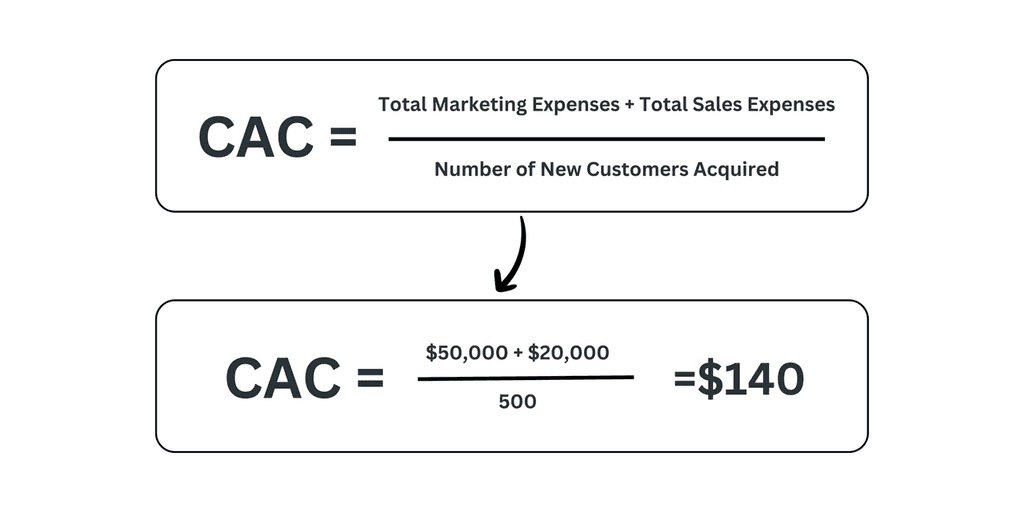
For example, if you spent $100,000 on sales and marketing in a month and acquired 100 new customers, your CAC would be $1,000. It’s as simple as that!
Key Factors Affecting Customer Acquisition Cost in SaaS
Now that we've got the basics down, let's talk about what drives CAC up or down in the SaaS universe. There are several key factors at play here:
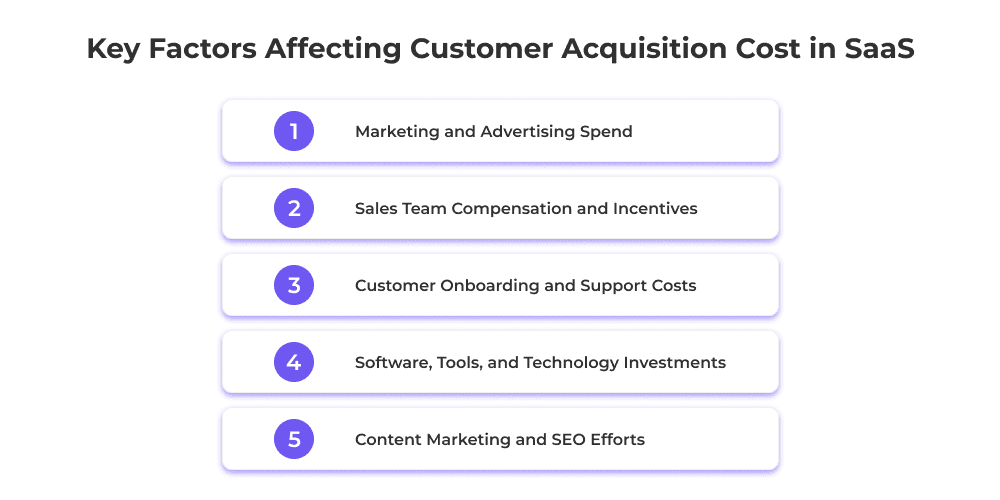
Marketing and Advertising Spend
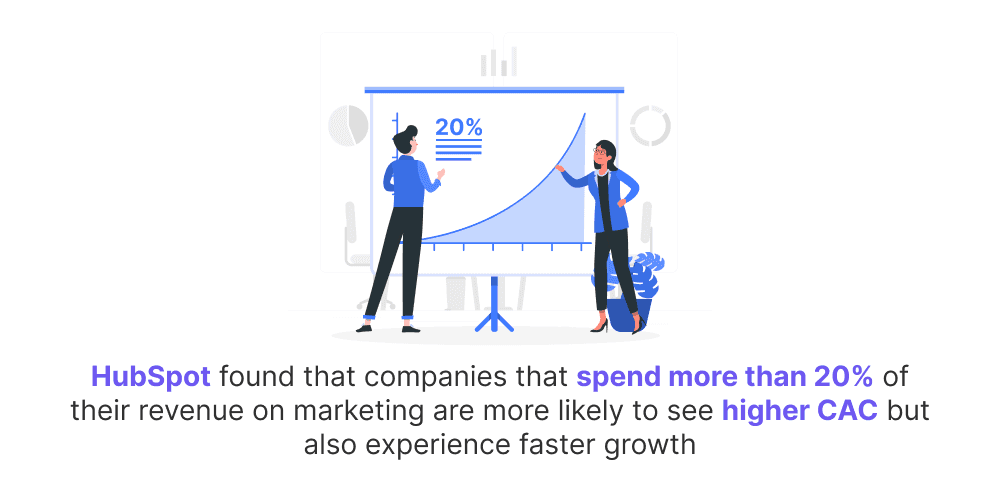
Marketing and advertising are the heavy lifters when it comes to driving new customer acquisition. Whether it’s Google Ads, social media campaigns, or sponsorships, every dollar spent here contributes to your CAC. It’s like putting up billboards on the internet highway – necessary, but it can get pricey.
Sales Team Compensation and Incentives
Your sales team is on the front lines, hustling to convert leads into paying customers. Their salaries, commissions, bonuses, and other incentives all add up. It’s like paying your star players to score goals; their success directly impacts your bottom line.
Customer Onboarding and Support Costs
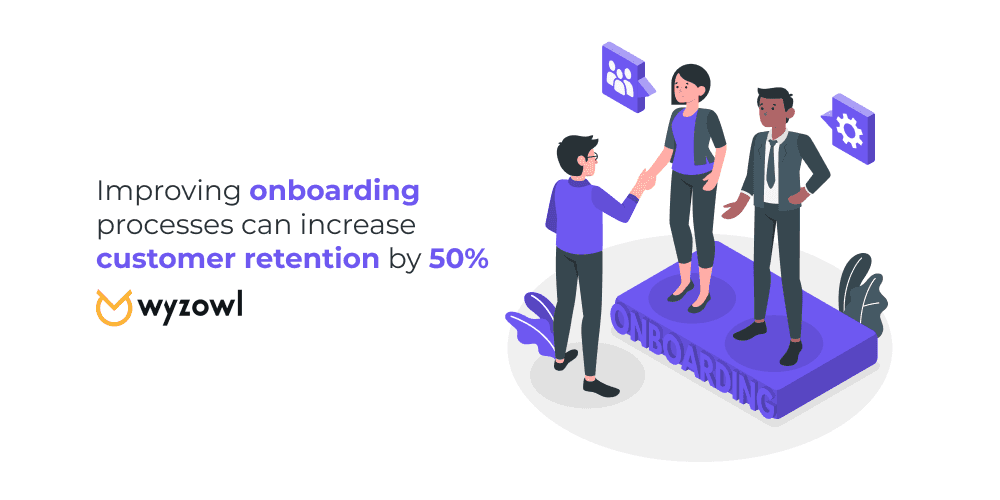
Once a customer signs up, the journey doesn't end. You need to onboard them, provide support, and ensure they understand how to use your product. This involves costs like training materials, customer support staff, and onboarding software. It’s like welcoming a new member to the family – you want them to feel at home and stay for the long haul.
Software, Tools, and Technology Investments
Running a SaaS business means investing in the right tools and technologies to support your sales and marketing efforts. This includes CRM systems, marketing automation platforms, analytics tools, and more. These investments are like the nuts and bolts keeping your growth engine running smoothly.
Content Marketing and SEO Efforts
Creating valuable content and optimizing it for search engines is a smart way to attract potential customers. Blog posts, whitepapers, webinars, and SEO strategies all contribute to this. It’s like planting seeds that, with time and care, will grow into a bountiful harvest of leads.
What is the Average Customer Acquisition Cost for SaaS Businesses?
Understanding the average customer acquisition cost (CAC) for SaaS businesses can give you a solid benchmark to compare your own costs against.
It's like knowing the average price of a house in your neighborhood before you buy – it helps you see if you're overpaying or getting a good deal.
Industry Benchmarks for Average CAC in SaaS
In the SaaS industry, the average customer acquisition cost can vary widely. On average, SaaS companies might spend anywhere from $1,000 to $25,000 to acquire a new customer.
This range depends on numerous factors, including the company's marketing strategy, sales spend, and the efficiency of their sales and marketing efforts.
For instance, a study by Totango found that successful SaaS companies typically spend around $1.18 in sales and marketing for every $1 of annual recurring revenue (ARR).
This means if you're aiming to generate $100,000 in ARR, you might expect to spend around $118,000 on acquiring customers.
Knowing these industry benchmarks can help you gauge whether your own CAC is in line with other SaaS businesses.
Differences in CAC Based on SaaS Business Size
The size of your SaaS business can significantly impact your CAC.
Let's break it down:
Startups: For startups, the customer acquisition cost is often higher. New companies are still finding their footing and experimenting with different marketing channels. They might spend aggressively on marketing campaigns to establish a foothold in the market. Consequently, the CAC for startups can be on the higher end of the spectrum.
Established Companies: More established SaaS companies usually have a lower CAC. They benefit from brand recognition, a solid customer base, and more refined marketing and sales strategies. Their marketing spend is more efficient, and they often have loyal, existing customers who generate referrals, reducing the overall cost to acquire new customers.
Variations in CAC by SaaS Business Model (B2B vs. B2C)
The type of SaaS business model you operate also plays a crucial role in determining your CAC:
B2B (Business-to-Business): In the B2B SaaS model, the customer acquisition process tends to be longer and more complex. Sales cycles are typically extended, requiring more personalized and high-touch sales and marketing efforts. As a result, the CAC for B2B SaaS companies is generally higher compared to B2C. According to a study by Pacific Crest, the median CAC for B2B SaaS companies can range between $12,000 and $25,000.
B2C (Business-to-Consumer): On the other hand, B2C SaaS companies often experience shorter sales cycles and can leverage scalable marketing channels like social media, content marketing, and SEO. The lower-touch nature of these marketing efforts usually translates to a lower CAC. B2C SaaS businesses may find their CAC to be significantly lower, often ranging from $1,000 to $3,000.
Understanding these benchmarks and variations can help you better evaluate your own customer acquisition costs and identify areas for improvement.
By comparing your CAC against industry standards, the size of your business, and your business model, you can make more informed decisions to optimize your marketing spend and sales efforts.
Up next, we'll explore the steps to calculate customer acquisition cost for SaaS Businesses, giving you deeper insights into where your money goes and how you can control it. Stay tuned!
Step-by-Step Guide to Calculating CAC for SaaS Businesses
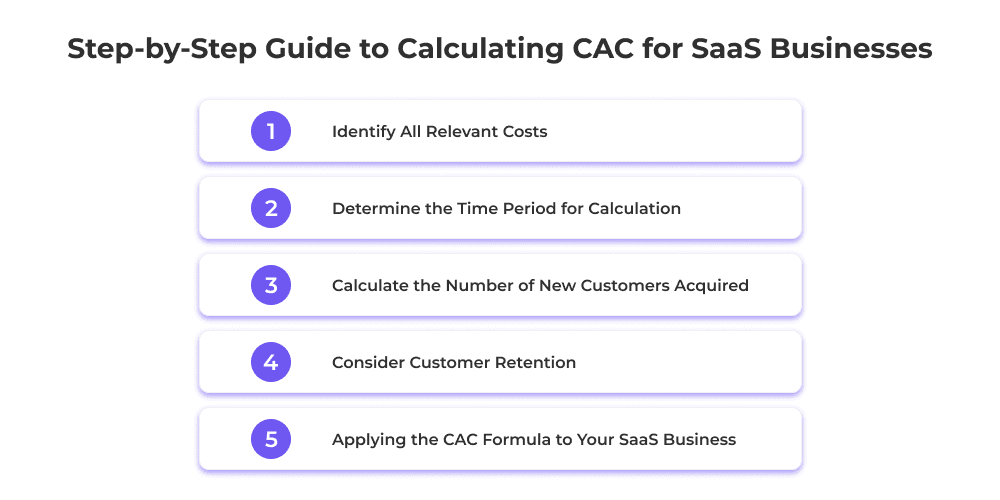
Getting a grip on your customer acquisition cost (CAC) is essential for any SaaS business. Here's a straightforward, step-by-step guide to help you calculate CAC and ensure you're on the right track.
Identify All Relevant Costs
First things first: you need to gather all the costs associated with acquiring new customers. These costs include:
Marketing Costs: This covers everything related to marketing expenses from ad spend, content marketing, SEO efforts, social media campaigns, to email marketing.
Sales Expenses: This includes the salaries and commissions of your sales team, bonuses, and any other incentives.
Software and Tools: The cost of CRM software, marketing automation tools, and analytics platforms.
Customer Onboarding: Expenses related to onboarding new customers, such as training materials, support staff, and onboarding software.
Other Related Expenses: Any additional costs that directly contribute to your sales and marketing efforts.
Add up all these costs to get your total sales and marketing spend for the period.
Determine the Time Period for Calculation
Next, decide the time period for customer acquisition cost calculation. This could be monthly, quarterly, or annually, depending on your business needs. It's important to be consistent with the period you choose to make meaningful comparisons over time.
Calculate the Number of New Customers Acquired
Now, determine the number of new customers acquired during the same period. This is straightforward – just count the number of new customers who signed up for your service during the period you're analyzing.
Consider Customer Retention
While calculating CAC, it's also useful to consider customer retention. If your customer retention rates are high, your customer lifetime value (LTV) will be higher, making a higher CAC more acceptable. Conversely, if customer retention is low, you need to keep your CAC lower to ensure profitability.
Also Read: Customer Acquisition vs Retention: What to Focus on for Business Growth?
Applying the CAC Formula to Your SaaS Business
With all the necessary data at hand, you can now apply the CAC formula. For example, if your total marketing and sales expenses for the quarter were $150,000 and you acquired 150 new customers during that period, your CAC would be:
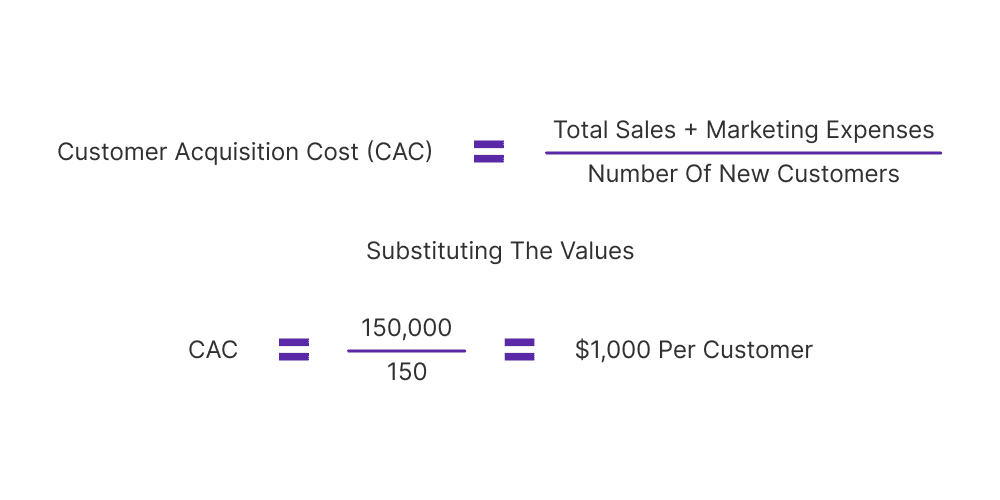
This means you spent $1,000 to acquire each new customer.
Calculating CAC is not just a one-time activity; it should be a regular part of your financial analysis. By tracking your CAC over time, you can identify trends, measure the effectiveness of your marketing strategies, and make informed decisions about where to allocate your resources.
Understanding and optimizing your customer acquisition cost is crucial for the financial health of your SaaS business.
Keep an eye on this metric, adjust your strategies as needed, and you'll be well on your way to sustainable growth.
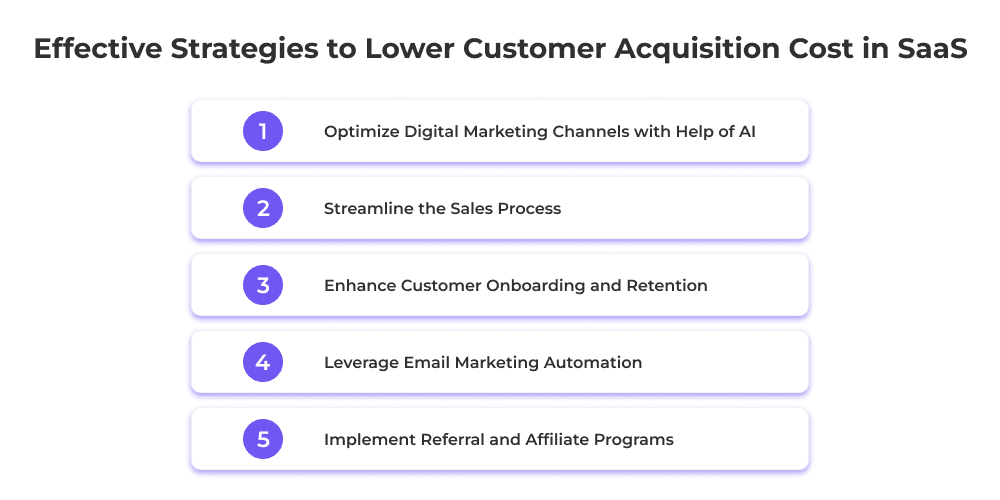
Effective Strategies to Lower Customer Acquisition Cost in SaaS
Keeping your customer acquisition cost (CAC) in check is crucial for maintaining profitability in the SaaS industry.
Here are some effective strategies to help lower your CAC and get more bang for your buck.
Optimize Digital Marketing Channels with Help of AI
Artificial intelligence (AI) can be a game-changer when it comes to optimizing your digital marketing channels.
By leveraging AI tools, you can analyze vast amounts of data to identify which marketing channels are delivering the best results at the lowest cost.
AI-Powered Analytics: Use AI to track and analyze customer behavior across different marketing channels. This helps you understand which channels are most effective at acquiring new customers.
Personalized Marketing: AI can help you create highly targeted and personalized marketing campaigns that resonate with your target audience, increasing conversion rates and reducing CAC.
Automated Ad Bidding: AI can optimize your ad spend by automatically adjusting bids based on performance data, ensuring you get the most out of your marketing budget.
Streamline the Sales Process
An efficient sales process can significantly reduce your CAC by shortening the sales cycle and improving conversion rates.
CRM Software: Invest in a robust CRM system to manage leads and automate follow-ups, ensuring no potential customer falls through the cracks.
Sales Training: Regularly train your sales team on the latest techniques and tools to improve their efficiency and effectiveness.
Lead Scoring: Implement lead scoring to prioritize high-quality leads, allowing your sales team to focus their efforts on the most promising prospects.
Enhance Customer Onboarding and Retention
Effective customer onboarding and retention strategies can lower your CAC by maximizing the value of each customer and reducing churn.
Onboarding Process: Develop a smooth and engaging onboarding process that helps new customers quickly understand and start using your product. This can include tutorials, webinars, and personalized support.
Customer Support: Provide exceptional customer support to address any issues and ensure customer satisfaction.
Loyalty Programs: Implement loyalty programs to reward long-term customers and encourage them to stick around, increasing their lifetime value.
Leverage Email Marketing Automation
Email marketing remains one of the most cost-effective ways to acquire and retain customers.
Automated Email Campaigns: Use email automation to send personalized messages at the right time, such as welcome emails, product updates, and special offers.
Segmentation: Segment your email list based on customer behavior and preferences to deliver more relevant content.
A/B Testing: Continuously test different email strategies to see what works best for your audience, improving open and conversion rates.
To streamline your email marketing efforts, consider using GoCustomer, an AI-powered platform designed to simplify and enhance your email campaigns. GoCustomer stands out with its ability to create hyper-personalized messages.
By leveraging detailed data from LinkedIn and other websites, GoCustomer tailors your emails perfectly to each recipient.
Whether it’s reflecting their recent LinkedIn activity or mentioning updates from their website, GoCustomer helps you send emails that feel genuinely personal and relevant.
GoCustomer’s email workflow builder is another game-changer. It allows you to create automated email sequences tailored to different segments of your audience.
This feature not only saves you time but also increases the chances of moving prospects down the sales funnel. With GoCustomer, you can enhance your email marketing strategy, reduce your CAC, and improve customer retention.
This makes GoCustomer an invaluable tool for any SaaS business looking to optimize their email marketing efforts.
Implement Referral and Affiliate Programs
Referral and affiliate programs can be powerful tools to acquire new customers at a lower cost.
Referral Programs: Encourage your existing customers to refer new customers by offering incentives like discounts, free months, or other rewards.
Affiliate Programs: Partner with affiliates who promote your product to their audience in exchange for a commission on sales they generate. This can expand your reach and acquire customers with minimal upfront costs.
By implementing these strategies, you can effectively lower your customer acquisition cost and drive more sustainable growth for your SaaS business.
Remember, the key is to continuously monitor your CAC and adjust your strategies based on what works best for your target market and business model.
Conclusion
So, there you have it! Understanding your customer acquisition cost (CAC) isn't just for number crunchers—it's for anyone serious about growing a SaaS business.
We’ve covered what customer acquisition cost is and why it’s crucial. You need to balance your marketing and sales spend with the number of new customers you bring in. Spending more than you’re making? Time to rethink those numbers.
And let’s not forget the strategies to lower that customer acquisition cost. From using AI to optimize your digital marketing channels to making your sales process smoother, there’s a lot you can do.
Improving customer onboarding, sending out smart, automated email campaigns, and running referral programs can all help keep costs down and customers coming in.
Speaking of smart tools, GoCustomer is a solid pick if you want to nail your email marketing. It makes your campaigns personal and relevant without all the hassle—definitely worth a look.
The key takeaway? Keep tabs on your CAC, tweak your strategies as you go, and keep experimenting. With a good handle on your customer acquisition costs, you’re setting your SaaS business up for sustainable growth and success.
Ready to tackle your CAC and grow your business? Let's get to work!

Reach more customers with your cold emails
Table of Contents
In a nutshell
Customer Acquisition Cost (CAC) in SaaS is the total cost associated with acquiring a new customer, including expenses on marketing, sales, and onboarding. It's calculated by dividing the total marketing and sales spend by the number of new customers acquired in a specific period.
A good CAC varies by industry and company size, but generally, a lower CAC is better. A typical benchmark is a CAC to LTV (Customer Lifetime Value) ratio of 3:1, meaning the revenue from a customer should be three times the cost to acquire them.
SaaS companies can reduce their CAC by optimizing their marketing channels with AI, streamlining the sales process, enhancing customer onboarding, leveraging email marketing automation, and implementing referral and affiliate programs.
Key factors include marketing and advertising spend, sales team compensation, customer onboarding and support costs, software and tools investments, and content marketing and SEO efforts.
Common mistakes include misallocating costs, ignoring customer churn, not updating CAC regularly, and overlooking the importance of customer lifetime value (LTV).
Subscribe to our Newsletter!
Digital advice costs money but we send it to
your inbox for free.
Related Blogs
Time is Money, and We're About to Save You Both!
Book a quick demo of our email marketing tools and watch as we transform your leads into loyal customers.
![A loop illustration w-auto h-[70px]](/_next/image?url=%2F_next%2Fstatic%2Fmedia%2Fvector1.7738e6de.png&w=256&q=75 "GoCustomer Platform Image")
Get in touch
Subscribe to our weekly Newsletter and receive updates via email.