


Email Marketing
Published:
Email Marketing
Qasim Farooq
Share
Let’s face it—being a tax professional can sometimes feel like running on a never-ending hamster wheel of paperwork, deadlines, and client demands. Between the complex tax codes and the flood of last-minute calls before April 15th, building strong relationships with clients might feel like just one more item on an already overwhelming to-do list. Sound familiar?
Now imagine this: you’ve built a solid tax practice, and while you’re proud of your work, you’re finding it harder and harder to stand out. Your clients are bombarded with financial advice from every direction—so how do you keep their attention, nurture trust, and grow your business?
Take a page out of the book of Elliott Davis, a once-small tax firm that has mastered the art of staying top of mind with clients all year round. How? They embraced email marketing, and it’s transformed the way they engage with clients.
From sending personalized tax tips to keeping clients updated on key law changes, they’ve managed to streamline their communication, grow their client base, and improve retention.
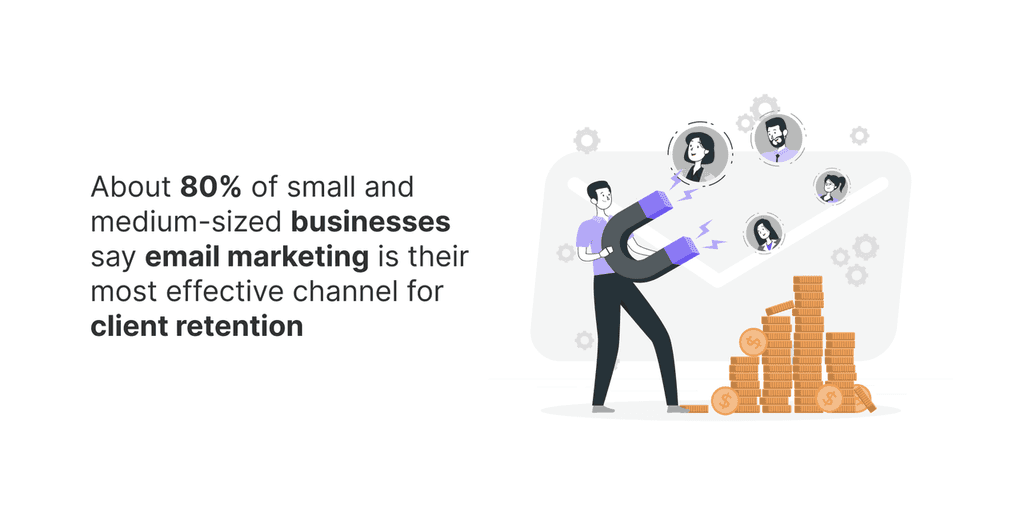
In fact, did you know that financial services firms that prioritize client retention can see a 25% to 95% increase in profits? That’s the power of keeping your clients close.
So, what if you could build a stronger connection with your clients without constantly chasing them? What if you could use email to become their trusted advisor, not just during tax season, but all year long?
In this post, we’ll explore how email marketing can help tax professionals build trust, boost client engagement, and ultimately grow their business. Let’s dive in!
Key Benefits of Email Marketing for Tax Professionals
Building Trust with Tax Clients Through Personalized Communication
Tax professionals can strengthen client relationships through personalized emails. Tailoring updates like tax-saving tips or deadline reminders shows attentiveness to each client’s specific needs, helping to build trust year-round, not just during tax season.
Keeping Clients Updated on Changing Tax Laws
Tax laws change frequently, and clients depend on you to keep them informed. Use email marketing to send simple, digestible updates on important tax changes. Whether it’s new deductions or critical deadlines, keeping clients informed positions you as their trusted advisor.
Strengthening Client Retention with Year-Round Engagement
Maintaining client relationships outside of tax season is key to retention. Regular emails with off-season tips or reminders about tax planning for next year keep clients engaged and ensures they return when tax season comes around.
Generating More Referrals with Targeted Email Campaigns
Email marketing is an excellent tool for generating referrals. Encourage satisfied clients to refer others by offering small incentives, like discounts or free consultations. Referral campaigns not only bring in new clients but also reward your current ones, boosting loyalty.
Step-by-Step Guide to Launching Email Marketing Campaigns for Tax Professionals
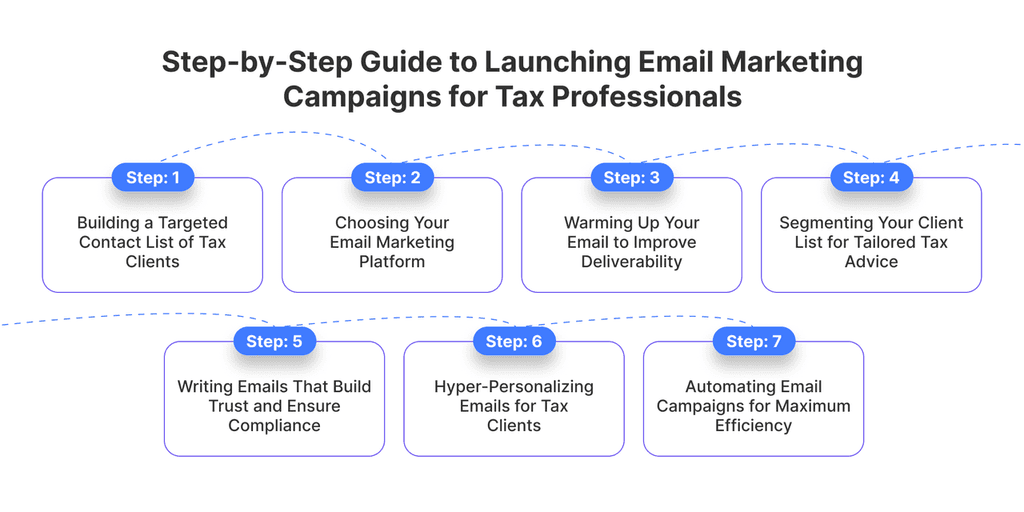
Step 1: Building a Targeted Contact List of Tax Clients
For tax professionals, building a solid, targeted contact list is the backbone of any successful email marketing campaign. Your clients, whether they are individuals or local businesses, rely on you for timely and critical information, especially during tax season.
Therefore, creating a list of engaged clients ensures your updates reach the right people.
Strategies for Tax Professionals
Client onboarding: Collect email addresses during consultations or when clients submit their documents. Make this part of your standard process to ensure you have a direct way to communicate.
Website lead magnets: Offer downloadable resources, like tax planning guides or deduction checklists, in exchange for email signups. This not only adds value but also grows your subscriber list.
Networking and referrals: Gather emails from industry events, seminars, and referrals—especially high-value contacts such as business owners and high-net-worth individuals.
Pro Tip: Use intake forms to collect additional details, like whether the client is a business or individual filer, to help you segment your client list for more personalized communication later.
Step 2: Choosing Your Email Marketing Platform
The right email marketing platform can make or break your strategy. For tax professionals, ease of use, automation, and analytics are essential when choosing a tool.
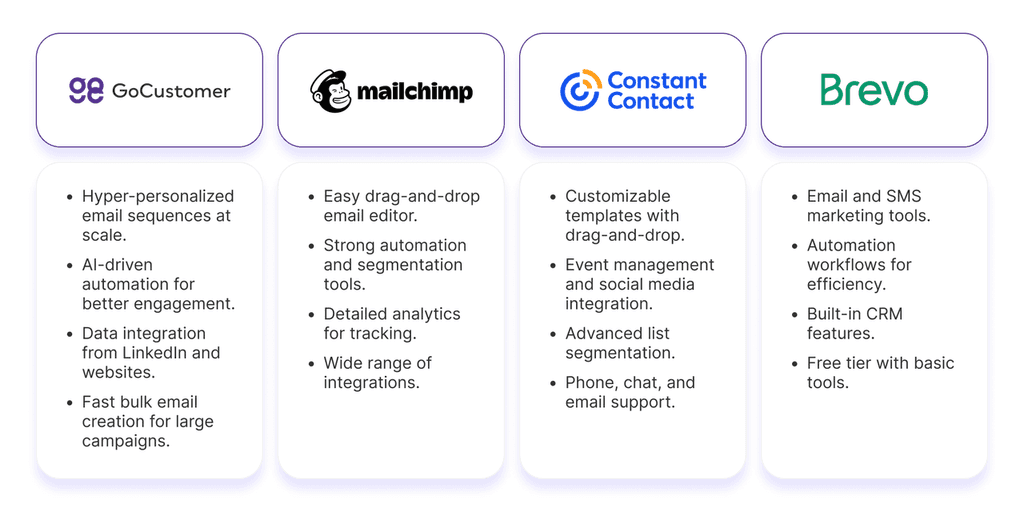
Platforms like Mailchimp, Constant Contact, or GoCustomer allow you to manage email marketing campaigns with ease while tracking important metrics.
Considerations for Tax Professionals
Ease of use: Choose a platform that’s easy to navigate, especially if your practice doesn’t have a dedicated marketing team.
Automation: Look for tools that automate key tasks like tax deadline reminders and follow-up emails with current clients and prospective clients.
Customization: Ensure the platform allows you to create personalized emails that reflect your firm’s brand. Personalization is key in keeping your tax preparation business top of mind.
Analytics: Monitoring your open rates, click-through rates, and engagement metrics is essential to refining your approach and improving results over time.
Recommended Platforms
Pro Tip: Select a platform that integrates with your CRM, making it easier to manage client communications and track your success.
Step 3: Warming Up Your Email to Improve Deliverability
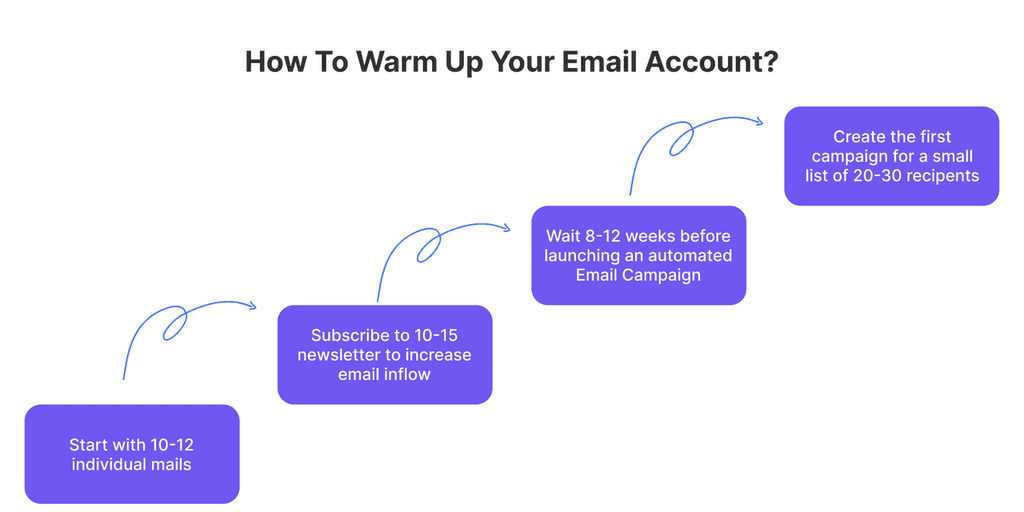
Deliverability is critical, especially for tax professionals sending time-sensitive emails. If you suddenly send bulk emails to all clients, it might flag email providers and result in your emails landing in spam folders.
Warming up your email list is key to building a strong reputation with email service providers.
Strategies for Tax Professionals
Start with engaged clients: Begin by sending emails to your most engaged clients, such as business owners or those who regularly open your updates.
Gradually increase send volume: Expand the number of recipients as you gain traction. This steady increase helps ensure that critical emails reach the inbox, particularly during tax season.
Monitor key metrics: Watch your bounce rates, open rates, and spam complaints. Keeping a close eye on these metrics ensures your communications remain effective, especially during crucial periods.
Pro Tip: Always include clear, recognizable details like your name or firm’s name in the subject line or preheader, such as "From Your Tax Advisor." This fosters trust and boosts open rates, ensuring your clients don’t miss important updates.
Step 4: Segmenting Your Client List for Tailored Tax Advice
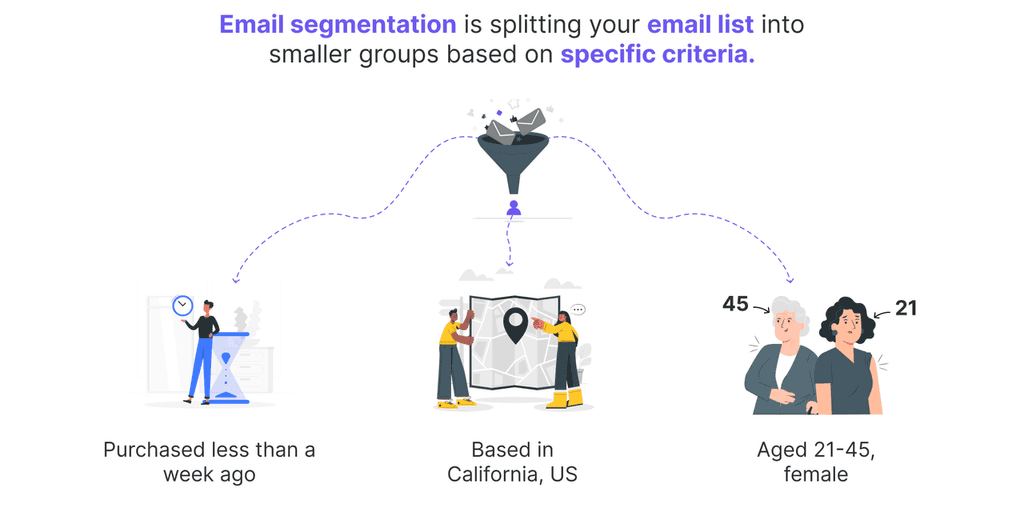
For tax professionals, segmentation is essential to delivering relevant, personalized content that meets the unique needs of each client. Your client list likely includes a range of individuals, small businesses, and high-net-worth clients—each with specific tax obligations.
Segmenting helps you ensure every email provides value by targeting the right audience with tailored advice.
Segmentation Strategies for Tax Professionals
Filing status: Break your client list into individual taxpayers, business owners, and corporations. Each group has different tax requirements, such as quarterly payments for businesses or year-end planning for individuals.
Tax deadlines: Use segmentation to target clients based on key deadlines, like quarterly estimated payments for the self-employed or corporate filing deadlines. This ensures your emails remain timely and relevant.
Client history: Identify clients based on their filing habits—those who consistently file extensions vs. those who file early. This allows you to tailor reminders accordingly, making sure everyone meets their deadlines.
Client engagement: Monitor email marketing behavior to identify your most engaged clients and those who need a nudge. Send more personalized content, like specialized tax-saving advice, to those who frequently engage with your emails, while creating re-engagement campaigns for those who are less active.
Pro Tip: Use segmentation to provide valuable content, such as tax-saving tips for high-income clients or reminders for businesses nearing critical IRS deadlines. This ensures your communication remains relevant and impactful.
Step 5: Writing Emails That Build Trust and Ensure Compliance
Your clients trust you with their financial details, so every email you send needs to reinforce that trust. Clear, concise, and accurate communication is key to maintaining credibility, especially when discussing sensitive matters like tax deadlines or legal changes.
Email Writing Strategies for Tax Professionals
Address urgent deadlines: Use attention-grabbing subject lines like "Upcoming Tax Deadline: Act Now" to prompt immediate action. This is especially important during tax season, when clients are inundated with tax-related tasks.
Simplify complex tax topics: Tax regulations can be confusing. Break down changes in a way that’s easy to understand, providing clear steps clients should take. This could include explaining new deductions or law changes affecting their accounting services.
Provide tax-saving advice: Tailor your emails to each client’s situation, offering personalized tax advice based on their filing status or past deductions. For example, “Maximize your savings with these deductions based on your income bracket.”
Include a clear call-to-action (CTA): Guide clients on the next step—whether it’s scheduling an appointment, submitting required documents, or downloading a necessary form. CTAs ensure clients know exactly what to do and when to do it.
Pro Tip: Always include IRS-compliant disclaimers where needed, and remind clients to consult with you before taking any tax-related actions. This helps reinforce your professionalism and ensures compliance with legal requirements.
Step 6: Hyper-Personalizing Emails for Tax Clients
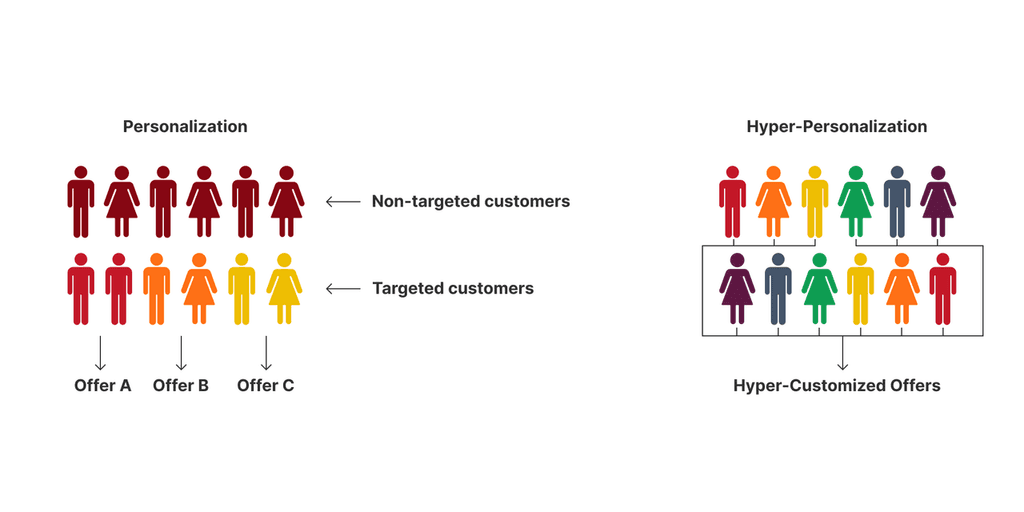
Hyper personalized communication is critical in email marketing for tax professionals, allowing you to address the specific needs of your clients. By offering relevant, timely advice, you not only increase engagement but also build trust with both existing clients and potential clients.
Strategies for Hyper-Personalization
Leverage past filings: Use data from previous tax years to tailor deductions or savings advice. For example, “Last year, you claimed a home office deduction. Here’s how to maximize it again for your tax preparation business.”
Client-specific reminders: Send reminders based on key tax season deadlines or missing documents, such as, "We noticed you haven't submitted your W-2 yet." This ensures your existing customers stay compliant.
Financial milestones: Personalize emails based on life events like buying property, retirement planning, or starting a business. These milestones impact tax obligations, making them perfect opportunities for personalized tax advice.
Use clients' websites: Extract information from clients' websites—such as new services, updates, or CEO announcements—to customize your email content. This shows you’re actively involved in their business and can offer more tailored tax solutions.
Leverage LinkedIn: Use LinkedIn profiles and company pages to gather insights like company milestones or job promotions. Acknowledging these achievements adds a personal touch and strengthens your connection with prospective clients in the accounting industry.
For tax professionals looking to elevate their email marketing efforts, a platform like GoCustomer can be a game-changer. GoCustomer uses AI to craft hyper-personalized emails by collecting and updating information from various sources, including LinkedIn, websites, and social media.
This means you can easily tailor your messaging to reflect your clients’ latest activities and business developments.
With GoCustomer, you can create thousands of unique, personalized emails for all your prospects in just minutes.
This approach, combined with targeted campaigns and strategies to ensure emails are delivered effectively, helps improve response rates, increase conversions, and keep your clients engaged.
Pro Tip: Implement dynamic content in your email marketing campaign to automatically adjust based on client segments. For example, offer specialized tax-saving tips for small businesses versus individuals, or highlight important tax deadlines for corporations vs. independent contractors.
Step 7: Automating Email Campaigns for Maximum Efficiency
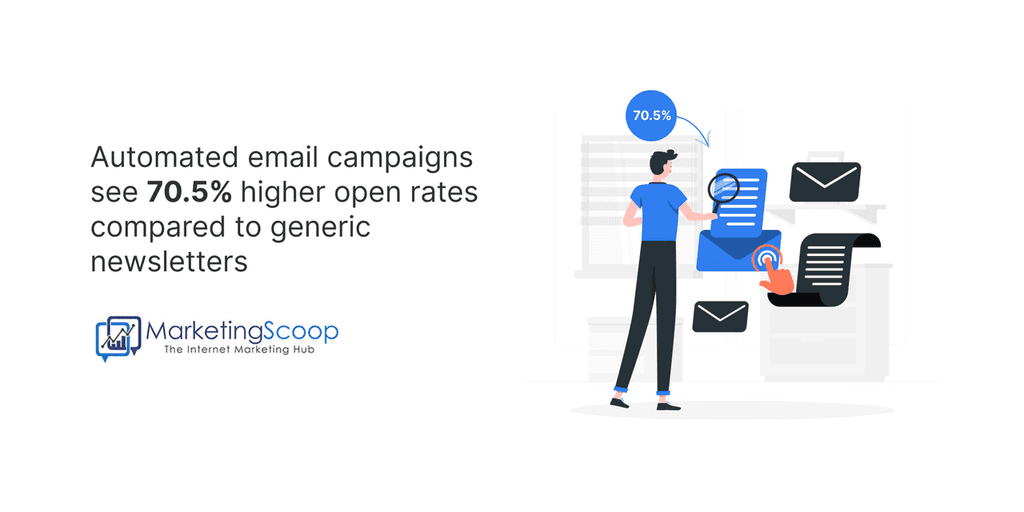
With countless deadlines and clients to manage, automation is a game-changer for tax professionals.
By automating your email marketing efforts, you can ensure timely communication without manually managing each client interaction, saving time and reducing costs.
Automation Strategies for Tax Professionals
Tax deadline reminders: Set up automated emails that remind your client list of critical tax dates, such as quarterly payments or year-end filings. This ensures both local businesses and individuals stay on track during tax season.
Document submission: Automate reminders for missing documents like W-2s or 1099s, ensuring your current clients and new customers provide what’s needed on time. Automated reminders free up valuable time and keep your accounting services running smoothly.
Post-tax season follow-ups: After tax season, send personalized financial planning emails or recommendations for next year’s tax prep. This keeps existing clients engaged and positions your accounting firm as a trusted partner year-round.
Re-engagement campaigns: Use automation to reach out to prospective clients or those who haven’t submitted documents or booked appointments yet. Automated re-engagement emails can help you generate more business and maintain communication with clients who might be at risk of disengaging.
Pro Tip: Schedule automated campaigns months in advance to ensure consistent communication. By keeping in touch with your target audience on a regular basis, you’ll be able to anticipate needs and reduce last-minute concerns.
Also read: Maximizing Client Engagement: Email Marketing Secrets for Financial Advisors
Conclusion
Email marketing for tax professionals is a powerful way to stay connected with clients, build trust, and simplify communication throughout the year.
Whether you're keeping existing clients updated on tax law changes, reminding them about important tax season deadlines, or sending personalized tax-saving tips, email marketing can help you stand out in the competitive accounting industry.
By using strategies like segmentation, hyper-personalization, and automation, you can tailor your messages to your client list, making sure every communication is timely and relevant.
These tactics not only strengthen relationships with current clients but also help attract potential clients to your tax preparation business.
So, take the first step in enhancing your email marketing campaign today and start building stronger connections with your clients. By doing so, you'll position yourself as a trusted advisor while helping clients navigate their tax obligations with ease.
Remember, it's all about providing value and creating a positive experience for your customers—just like you do with their taxes!

Reach more customers with your cold emails
Table of Contents
In a nutshell
Email marketing allows tax professionals to stay connected with clients year-round, not just during tax season. It helps build trust, deliver important updates, and keep clients informed about tax deadlines, law changes, and personalized tax advice. By using email, tax professionals can provide consistent value and increase client retention.
Tax professionals can use email marketing to attract new clients by offering lead magnets like tax-saving guides, personalized advice, or free consultations. Sending targeted campaigns to prospective clients and encouraging referrals from existing clients are also effective ways to expand the client base.
The frequency of emails depends on the content being shared. Tax professionals should send emails more frequently during tax season—with reminders about deadlines and document submissions. During the off-season, sending a monthly newsletter with tax tips or financial advice keeps clients engaged without overwhelming their inboxes.
Yes, email marketing can be a powerful tool for generating referrals. Tax professionals can create referral programs and promote them through email campaigns, offering incentives like discounts on accounting services or free consultations for both the referrer and the new client.
The best tools for email marketing vary depending on the size of the tax preparation business and the specific needs of the firm. Popular platforms like Mailchimp, Constant Contact, and GoCustomer offer automation, segmentation, and analytics features that make managing campaigns easy. These tools help tax professionals send personalized, targeted emails while tracking performance.

Subscribe to our Newsletter!
Digital advice costs money but we send it to
your inbox for free.
Related Blogs


Time is Money, and We're About to Save You Both!
Book a quick demo of our email marketing tools and watch as we transform your leads into loyal customers.

![A loop illustration w-auto h-[70px]](/_next/image?url=%2F_next%2Fstatic%2Fmedia%2Fvector1.7738e6de.png&w=256&q=75 "GoCustomer Platform Image")

Get in touch
Subscribe to our weekly Newsletter and receive updates via email.