

Email Marketing
Published:
Email Marketing
Qasim Farooq
Share

Remember when email marketing was as simple as crafting a catchy subject line and hitting send? Those days are long gone. (RIP, “Hey [First Name], We Have a Special Offer for You!”)
Email marketing is evolving fast. What worked last year—heck, even last month—might already be outdated. Spam filters are smarter, inboxes are more crowded, and let’s be honest, people are pickier about what they open. So, how do you make sure your emails don’t end up ignored, unopened, or—worst case—trashed?
Here’s the reality: the average email open rate hovers around 21.5%, but top-performing campaigns crush that number with the right mix of personalization, automation, and innovative strategies.
If you want more clicks, conversions, and actual engagement (not just emails sitting pretty in someone’s inbox), you need to stay ahead of the curve.
This blog is your roadmap to what’s working right now.
We’re diving into the hottest email marketing trends—privacy-proofing, AI-generated content, automation, and more—so you can adapt, optimize, and keep your emails from collecting digital dust. Let’s get into it.
10 Email Marketing Trends That Will Define 2025
AI is Taking Over—But in a Good Way
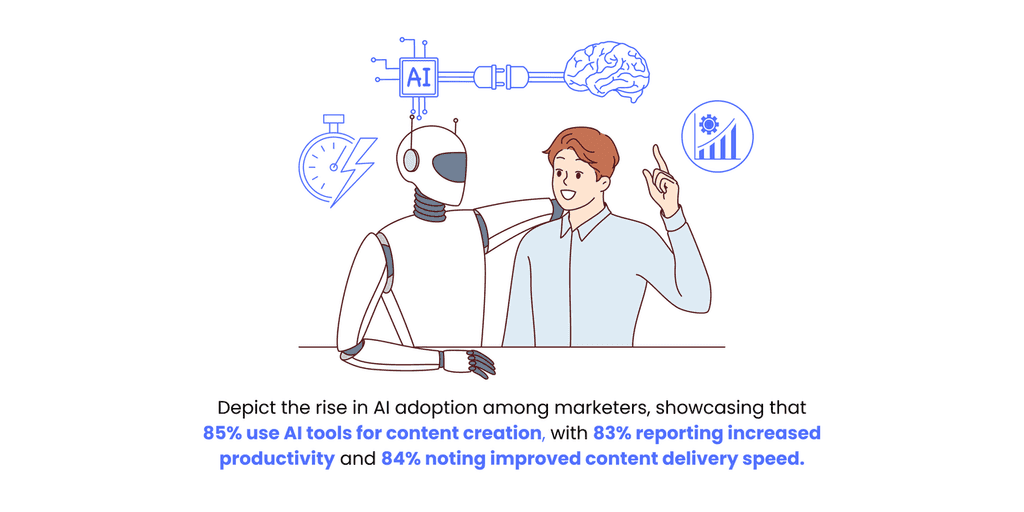
AI is no longer just the behind-the-scenes assistant in email marketing—it’s now the main player. In 2025, AI-powered email marketing will redefine how brands create, automate, and optimize campaigns, making emails more personalized, engaging, and efficient than ever before.
Forget the old-school manual tweaks. AI now writes high-converting email copy, generates subject lines that grab attention, and even designs email templates that align perfectly with brand guidelines.
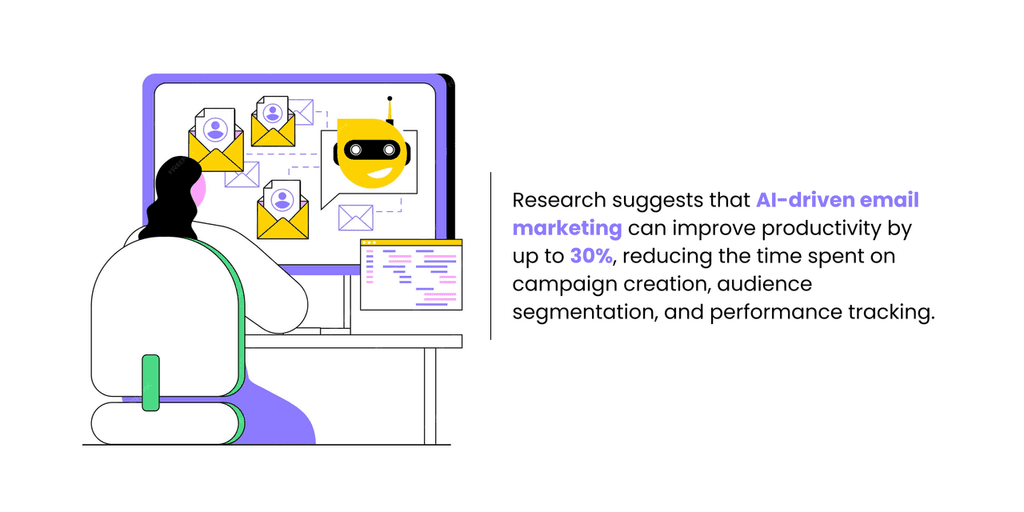
AI-driven tools can create compelling email copy and design templates, reducing production time by up to 44%. No more guesswork—just smart, data-backed content marketing that resonates with your target audience.
AI and Machine Learning: The Next Level of Automation
AI isn’t just helping marketers work faster—it’s making email automation smarter, more intuitive, and more human.
Predictive analytics: AI anticipates user behavior, sending the right emails at the right time to the right people.
Triggered emails that feel natural: Whether it’s a follow-up email for a recent purchase or an automated re-engagement email for inactive subscribers, AI makes it feel personal—without manual effort.
Real-time optimization: AI-powered A/B testing allows marketers to adjust campaigns instantly based on real-time data, boosting engagement and conversions.
In 2025, brands that embrace AI-powered email marketing strategies will gain a serious competitive edge.
Whether it’s improving customer engagement, optimizing email automation, or refining email personalization, AI is the key to better performance and higher conversions—without the extra workload.
Tougher Email Security Rules Are Here
Hitting “send” isn’t enough anymore. If your emails aren’t properly authenticated, they might never make it to the inbox.
Stricter email security protocols—like SPF, DKIM, and DMARC—are being enforced by email providers to combat phishing and spam.
While that’s great for security, it also means marketers need to be more proactive about email authentication.
Here’s why it matters:
SPF (Sender Policy Framework): Ensures only authorized servers can send emails on your behalf.
DKIM (DomainKeys Identified Mail): Verifies that your email hasn’t been tampered with before reaching the recipient.
DMARC (Domain-based Message Authentication, Reporting & Conformance): Gives email providers rules on what to do with unauthenticated emails—like rejecting or flagging them as spam.
Not setting up these protocols correctly could mean fewer emails landing in inboxes and lower engagement.
Marketers who take authentication seriously will see better email deliverability and stronger customer trust.
Hyper-Personalization Goes Next Level
Basic personalization—like adding someone’s first name—isn’t enough anymore. Customers expect emails that actually understand them.
That’s where AI-driven hyper-personalization comes in. Instead of guessing what a subscriber wants, AI pulls insights from real-time data, past interactions, and even social media activity to craft emails that feel truly relevant.
Take GoCustomer, for example. It uses AI to scan a prospect’s LinkedIn activity, website behavior, and other engagement signals to create deeply personalized emails.
No more generic messaging—just highly relevant, human-like interactions.
What this means for email marketers:
More relevant messaging: AI personalizes emails based on a recipient’s latest activity, not just past purchases.
Smarter segmentation: Instead of broad email lists, AI refines audience targeting based on real-time engagement.
Better conversions: The more relevant an email feels, the more likely a customer is to open, click, and act.
In 2025, the brands that win will be the ones making personalization feel effortless—and AI is making that easier than ever.
Smarter Tracking to Beat Bot Clicks
If your email marketing campaign reports show a high click-through rate but little to no conversions, you might be dealing with bot clicks—automated security scans that mimic real engagement.
And in 2025, this problem is only growing.
With email providers implementing stricter security measures and anti-phishing protocols, email marketers need better tracking strategies to distinguish real user behavior from false signals.
How to Identify and Reduce Bot Clicks
Monitor click-to-open rates: If clicks significantly outnumber email opens, chances are bots are inflating your engagement numbers.
Use human verification signals: Heatmaps and session tracking tools can help separate real customer engagement from automated scanning.
Delay click tracking: Many email service providers (ESPs) allow delayed link activation, ensuring that only human clicks count.
Segment by user behavior: Cross-reference email interactions with purchase history, past engagement, and landing page activity to filter out bot-generated clicks.
Brands that implement smarter tracking methods will gain more accurate insights into their campaigns, allowing them to optimize based on real engagement—not artificial inflation.
Apple Intelligence Is Changing Email—Again
Apple’s latest update, iOS 18.1, is making waves in email marketing with the introduction of Apple Intelligence. This AI-powered system is reshaping how emails are categorized, read, and engaged with, forcing marketers to rethink their approach.
Apple Mail now includes priority messaging and tabs, a feature borrowed from Gmail.
Emails are automatically sorted into categories based on urgency and relevance, meaning promotional emails could be deprioritized if they don’t meet the right criteria. The real game-changer, though, is AI summaries.
Apple’s AI scans long emails and condenses them into short highlights, allowing users to decide whether to read the full message.
This shift changes everything for email marketers. If an email isn’t engaging enough from the start, subscribers may never read beyond the AI-generated summary.
Marketers must now focus on:
Writing stronger subject lines and opening sentences that immediately grab attention
Making email content concise, valuable, and personalized to encourage readers to open the full message
Monitoring changes in engagement, as click-through rates and open rates may fluctuate with AI-driven filtering
Using email hyper personalization and segmentation to ensure messages are categorized correctly and don’t get lost in the inbox
With Apple Intelligence reshaping inbox management, email marketers need to adapt quickly.
The focus is no longer just on getting into the inbox—it’s on making every email compelling enough to survive AI filtering and stand out in an increasingly competitive space.
Accessibility Is No Longer Optional
Email accessibility has been discussed for years, but despite growing awareness, most emails still fail to meet basic accessibility standards.
The Email Markup Consortium’s Accessibility Report 2024 found that 99.9% of analyzed emails contained critical or serious accessibility issues, making it clear that accessibility isn’t just a best practice—it’s a major gap in email marketing.
Many of these issues stem from inconsistent support across email clients and a lack of built-in accessibility tools. But not all of them.
The report highlights that four of the ten most common accessibility issues can be fixed by email marketers, regardless of the tools they’re using.
The real problem? Misinformation and outdated design practices, like the push for all-image email templates, which create serious usability barriers.
All-image emails may look sleek, but they’re a disaster for accessibility. Screen readers can’t interpret the text, images don’t always scale well on mobile devices, and AI-powered tools like Apple Intelligence struggle to summarize them accurately.
A well-coded template, on the other hand, can achieve the same visual impact while ensuring content remains accessible.
Key Accessibility Best Practices for 2025
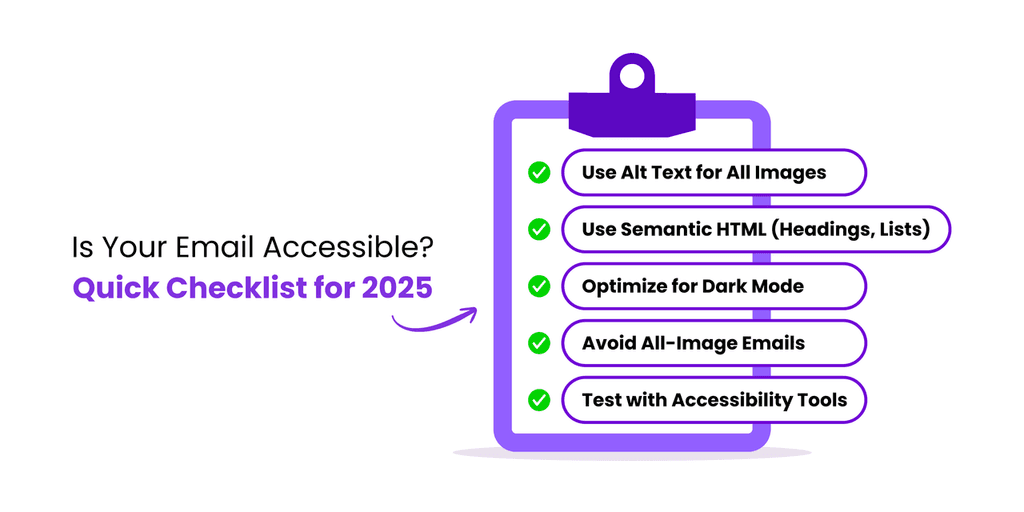
Use alternative text for images – Ensures that visually impaired users can access critical information if images don’t load.
Adopt semantic HTML – Improves readability for screen readers by using proper heading structures, lists, and meaningful labels.
Optimize for dark mode – Ensures emails are legible regardless of user settings.
Test emails with accessibility tools – Platforms like Sinch’s Email on Acid can help identify and fix accessibility issues before sending.
Inbox AI Could Make or Break Open Rates
Apple Mail and Gmail are rolling out AI-powered inbox tools that let users search for information or generate message summaries without actually opening emails.
While this might sound like a win for convenience, it’s a major challenge for email marketers. If email subscribers can get what they need from an AI-generated summary, why would they bother clicking in?
How AI Inbox Search and Summarization Affect Open Rates
Google AI’s Inbox Search – Gmail’s AI now scans inboxes and pulls key details from emails to answer user queries. If someone searches “tracking number,” Google may provide the info straight from a shipping confirmation email—without them ever opening the message.
Apple Intelligence’s AI Summaries – Apple Mail is rolling out AI-driven email summaries, condensing long messages into short highlights. If the summary provides everything the user needs, they may never read the full email.
Inconsistent AI accuracy – Early tests of Gmail’s AI search show mixed results. Sometimes it correctly pulls the needed information, other times it misses the mark, making engagement unpredictable.
How to Keep Emails Relevant in an AI-Filtered World
With inbox AI reducing the need to open emails, marketers need to adapt their email strategy to remain visible and valuable.
Front-load important details – AI pulls information from the beginning of an email. If key messages, offers, or CTAs are buried in the middle or end, they may never be seen.
Make subject lines work harder – The subject line must spark curiosity or offer something AI can’t summarize, driving people to open the full email.
Use engaging formatting – AI may summarize text, but it can’t replace the experience of a well-designed email. Interactive elements, images, and dynamic content still encourage real engagement.
Offer exclusive value inside – If users know they’ll find discount codes, gated content, or personalized offers only by opening, they’ll be less likely to rely on AI summaries.
Test and adjust based on new behaviors – As AI inbox features evolve, click-through rates and engagement patterns may shift. Marketers should monitor analytics closely and refine content accordingly.
AI-powered inbox filtering isn’t going away, and marketers who embrace new strategies—rather than fight against them—will have a better chance of keeping their emails from fading into the background.
Greener, Leaner, and More Sustainable Emails
Email might seem like a low-impact digital marketing channel, but the environmental footprint of email campaigns is bigger than most realize.
Every email sent requires energy—from the data centers storing them to the devices used to read them. In fact, an estimated 300 billion emails are sent daily, contributing to millions of tons of CO2 emissions each year.
With sustainability becoming a priority, businesses are now adopting eco-friendly email marketing strategies to reduce digital waste and minimize their carbon footprint.
How Marketers Are Making Emails More Sustainable
Lighter, optimized emails – Reducing unnecessary images, videos, and large attachments lowers the energy needed to send and store emails.
Targeted and efficient email lists – Cleaning up mailing lists by removing inactive subscribers helps reduce unnecessary sends, cutting energy consumption.
Improved email automation – Triggered emails based on real user behavior ensure fewer unnecessary emails are sent.
Minimalist email design – Using plain text emails or lightweight HTML templates cuts down on processing power while still delivering impact.
Newsletters Are Becoming a Retention Powerhouse
Newsletters used to be just another part of an email marketing strategy.
Now? They’re one of the smartest ways to keep customers engaged long-term.
With acquisition costs climbing and inboxes getting more competitive, brands are realizing that newsletters aren’t just about updates—they’re about building relationships.
A well-executed newsletter keeps people coming back, even when they’re not ready to buy.
Instead of relying on one-off email campaigns that might get lost in AI-driven inbox filters, brands are focusing on consistent, valuable content that strengthens loyalty over time.
How to make your newsletter a must-read
Lead with value, not promotions. If every email is a sales pitch, subscribers will tune out fast.
Personalize beyond the first name. AI tools and email segmentation make it possible to tailor newsletters based on user behavior, preferences, and past engagement.
Add interactive content to boost engagement. Quizzes, surveys, or live polls can make newsletters feel like a two-way conversation.
With inboxes more crowded than ever, brands that treat newsletters as a retention strategy—not just another content creation channel—will be the ones winning long-term customer loyalty.
Smarter Segmentation and Team Collaboration
Top email marketing trends in 2025 are shifting toward hyper-personalized, AI-driven segmentation and seamless team collaboration.
Brands that still rely on static email lists and outdated workflows are missing out on more effective email marketing strategies.
Smarter segmentation powered by AI
The days of broad email campaigns sent to an entire subscriber list are over. AI now analyzes user behavior in real time, making segmentation more dynamic and personalized.
AI-driven segmentation sorts subscribers based on browsing history, past purchases, and engagement patterns, ensuring every message feels relevant.
Predictive targeting anticipates when a customer is most likely to interact, allowing for smarter email marketing campaigns that land at the right moment.
Cross-channel insights integrate data from email interactions, website activity, and social platforms to refine audience targeting further.
Smarter segmentation and AI-driven collaboration mean fewer wasted emails, better engagement, and marketing teams that can focus on strategy instead of tedious manual tasks.
Brands that embrace this shift will create more targeted, high-performing email campaigns without adding to their workload.
Conclusion: The Future of Email is Smart, Secure & Personalized
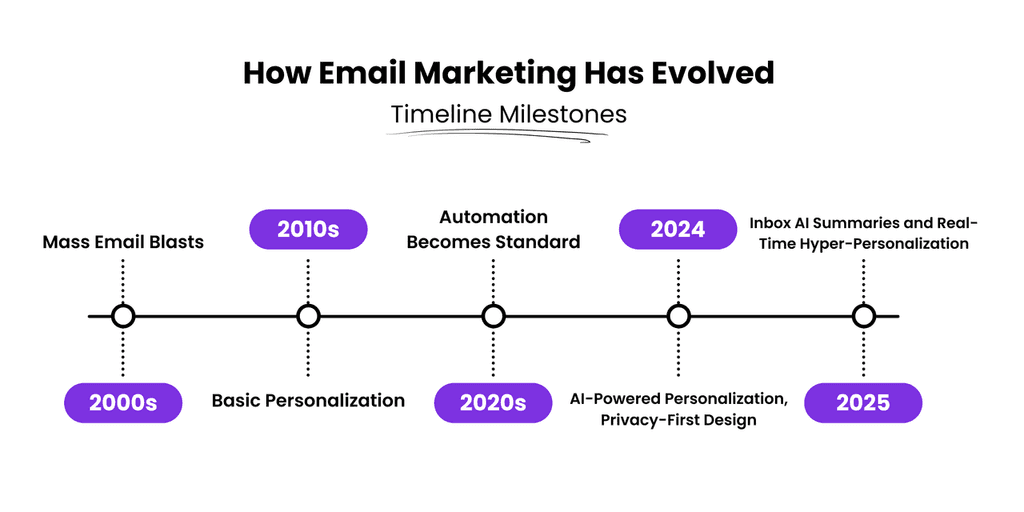
Email marketing is evolving, and the latest email marketing trends show one thing loud and clear—generic mass emails just don’t cut it anymore.
AI is reshaping inbox filtering, segmentation is getting sharper, and engagement is becoming more about relevance than reach. The brands that win? They’re the ones making their emails feel personal, valuable, and timely—at scale.
But here’s the challenge: how do you scale personalization without turning it into a time-consuming mess? AI-powered inbox filters from Gmail and Apple Mail are getting better at prioritizing meaningful, human-like emails.
That means marketers have to work harder to craft messages that stand out—not just with good subject lines, but with content that feels tailored to the recipient.
This is where GoCustomer makes a difference. The same AI-driven advancements that are making inboxes smarter can also be used to create better, more personalized emails.
Instead of relying on generic outreach, GoCustomer pulls data from LinkedIn, company websites, and other sources to craft messages that actually reflect the recipient’s interests, job changes, or recent activity.
No more guessing. No more impersonal mass emails. Just targeted, relevant messaging at scale.
The email game is changing. The question is—are you keeping up? Try GoCustomer’s free forever planand start scaling personalization the smart way.

Reach more customers with your cold emails
Table of Contents
In a nutshell
AI is revolutionizing email marketing by enabling hyper-personalization, predictive analytics, and automated content creation, leading to more effective and engaging campaigns.
To boost engagement, incorporate interactive elements like polls or quizzes, personalize content based on user behavior, and ensure your emails are mobile-friendly.
With a significant number of users accessing emails on mobile devices, optimizing for mobile ensures better user experience and higher engagement rates.
As voice assistants become more prevalent, optimizing emails for voice-activated commands can enhance accessibility and user engagement.
Interactive content, such as embedded videos or surveys, increases engagement and provides a more immersive experience for the reader.
Subscribe to our Newsletter!
Digital advice costs money but we send it to
your inbox for free.
Related Blogs

Time is Money, and We're About to Save You Both!
Book a quick demo of our email marketing tools and watch as we transform your leads into loyal customers.

![A loop illustration w-auto h-[70px]](/_next/image?url=%2F_next%2Fstatic%2Fmedia%2Fvector1.7738e6de.png&w=256&q=75 "GoCustomer Platform Image")

Get in touch
Subscribe to our weekly Newsletter and receive updates via email.