
Email Marketing
Published:
Email Marketing
Qasim Farooq
Share
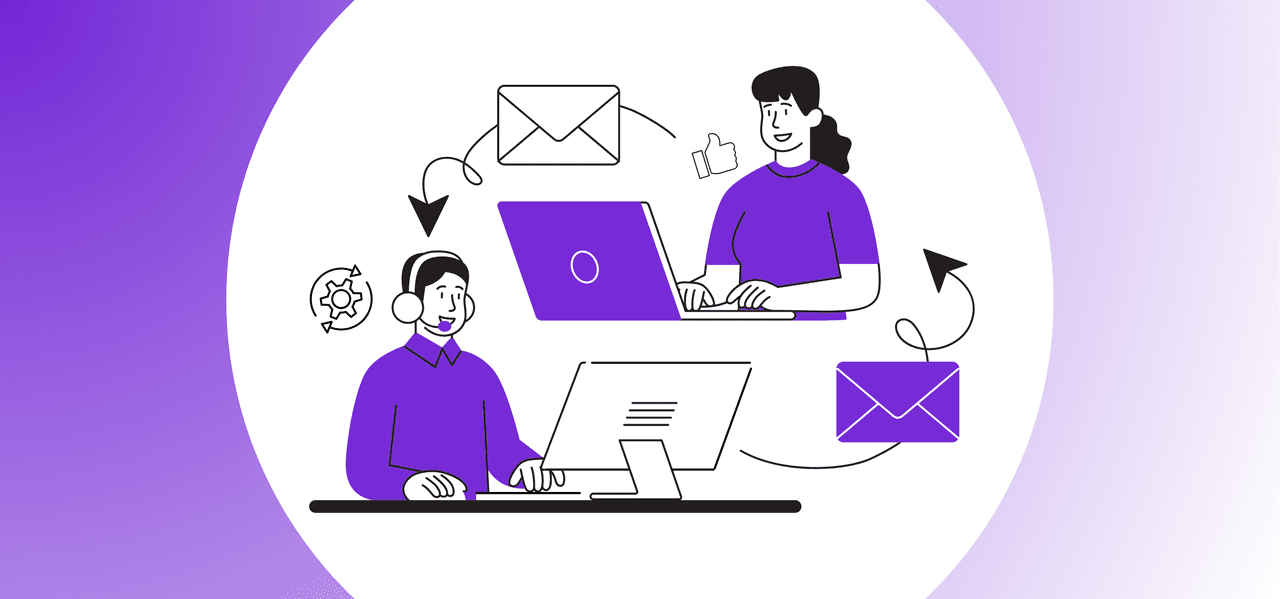
You ever get one of those emails that screams “I am a robot pretending to be human”? The ones that start with “Dear [First Name], I hope this email finds you well.” (It found me drowning in unread emails, thanks.)
Bad automated sales emails feel like those weird mannequins with human-like faces—close, but something’s off. And the worst part? Instead of drawing people in, they make them run for the “unsubscribe” button like it’s an emergency exit.
But here’s the thing: automation doesn’t have to feel robotic. When done right, sales email sequences can feel so personal that your prospects will think you wrote each one by hand, just for them. (Spoiler: You didn’t. But they don’t have to know that.)
So, how do you make automated sales emails feel like a warm handshake instead of a cold, scripted monologue?
Let’s break it down. Get ready for practical examples, clever strategies, and (of course) a little sarcasm. Because boring sales emails don’t convert—but hyper personalized ones do.
7 Pillars of Great Sales Email Sequences
A killer sales email sequence isn’t just a bunch of emails strung together like a sad game of telephone. It’s a carefully crafted, strategic series of messages designed to move your prospect from “Who is this?” to “Take my money!” (Or at least, “Let’s talk.”)
So, what separates sales emails that convert from the ones that get ghosted? These seven pillars—the building blocks of sequences that feel personal, persuasive, and impossible to ignore.
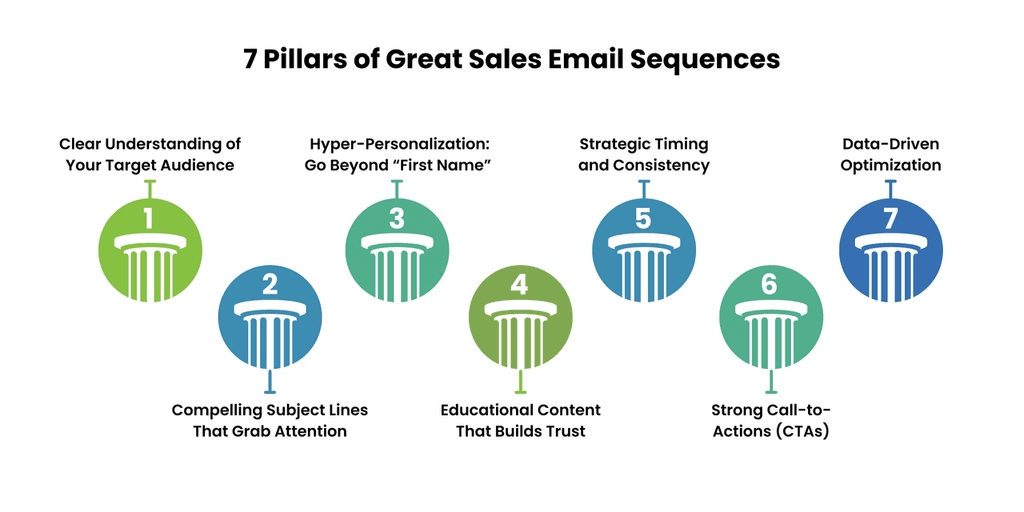
1. Clear Understanding of Your Target Audience
Imagine walking into a party and launching into a 30-minute monologue about cat food... to a room full of dog owners. That’s what happens when you send sales emails without understanding your audience.
The best sales sequences start with deep audience research—who they are, what they care about, and (most importantly) what keeps them up at night.
🔍 Know their:
✔ Pain points (What’s frustrating them right now?)
✔ Goals (What do they actually want?)
✔ Industry-specific challenges (Because no one wants generic advice.)
When you truly get your audience, your emails will feel like a helpful conversation instead of a generic pitch. And that’s when people start paying attention.
2. Compelling Subject Lines That Grab Attention
Your subject line is like the doorway to your email. If it’s boring, no one’s walking through.
Bad subject lines? They go straight to the abyss (a.k.a. the spam folder or “mark as read” purgatory).
So, what works?
Curiosity: “Saw this on your LinkedIn—thought you’d like it.”
Personalization: “[First Name], quick idea for [Company Name]”
Value-driven: “3 ways to fix [pain point] today”
🚨 Pro Tip: Avoid the spammy stuff (“Urgent!!! Limited Time Offer!!!”). If your subject line sounds like a sketchy infomercial, it’s probably bad.
3. Hyper-Personalization: Go Beyond “First Name”
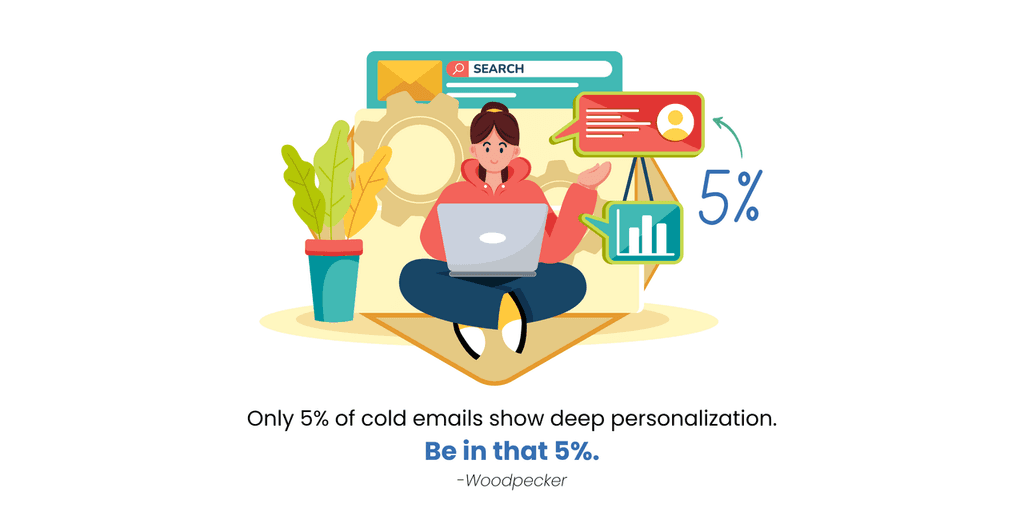
People can smell a fake “personalized” email from a mile away. (Yes, even the “Hey [First Name], I loved your recent post on LinkedIn” trick is wearing thin.)
Real personalization means actually leveraging data—their LinkedIn profile, website activity, or even a recent company announcement.
Examples of hyper-personalized openers:
✔ “Noticed [Company] just launched [New Feature]—curious how that’s going for you.”
✔ “Saw your post about [Industry Trend]—completely agree with your take.”
✔ “Checked out your site and loved [Specific Detail]—I had an idea that might help.”
It’s low effort for you (because automation tools can pull this info), but high impact for them (because it feels like you actually did your homework).
4. Educational Content That Builds Trust
If every email in your sequence is just “Buy now! Schedule a call! Let’s talk!”—congrats, you’re officially that pushy salesperson no one likes.
Great sequences add value before asking for anything. That means:
Sharing industry insights
Sending relevant case studies
Offering free resources (without asking for anything in return)
You’re playing the long game here—when people see you as a trusted expert, they’re far more likely to want to work with you.
5. Strategic Timing and Consistency
Send one email and disappear? Too passive.
Send five emails in three days? Way too aggressive.
The sweet spot? Consistency without being annoying.
📅 Best practices for timing:
✔ Follow up within 24-48 hours after the first touchpoint
✔ Space emails out (every 3-5 days is a good rule of thumb)
✔ Stop when it’s clear they’re not interested (if they haven’t engaged after 5+ emails, take the hint)
And whatever you do—don’t “circle back” five times in a row. It’s painful. For everyone.
6. Strong Call-to-Actions (CTAs)
If your email ends with “Let me know your thoughts,” I have bad news: No one is responding.
A great CTA tells them exactly what to do next—and makes it easy.
✅ Examples of clear, actionable CTAs:
✔ “Would love to set up a quick call. Does [Day/Time] work for you?”
✔ “Here’s a free guide on [Topic]—let me know what you think!”
✔ “If this isn’t the right time, just hit reply and say ‘Not now’—I won’t bug you.”
No friction. No confusion. Just a simple next step.
7. Data-Driven Optimization
You’re not guessing here. You’re using data to get better.
📊 Key metrics to track:
✔ Open rates (Are your subject lines working?)
✔ Reply rates (Are your emails sparking conversations?)
✔ Click-through rates (Are people actually engaging?)
And if something isn’t working? Tweak and test.
A/B test different subject lines.
Experiment with email length.
Change up your CTA style.
Because the best sales sequences aren’t set in stone—they evolve.
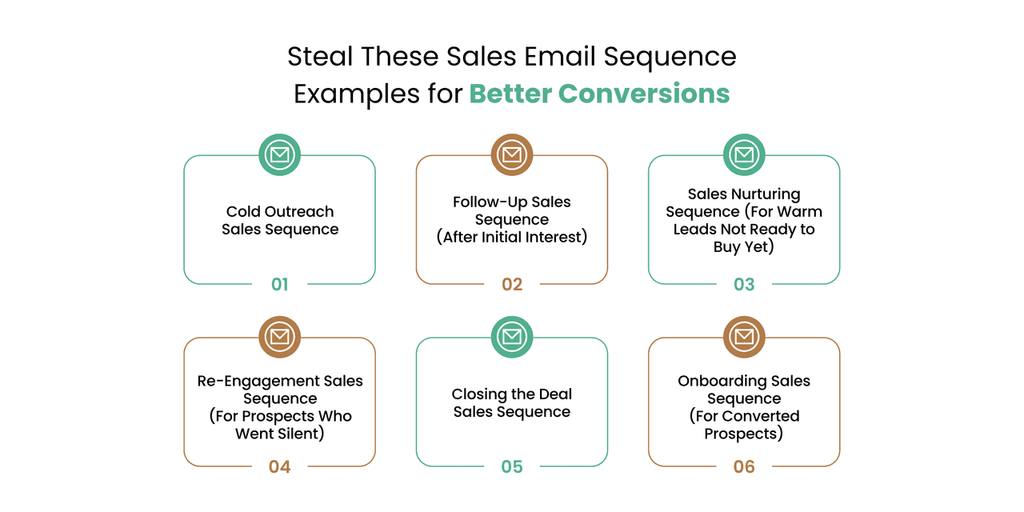
Steal These Sales Email Sequence Examples for Better Conversions
You know what doesn’t work in 2025? Generic, robotic sales emails that sound like they were written by a 2012 email automation tool.
People are savvier than ever. They can smell a template from a mile away, and if your email screams “mass send,” you’re getting ghosted. Hard.
So, let’s fix that.
Below are sales email sequences that actually work in today’s inbox chaos.
No gimmicks. No overused “Just following up…” nonsense. Just high-converting, human-sounding emails that feel like they were written for one person—even when they’re automated.
1. Cold Outreach Sales Sequence
(For people who don’t know you… yet.)
Cold outreach is like sliding into someone’s DMs—you’ve got one shot to make a good impression before you’re ignored forever. This sequence is designed to get your email opened, read, and responded to without making your prospect feel like they’re on an outdated email blast list.
Email 1: The Icebreaker (Day 1)
📌 Goal: Get attention without sounding salesy.
Subject: [First Name], this caught my eye…
Hey [First Name],
I was scrolling through [LinkedIn, their website, industry news] and saw [mention something specific they did—hiring, launch, funding, podcast appearance, recent post]. Impressive work!
Quick intro—I'm [Your Name], and I help [similar companies/roles] with [specific problem they likely have]. Right now, I’m seeing a lot of [Industry] teams struggle with [pain point].
Not sure if this is something you’re thinking about, but I’ve got some ideas on how [Company Name] can tackle this. Worth a quick chat?
Let me know—happy to keep it casual.
Best,
[Your Name]
🔥 Why this works in 2025:
It’s not a sales pitch. It’s a real, human conversation starter.
It’s customized. Mentioning something they did proves this isn’t a mass email.
It’s low-pressure. No hard sell—just opening the door.
Email 2: The “Oh BTW” Follow-Up (Day 3-5)
📌 Goal: Give them a reason to reply.
Subject: Thought you’d find this interesting, [First Name]
Hey [First Name],
Wanted to circle back in case my last note got buried. Totally get how busy things can be.
I came across [case study, industry report, or quick stat] that I thought you’d find interesting. It talks about [key takeaway]—and given what I saw about [Company Name], I figured it might be useful.
Let me know what you think—curious to hear your take.
Best,
[Your Name]
🔥 Why this works in 2025:
It gives them something of value. No “just following up” nonsense—this email is actually helpful.
It continues the conversation naturally. No hard pitch yet, just keeping engagement going.
It feels like it was written just for them. Sharing insights shows thoughtfulness.
Email 3: The Soft Pitch (Day 7-10)
📌 Goal: Introduce the solution without being pushy.
Subject: Here’s how [Competitor/Similar Company] solved [Pain Point]
Hey [First Name],
Not sure if you’ve been thinking more about [Pain Point], but I wanted to share a quick example of how [Competitor/Similar Company] tackled this.
They were facing [specific challenge] and used [Your Solution] to [specific result]. If this is something you’re interested in exploring, I’d be happy to walk you through how it might work for [Company Name].
Let me know if that sounds helpful!
Best,
[Your Name]
🔥 Why this works in 2025:
It name-drops competitors. A little FOMO never hurts.
It’s still casual. No “I’d love to schedule a 30-minute discovery call” nonsense.
It’s outcome-driven. Instead of selling features, it talks about real results.
Email 4: The Exit Door (Day 12-15)
📌 Goal: Give them an easy way to say “not now” instead of ignoring you.
Subject: Should I cross you off my list, [First Name]?
Hey [First Name],
I don’t want to be that person who keeps following up when it’s not the right time.
If [Pain Point] isn’t a priority right now, no worries—I can check back in a few months. But if it is something you’d like to solve soon, I’d love to chat.
Just hit reply with:
“Let’s talk” → I’ll send over some times.
“Not now” → I’ll leave you alone for a while.
“Never” → I’ll remove you from my list, no hard feelings.
Appreciate your time either way!
Best,
[Your Name]
🔥 Why this works in 2025:
It gives them an easy out. Most people ignore emails because they don’t want to say no—this makes it effortless.
It’s refreshingly honest. People respect that.
It creates urgency without pressure. “Now or later?” is easier to answer than “Book a call?”
2. Follow-Up Sales Sequence (After Initial Interest)
(For people who were interested… and then vanished.)
You know those prospects who clicked your email, maybe even booked a demo—and then? Crickets.
Here’s how to nudge them (without being annoying).
Email 1: The “Thanks for Your Time” Email (Immediately After Demo/Response)
📌 Goal: Keep them engaged post-call.
Subject: Great chat, [First Name]—Here’s what’s next
Hey [First Name],
Loved our chat earlier! I wanted to recap what we covered:
✅ [Key Takeaway #1]
✅ [Key Takeaway #2]
✅ [Next Step: [Action you agreed on]]
I know you’re weighing options, so no pressure. Let me know if you need anything from me!
Best,
[Your Name]
🔥 Why this works in 2025:
It reinforces the value of your solution.
It sets expectations for what happens next.
It keeps the tone friendly and pressure-free.
Email 2: The “Let’s Address Your Concerns” Email (2-3 Days Later)
📌 Goal: Handle any hesitations before they ghost you.
Subject: [First Name], let’s talk about [Objection]
Hey [First Name],
Totally get that [Objection: pricing, timing, competitor]. A lot of our clients felt the same way—until they saw how [Solution] helped them [Specific Result].
If you’re on the fence, would it help if I [offer alternative solution, extended trial, extra feature]?
Let me know—I’m happy to make this work for you.
Best,
[Your Name]
🔥 Why this works in 2025:
It directly tackles their hesitation.
It offers a solution instead of just “following up.”
It keeps things open-ended (not pushy).
Final Email: The Close (7-10 Days Later)
📌 Goal: Get a yes, no, or “not now.”
Subject: Closing the loop, [First Name]
Hey [First Name],
I know things get busy, so I wanted to check in one last time. If now isn’t the right time, no worries—I can touch base later.
Just reply with:
✔ Yes, let’s talk
✔ Not now, check back in [X] months
✔ Not interested (totally fine, no hard feelings!)
Appreciate your time either way!
Best,
[Your Name]
🔥 Why this works in 2025:
It forces a decision.
It makes it easy to reply.
It keeps things friendly and human.
3. Sales Nurturing Sequence (For Warm Leads Not Ready to Buy Yet)
(For prospects who have shown interest in your product or service but aren’t quite ready to commit to becoming a paying customer.)
Not all email sequences work the same way. Some prospects need time before making a decision. That’s where a sales nurturing sequence comes in—helping you stay top-of-mind without coming across as pushy.
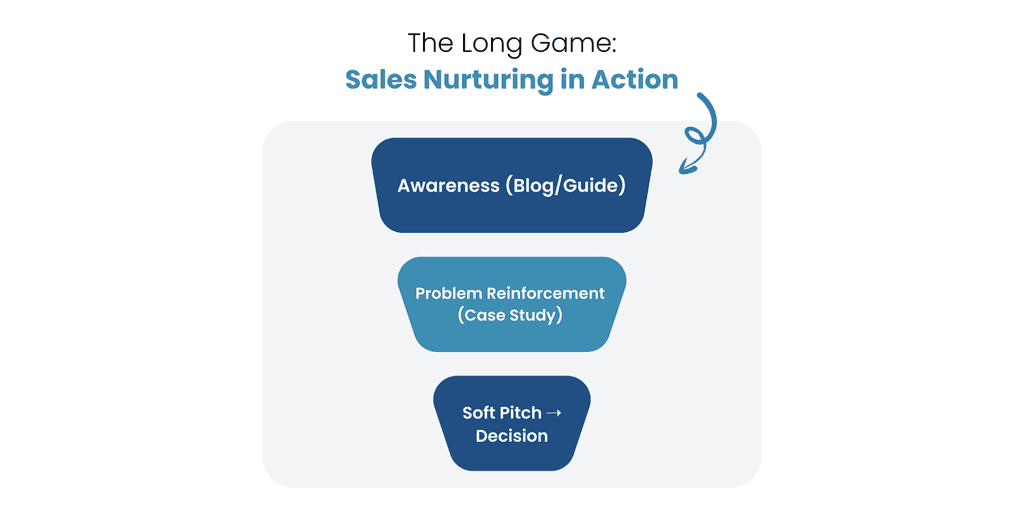
This email sequence example builds trust, keeps engagement high, and strategically moves leads through the sales funnel until they’re ready to buy.
Email 1: Educational Value (Day 1)
📌 Goal: Provide valuable content that positions you as an expert in your space.
Subject: [First Name], saw this and thought of you!
Hey [First Name],
I know you’re considering [Product/Service], so I wanted to send over something useful.
Here’s a [case study, whitepaper, or blog post] breaking down how companies like [Target Audience] solve [Pain Point] using a strategic approach [Strategy Breakdown].
A few key takeaways:
✔ [Industry insight #1]
✔ [Stat or trend #2]
✔ [Tactical tip #3]
Would love to hear your thoughts! No rush—just wanted to send some immediate value your way.
Best,
[Your Name]
🔥 Why this works:
It sets the tone for a helpful, not salesy, conversation.
It aligns with their pain points, offering a solution rather than a pitch.
It kicks off the nurturing process with an email marketing strategy that delivers value first.
Email 2: Pain Point Reinforcement (Day 5-7)
📌 Goal: Remind them why they need your product/service to solve their challenge.
Subject: [First Name], does this sound familiar?
Hey [First Name],
I was chatting with a [Job Title] at [Company Name] last week, and they mentioned struggling with [Pain Point]—which reminded me of our conversation.
They were spending [X time/money] on [Inefficient Process] before implementing [Strategy Breakdown]. After that? Their sales reps started closing deals 30% faster.
Curious—are you seeing similar challenges? If so, happy to share how [Product/Service] can help.
Best,
[Your Name]
🔥 Why this works:
It uses a real-world example to make the challenge feel urgent.
It taps into FOMO—if others are solving this issue, why not them?
It naturally introduces how an email sequence can be a game-changer.
Email 3: Subtle Pitch (Day 10-14)
📌 Goal: Show how your sales email can drive better conversions—without a hard sell.
Subject: A quick idea for [Company Name]
Hey [First Name],
I know [Pain Point] has been on your radar, so I wanted to share a quick example of how a conversion sequence could help.
We’ve worked with companies like [Competitor/Industry Leader] who faced similar challenges, and we found that [Your Solution] helped them:
✔ [Increase open rates by X%]
✔ [Improve response rates by X%]
✔ [Generate leads more effectively]
Would love to hear your thoughts. No pressure—just sharing some insights that might be useful for [Company Name].
Best,
[Your Name]
🔥 Why this works:
It introduces a solution without being pushy.
It highlights key metrics to make the value proposition clear.
It naturally keeps the conversation going while building trust.
Email 4: Soft Close & CTA (Day 20-30)
📌 Goal: Get a yes, no, or “not now” response before moving them into a re-engagement email sequence.
Subject: Still on your radar, [First Name]?
Hey [First Name],
I know we’ve been chatting about [Pain Point], and I just wanted to check in.
Does solving this still feel like a priority for you? If so, here are two quick options:
✔ Option A – A 15-min chat to see how this fits into your sales process.
✔ Option B – A free trial to test-drive it for yourself.
If now isn’t the right time, no problem—just let me know, and I’ll circle back later.
Looking forward to your thoughts!
Best,
[Your Name]
🔥 Why this works:
It respects their time while prompting a clear response.
It offers a clear call to action (CTA) without forcing a commitment.
It sets the stage for a future conversation—even if they’re not ready today.
4. Re-Engagement Sales Sequence (For Prospects Who Went Silent)
(For leads who initially engaged with your cold email sequence but then disappeared.)
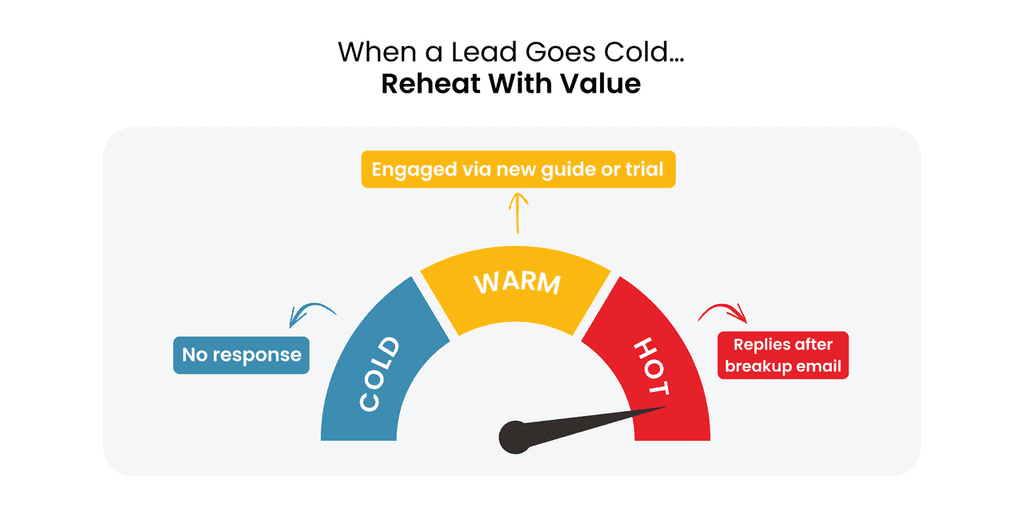
Ghosting isn’t just for dating apps—it happens in sales, too. This re-engagement email sequence is designed to bring cold leads back into the sales funnel and increase engagement rates without being pushy.
Email 1: Check-In & Offer Assistance (Day 1)
📌 Goal: Show you’re still available to help—without the awkward “Just following up…”
Subject: Still interested in [Pain Point], [First Name]?
Hey [First Name],
Hope you’re doing well! I wanted to check in and see if [Pain Point] is still on your radar. If there’s anything I can help with—questions, insights, or a quick walkthrough—let me know.
No rush, just here when you’re ready.
Best,
[Your Name]
🔥 Why this works:
It’s low-pressure. Just a casual check-in.
It leaves the door open for a response.
It reminds them of why they engaged in the first place.
Email 2: Address Potential Concerns (Day 4-7)
📌 Goal: Handle objections before they ghost permanently.
Subject: Is something holding you back, [First Name]?
Hey [First Name],
I totally get that timing, budget, or internal approvals can slow things down. If any of those are concerns, I’d be happy to chat through options that might help—whether it’s an extended free trial, flexible pricing, or just answering a few questions.
Let me know how you’re feeling about this!
Best,
[Your Name]
🔥 Why this works:
It acknowledges real concerns instead of ignoring them.
It provides a potential workaround.
It makes responding easy—without pressure.
Email 3: Limited-Time Incentive (Day 10-14)
📌 Goal: Create urgency without sounding desperate.
Subject: [First Name], quick heads-up…
Hey [First Name],
We’re running a limited-time offer for [discount, bonus, free trial] until [Date]. If you’re still thinking about this, now might be a great time to act.
Would love to help—let me know if you want to discuss!
Best,
[Your Name]
🔥 Why this works:
It uses a deadline to create urgency.
It makes them reconsider delaying a decision.
It offers a tangible benefit instead of just asking for a reply.
Email 4: The Breakup Email (Day 20-30)
📌 Goal: Get closure and either restart the conversation or let them go.
Subject: Should I close your file, [First Name]?
Hey [First Name],
I don’t want to keep bothering you if this isn’t a priority right now. If you’re interested, let me know. Otherwise, I’ll assume the timing isn’t right and won’t reach out again.
Either way, I appreciate your time!
Best,
[Your Name]
🔥 Why this works:
It forces a decision.
It gives them an easy out.
It often revives the conversation.
5. Closing the Deal Sales Sequence
(For prospects on the edge of becoming a paying customer but need a final nudge.)
So, they’ve opened your emails, attended your demo, asked all the right questions—but haven’t pulled the trigger yet. Frustrating? Sure. Fixable? Absolutely.
This closing sales email sequence helps seal the deal by reinforcing value, handling objections, and adding just the right amount of urgency (without sounding desperate).
Email 1: Personalized Offer (Day 1)
📌 Goal: Make the offer feel exclusive and personalized to their needs.
Subject: [First Name], I pulled some strings for you…
Hey [First Name],
I know you’ve been considering [Product/Service], so I wanted to do something special for you.
I checked with my team, and we can offer you [Discount, Bonus Feature, Extended Trial]—but only if we finalize everything by [Date].
✔ [Key Benefit #1]
✔ [Key Benefit #2]
✔ [Key Benefit #3]
Would love to get you set up and make this official. Let me know if you’d like to chat!
Best,
[Your Name]
🔥 Why this works:
It makes them feel special. The phrase "I pulled some strings" implies exclusivity.
It reinforces value. No just “Here’s a discount,” but why this is a great opportunity.
It subtly applies urgency. A limited-time offer gives them a reason to act now instead of “later.”
Email 2: Competitor Comparison (Day 4-5)
📌 Goal: Show them why choosing your solution is the best decision.
Subject: How we stack up against [Competitor]
Hey [First Name],
I know you’re weighing your options between [Your Product] and [Competitor], so I wanted to make it easy for you.
Here’s a quick comparison between the two:
Feature | [Your Product] | [Competitor] |
[Feature #1] | ✅ Yes | ❌ No |
[Feature #2] | ✅ Yes | ❌ No |
[Feature #3] | ✅ Yes | ❌ No |
Beyond features, the real difference? [Unique Value Proposition]—our customers see [Key Benefit, e.g., 40% faster implementation, 2x engagement boost, etc.].
Would love to chat and walk you through why so many teams choose [Your Company Name]. Let me know if you have any questions!
Best,
[Your Name]
🔥 Why this works:
It gives them clarity. A side-by-side comparison helps them justify their decision.
It positions your solution as superior. Without badmouthing the competition, you highlight why you’re better.
It reduces decision fatigue. They don’t have to research on their own—you’ve done the work for them.
Email 3: Last Chance (Day 7-10)
📌 Goal: Create a final sense of urgency to get them off the fence.
Subject: [First Name], this deal disappears after [Date]
Hey [First Name],
Just a quick heads-up—our [Exclusive Offer, Discount, Bonus] is expiring on [Date].
I’d love to get you set up before then so you can start seeing results with [Key Benefit] right away. If you’re in, let’s finalize everything today.
Just hit reply and say “Let’s go”, and I’ll take care of the rest!
Best,
[Your Name]
🔥 Why this works:
It creates urgency without pressure. The offer is going away—but they still have control.
It simplifies the next step. No “schedule a call” or “fill out this form.” Just reply "Let’s go."
It keeps things human. A casual, low-effort CTA makes it easy to commit.
6. Onboarding Sales Sequence (For Converted Prospects)
(This sequence ensures that new customers experience immediate value, increasing retention and reducing churn.)
Closing the deal is just the beginning. The real win? Keeping customers engaged, happy, and using your product/service long-term.
This onboarding email sequence ensures new customers see value ASAP, reducing the risk of churn and boosting retention.
Email 1: Welcome & Getting Started (Day 1)
📌 Goal: Make them feel excited and guide them through the first step.
Subject: Welcome to [Product Name]! Here’s what’s next…
Hey [First Name],
Welcome aboard! 🎉 We’re thrilled to have you on [Product Name], and we can’t wait for you to start seeing results.
To get started, here’s what to do first:
✔ [First Step: Set up an account, integrate a tool, schedule onboarding, etc.]
✔ [Second Step: Key action to unlock value fast]
✔ [Third Step: Quick win they can achieve immediately]
Need any help? Just hit reply—I’m here for you!
Best,
[Your Name]
🔥 Why this works:
It provides clear direction. No guessing what to do next.
It emphasizes a quick win. The sooner they see results, the more likely they’ll stick around.
It keeps engagement high from day one. A strong start reduces churn.
Email 2: Key Features & Best Practices (Day 3-5)
📌 Goal: Ensure they use your product/service effectively.
Subject: 3 insider tips to get the most from [Product Name]
Hey [First Name],
Now that you’re set up, I wanted to share three pro tips to help you get the most from [Product Name]:
1️⃣ [Feature #1] – Here’s how it can [Benefit].
2️⃣ [Feature #2] – Most users see [Result] by doing this.
3️⃣ [Feature #3] – This trick can [Boost efficiency, increase ROI, etc.].
Try them out, and let me know if you have any questions!
Best,
[Your Name]
🔥 Why this works:
It encourages deeper engagement. If they’re actively using features, they’re less likely to churn.
It sets them up for success. They feel empowered, not overwhelmed.
It keeps the excitement going. New customers = eager learners.
Email 3: Social Proof & Success Stories (Day 7-10)
📌 Goal: Show them how others have succeeded with your product.
Subject: See how [Similar Customer] achieved [Key Benefit]
Hey [First Name],
I wanted to share how [Customer Name] used [Product Name] to achieve [Result].
✔ [Before: Challenge they faced]
✔ [After: How your solution helped]
✔ [Key Outcome: 2x efficiency, 30% more leads, etc.]
You’re on the same path! Let me know if I can help you get there faster.
Best,
[Your Name]
🔥 Why this works:
It reinforces confidence. Seeing someone else succeed makes them believe they can too.
It keeps them engaged. New users can get discouraged—this keeps them motivated.
It subtly sets up the next email (overcoming challenges).
Email 4: Overcoming Common Challenges (Day 14-20)
📌 Goal: Prevent frustration before it happens.
Subject: Stuck? Here’s how to fix it fast.
Hey [First Name],
I know the first few weeks with a new tool can be overwhelming. Here are quick fixes to common roadblocks:
🚧 Issue #1 – Solution
🚧 Issue #2 – Solution
🚧 Issue #3 – Solution
If you ever hit a snag, reply here—I’ll personally make sure you’re taken care of.
Best,
[Your Name]
🔥 Why this works:
It proactively prevents churn. If they get stuck, they won’t just give up.
It strengthens customer support. Knowing they can reach out builds trust.
It increases product adoption. More usage = higher retention.
Taking Sales Email Sequences to the Next Level
Scaling personalized email outreach shouldn’t feel like trying to handwrite holiday cards for a million people. You either spend hours researching each prospect (and slowly lose your mind) or send generic, lifeless cold emails that get ignored faster than a “Congratulations, you’ve won a free cruise!” message.
Enter GoCustomer—the AI-powered email marketing platform that makes hyper-personalization effortless.
Instead of stalking LinkedIn profiles and manually piecing together a sales email, GoCustomer’s AI agents do the heavy lifting.
Got a prospect’s LinkedIn URL? The LinkedIn Agent grabs their latest post, job history, and company updates, so your email feels like a natural conversation—not a cookie-cutter pitch.
And the best part? GoCustomer doesn’t just help you personalize—it helps you scale.
With automated email sequences, drip campaigns, and domain warm-up, you’re not just reaching inboxes—you’re landing replies.
So, if you’re tired of guessing, copying, pasting, and hoping for the best, here’s a better idea: Try GoCustomer’s Free Forever Plan and start sending emails that actually sound like they were written by a human.

Reach more customers with your cold emails
Table of Contents
In a nutshell
The ideal number of emails depends on the goal of your sequence and your target audience. For example:
Cold outreach sequence: 4-6 emails spread over two weeks
Follow-up sequence: 3-5 emails over 10-14 days
Nurturing sequence: 5-7 emails spaced over several weeks
Re-engagement sequence: 3-4 emails over a month
Personalization goes beyond just using the recipient’s first name in the subject line. To make emails feel genuinely tailored, leverage data points such as:
Recent LinkedIn activity (job changes, posts, promotions)
Company news (funding rounds, product launches, hiring trends)
Industry pain points specific to their role
Past interactions with your brand (downloads, website visits, email engagement)
Subject lines should be concise, specific, and intriguing. Some proven approaches include:
Curiosity-driven: “[First Name], saw this and thought of you”
Pain-point focused: “Struggling with [Problem]? Here’s a fix”
Social proof-based: “How [Competitor] improved [Metric] in 30 days”
Conversational: “Quick question about [Company Name]”
A/B testing different subject lines can help refine what resonates with your audience.
One of the most common mistakes is using generic, templated emails that lack real personalization. Other pitfalls include:
Not addressing the recipient’s actual pain points
Focusing too much on features rather than benefits
Sending too many emails too quickly
Weak CTAs that don’t guide the prospect to the next step
Ignoring data—failing to adjust based on open, click, and response rates
Successful email sequences feel human, relevant, and well-timed.
Writing hyper-personalized emails for every lead manually isn’t scalable. GoCustomer solves this by using AI-powered agents to:
Collect and enrich prospect data from LinkedIn, websites, and other sources
Automate highly personalized email sequences that feel tailored, not templated
Improve inbox placement with built-in domain warm-up to maximize deliverability
Optimize engagement rates with AI-driven insights
Instead of spending hours researching and personalizing emails manually, GoCustomer helps sales teams send better emails, faster—without sacrificing quality.
Subscribe to our Newsletter!
Digital advice costs money but we send it to
your inbox for free.
Related Blogs
Time is Money, and We're About to Save You Both!
Book a quick demo of our email marketing tools and watch as we transform your leads into loyal customers.
![A loop illustration w-auto h-[70px]](/_next/image?url=%2F_next%2Fstatic%2Fmedia%2Fvector1.7738e6de.png&w=256&q=75 "GoCustomer Platform Image")
Get in touch
Subscribe to our weekly Newsletter and receive updates via email.