

Customer Acquisition
Published:
Customer Acquisition
Qasim Farooq
Share
For startups, one of the most critical metrics to monitor and manage is the Customer Acquisition Cost (CAC). Understanding and optimizing CAC can mean the difference between a thriving business and one that struggles to stay afloat.
High CAC can drain your resources, limit your growth potential, and ultimately, threaten the sustainability of your startup. Conversely, a well-managed CAC can lead to increased profitability, more efficient scaling, and a stronger market presence.
Elon Musk, a visionary entrepreneur, often emphasizes the importance of efficiency and innovation in every aspect of business, including customer acquisition. He believes that focusing on reducing costs while increasing value is key to achieving sustainable growth and success.
In this guide, we will explore innovative and effective strategies to lower your startup's CAC. From understanding what CAC is and why it matters to practical tips on calculating and benchmarking your CAC, we’ve got you covered.
By the end of this blog, you’ll be equipped with the knowledge and tools you need to drive down your CAC, allowing your startup to grow sustainably and profitably.
Let's revolutionize the future of customer acquisition, making it smarter and more efficient than ever. Buckle up, the journey is just beginning!
What is Customer Acquisition Cost (CAC)
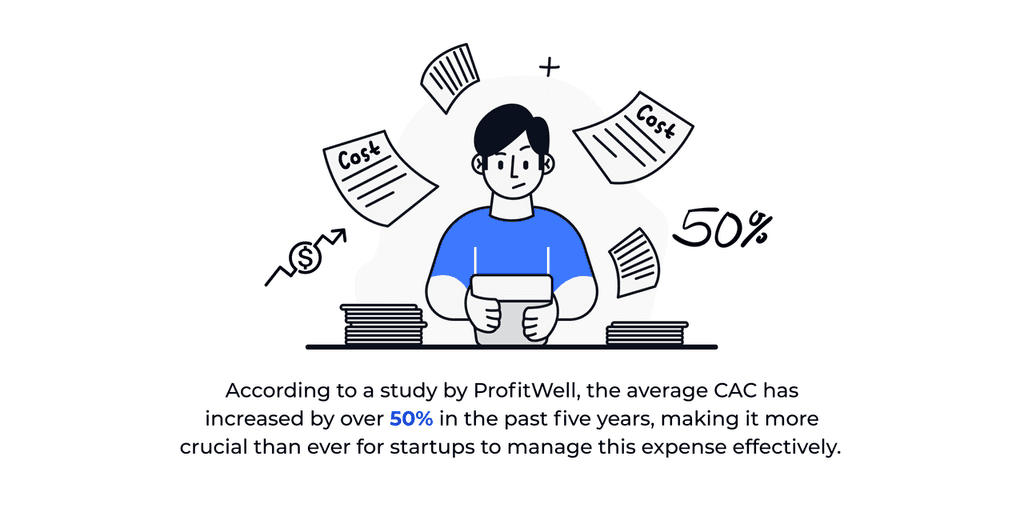
Customer Acquisition Cost (CAC) is a critical metric for any startup aiming for sustainable growth. It represents the total cost of acquiring a new customer, encompassing all the marketing and sales expenses involved in attracting and converting leads.
CAC includes costs such as advertising spend, salaries of the sales and marketing teams, software costs, and any other related expenses.
Understanding CAC is essential because it directly impacts your business's profitability and scalability. A high CAC can limit your ability to acquire new customers efficiently, while a low CAC can enhance your overall return on investment (ROI) and drive growth.
By keeping your customer acquisition cost in check, you can allocate resources more effectively and ensure your startup remains competitive in a crowded market.
How to Calculate Customer Acquisition Cost of your Startup
Calculating Customer Acquisition Cost is straightforward but requires a comprehensive view of your sales and marketing expenses. Here’s a simple formula to calculate your CAC:
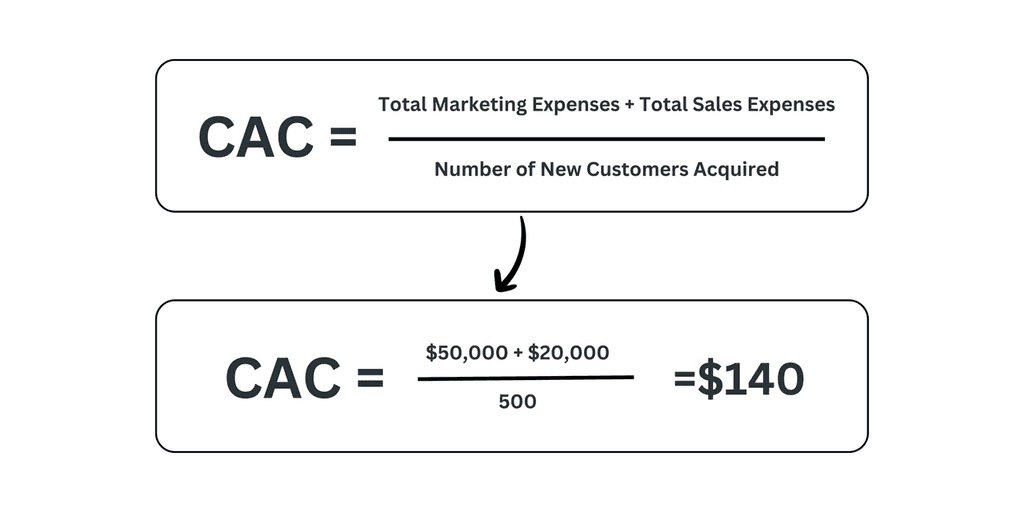
To break it down:
Total Sales and Marketing Expenses: This includes all costs associated with your marketing efforts, such as ad spend on platforms like Google Ads, salaries for your sales and marketing teams, marketing automation software, costs of marketing campaigns, and any other related expenses.
Number of New Customers Acquired: This is the total number of new customers gained within the same period.
For example, if your startup spent $50,000 on sales and marketing in a month and acquired 100 new customers during that period, your CAC would be: $500
This means you are spending $500 to acquire each new customer. By regularly calculating your CAC, you can assess the effectiveness of your customer acquisition process and make informed decisions on optimizing your marketing strategy.
Monitoring and managing your CAC helps in identifying which marketing channels and strategies yield the best return on investment, allowing you to focus your efforts on the most cost-effective methods for acquiring customers.
Why It is Crucial to Manage Customer Acquisition Cost for Startups
For startups, managing Customer Acquisition Cost (CAC) is not just important—it’s essential for survival and growth.
Unlike established companies, startups often operate with limited resources and tighter budgets, making every dollar spent on acquiring new customers critical.
Here’s why managing CAC is particularly crucial for startups:
Resource Allocation and Efficiency: Startups need to make the most of their limited resources. By keeping CAC low, startups can allocate their budgets more efficiently, ensuring that funds are directed towards the most effective customer acquisition channels. This helps in maximizing the return on investment (ROI) from marketing efforts and avoiding wasteful expenditure.
Sustainable Growth: High CAC can quickly eat into a startup’s cash flow, making it difficult to achieve sustainable growth. By managing CAC, startups can ensure that the cost of acquiring new customers is balanced with the revenue those customers generate, leading to a more sustainable business model. This balance is crucial for maintaining healthy cash flow and ensuring long-term viability.
Investor Confidence: Investors closely scrutinize a startup’s financial metrics, including CAC, before deciding to invest. A high or poorly managed CAC can be a red flag, indicating inefficiency and potential scalability issues. Conversely, a low and well-managed CAC demonstrates that a startup has a solid customer acquisition strategy and can grow efficiently, making it more attractive to investors.
Competitive Advantage: In the highly competitive startup ecosystem, those that manage their CAC effectively can outmaneuver competitors. Lower CAC allows startups to reinvest savings into other growth initiatives such as product development, market expansion, or customer service enhancements, providing a competitive edge.
Profitability and Customer Lifetime Value: Managing CAC is directly linked to profitability. If the cost to acquire customers is too high relative to the revenue they generate, it’s challenging to achieve profitability. Startups need to ensure that their CAC is lower than the customer lifetime value (CLV) to maintain a profitable customer base. This means acquiring customers at a cost that allows for a positive margin over their lifetime with the company.
Scalability: Efficiently managing CAC is essential for scaling a startup. As you grow, the ability to maintain or reduce CAC while increasing customer acquisition can exponentially boost growth. Startups that can scale their customer acquisition processes without proportionally increasing costs will find it easier to expand their market share and reach.
In summary, for startups aiming to achieve long-term success, managing CAC is a critical part of the overall business strategy.
By focusing on reducing and optimizing CAC, startups can set the foundation for robust and sustainable business growth.
Benchmarking: Average CAC for Startups
Understanding the average Customer Acquisition Cost (CAC) across different industries can provide valuable insights for startups aiming to optimize their customer acquisition strategies.
By benchmarking against industry standards, startups can assess whether their CAC is competitive and identify areas for improvement.
Below is an analysis of average CAC for both B2B and B2C segments across various industries:
Industry | B2B | B2C |
Aerospace & Defense | $722 | N/A |
Addiction Treatment | $432 | $506 |
Automotive | $692 | $234 |
Aviation | $778 | $708 |
Biotech | $694 | N/A |
Business Consulting | $656 | N/A |
$595 | $94 | |
Construction | $349 | $294 |
Cybersecurity | $429 | $73 |
eCommerce | $84 | $68 |
Engineering | $566 | N/A |
Entertainment | $329 | $106 |
Environmental Services | $495 | $197 |
Financial Services | $923 | $173 |
Higher Education & College | $1,424 | $116 |
HVAC Services | $380 | $177 |
Industrial IoT | $673 | $247 |
IT & Managed Services | $583 | $98 |
Legal Services | $915 | $457 |
Manufacturing | $784 | N/A |
Medical Device | $628 | $126 |
Oil & Gas | $857 | $176 |
PCB Design & Manufacturing | $494 | N/A |
Pharmaceutical | $178 | $88 |
$923 | $165 | |
SaaS | $273 | $166 |
Software Development | $761 | N/A |
Solar Energy | $471 | $247 |
Transportation & Logistics | $584 | $147 |
Strategic Takeaways for Startups
Leverage Efficient Channels: Startups in low CAC industries like eCommerce should continue leveraging digital marketing channels that offer high efficiency and low costs. Consider expanding efforts in SEO, content marketing, and social media campaigns to maintain low CAC.
Optimize High CAC Strategies: For startups in high CAC industries like Higher Education and Legal Services, it’s crucial to optimize customer acquisition strategies. This might involve refining targeting methods, enhancing lead qualification processes, and investing in marketing automation software to improve efficiency.
Invest in Personalized Marketing: Industries with high B2C CACs can benefit from personalized marketing efforts. For instance, startups in the Aviation and Automotive sectors should focus on creating hyper-personalized email campaigns and retargeting ads to lower CAC by directly addressing customer needs and preferences.
Focus on Customer Lifetime Value (CLV): Startups should balance CAC with customer lifetime value. By focusing on customer retention strategies, startups can ensure that the cost of acquiring customers is offset by the revenue generated over the customer’s lifetime. Implement loyalty programs, upselling, and cross-selling strategies to enhance CLV.
Benchmark Regularly: Continuously benchmark your CAC against industry standards to identify trends and areas for improvement. Use this data to make informed decisions about where to allocate marketing spend and how to adjust your customer acquisition strategy.
Adopt Multi-Channel Approaches: Diversify your customer acquisition channels to spread risk and increase efficiency. Utilize a mix of content marketing, PPC advertising (e.g., Google Ads), social media, and direct sales to find the most cost-effective customer acquisition channel for your startup.
Read More: How SaaS Businesses Can Slash Customer Acquisition Costs and Boost Growth
Proven Strategies to Lower Your Startup’s CAC
Lowering the Customer Acquisition Cost (CAC) is crucial for startups aiming to achieve sustainable growth and profitability. Here are some proven strategies to help reduce your startup’s CAC:
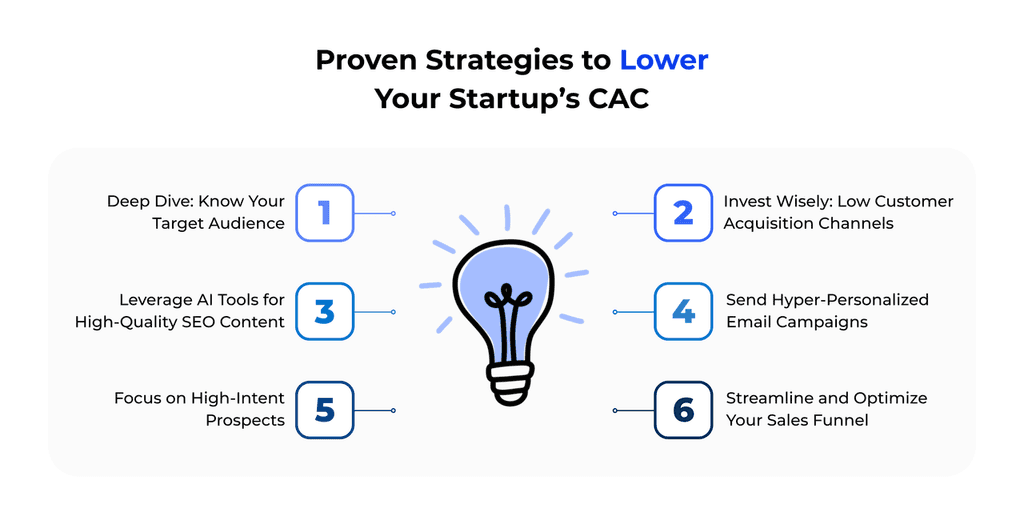
Deep Dive: Know Your Target Audience
Understanding your target audience is the foundation of any successful customer acquisition strategy. Startups should invest time and resources into thoroughly researching and defining their customer segments:
Create Detailed Buyer Personas
Develop detailed buyer personas that include demographic information, pain points, preferences, and purchasing behavior. This helps in tailoring your marketing efforts to meet the specific needs of your ideal customers.
Use Customer Data
Leverage customer data from various touchpoints to gain insights into your audience’s behavior and preferences. Tools like Google Analytics and CRM systems can provide valuable data to refine your customer acquisition process.
Segment Your Audience
Divide your target audience into smaller segments based on common characteristics. This allows for more personalized marketing efforts and can improve the effectiveness of your campaigns, ultimately reducing acquisition costs.
Invest Wisely: Low Customer Acquisition Channels
Choosing the right marketing channels can significantly impact your startup’s CAC. Focus on channels that offer the highest return on investment:
Content Marketing
Invest in creating high-quality, SEO-friendly content that attracts organic traffic. Blog posts, infographics, and videos can drive traffic and generate leads without the high costs associated with paid advertising.
Social Media Marketing
Utilize social media platforms to engage with potential customers. Organic social media efforts, such as regular posting and community engagement, can be cost-effective ways to build brand awareness and attract new customers.
Email Marketing
Sending hyper-personalized emails to your prospects can be an effective and low-cost way to nurture leads and convert them into paying customers. Use segmentation and personalization to increase engagement rates.
Referral Programs
Encourage your existing customers to refer new ones through referral programs. Offering incentives for referrals can be a cost-effective way to acquire high-quality leads.
Leverage AI Tools for High-Quality SEO Content
Artificial Intelligence (AI) tools can help startups create high-quality, SEO-friendly content more efficiently, reducing the costs associated with content creation and optimization:
AI-Powered Content Creation
Tools like Jasper and Copy.ai can assist in generating high-quality content quickly. These tools use AI to produce engaging and relevant content that can attract and retain your target audience.
SEO Optimization
Utilize AI tools such as Surfer SEO and Clearscope to optimize your content for search engines. These tools analyze top-performing content and provide recommendations on keyword usage, readability, and structure, helping to improve your search rankings and attract more organic traffic.
Predictive Analytics
Use AI-driven predictive analytics to understand which types of content and keywords are most likely to perform well. This helps in focusing your content creation efforts on areas that will yield the highest return on investment.
Send Hyper-Personalized Email Campaigns
One of the most effective ways to reduce Customer Acquisition Cost (CAC) for startups is by leveraging hyper-personalized email campaigns.
Hyper personalization goes beyond addressing recipients by their first name; it involves tailoring content to meet the specific needs and preferences of each prospect.
Here’s how to achieve this:
Leverage Customer Data
Use data from various touchpoints to understand your prospects’ interests, behaviors, and needs. This data can come from website interactions, social media engagements, past purchases, and more.
The more you know about your prospects, the more personalized and relevant your emails can be.
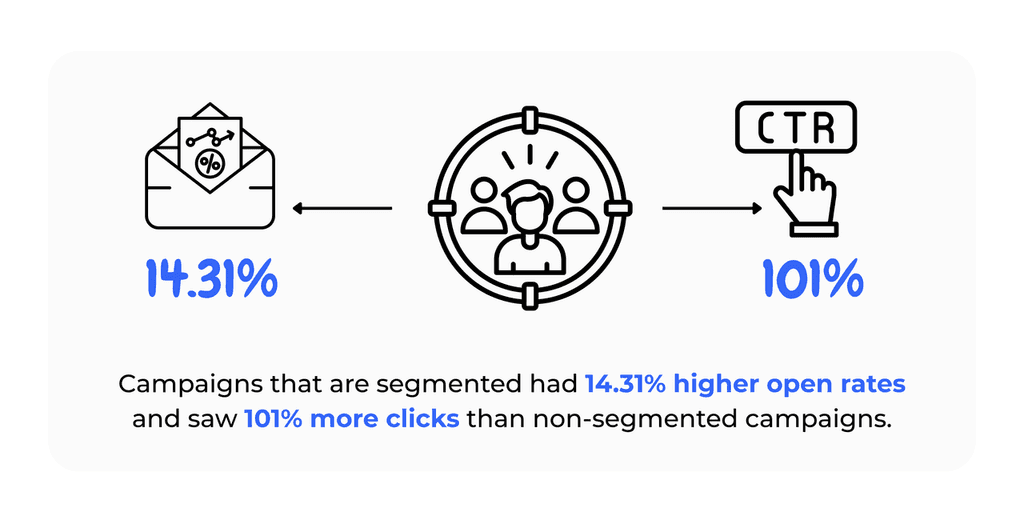
Segment Your Email List
Divide your email list into segments based on common characteristics such as industry, job role, or previous interactions with your brand.
Segmentation allows you to send more targeted and relevant messages, increasing the chances of engagement and conversion.
Use Hyper-Personalization Tools
Platforms like GoCustomer can significantly enhance your email personalization efforts. GoCustomer is a customer acquisition platform that helps businesses nurture leads by sending hyper-personalized emails.
It collects and updates information from various sources, including LinkedIn and websites, to create highly personalized emails.
With GoCustomer, you can create thousands of unique emails for all of your prospects in just a few minutes, ensuring each email is tailored to the recipient’s specific context and needs.
A/B Testing and Optimization
Continuously test different elements of your email campaigns, such as subject lines, email copy, and call-to-action buttons. A/B testing helps you understand what resonates best with your audience, allowing you to refine your approach and improve overall campaign performance.
Automate and Scale
Use GoCustomer to streamline and automate your email campaigns. Automation allows you to send personalized emails at scale, ensuring timely and relevant communication with your prospects.
Set up automated workflows that trigger emails based on specific actions or behaviors, such as downloading a resource or abandoning a shopping cart.
Measure and Analyze
Track key metrics such as open rates, click-through rates, and conversion rates to evaluate the effectiveness of your email campaigns. Use these insights to make data-driven decisions and continuously improve your personalization strategies.
By incorporating hyper-personalized email campaigns into your customer acquisition strategy, you can engage your prospects more effectively and reduce your CAC.
Personalized emails not only enhance the user experience but also increase the likelihood of conversions, driving sustainable growth for your startup.
Focus on High-Intent Prospects
Focusing on high-intent prospects is crucial for startups aiming to reduce their Customer Acquisition Cost (CAC). High-intent prospects have shown clear interest in your product or service and are more likely to convert into paying customers.
Here’s how to identify and target them:
Identify High-Intent Signals
Look for behaviors such as visiting your pricing page, downloading high-value content, requesting a demo, or frequently engaging with your emails and social media posts.
Use Lead Scoring
Implement a lead scoring system to rank prospects based on their level of engagement and readiness to purchase. Prioritize leads with the highest scores to focus your sales efforts effectively.
Retargeting Campaigns
Utilize retargeting campaigns to re-engage high-intent prospects who have interacted with your website or content but haven’t yet converted.
Also read: A Comprehensive Guide to Customer Engagement Models
Offer Free Trials or Demos
Encourage high-intent prospects to experience your product or service firsthand by offering free trials or demos, reducing the perceived risk and moving them closer to purchase.
Streamline and Optimize Your Sales Funnel
An optimized sales funnel is essential for reducing CAC and improving conversion rates. Here’s how to streamline your sales funnel for better efficiency:
Map Out Your Sales Funnel
Clearly define each stage of your sales funnel from initial awareness to final conversion. Identify bottlenecks or drop-off points that need to be addressed.
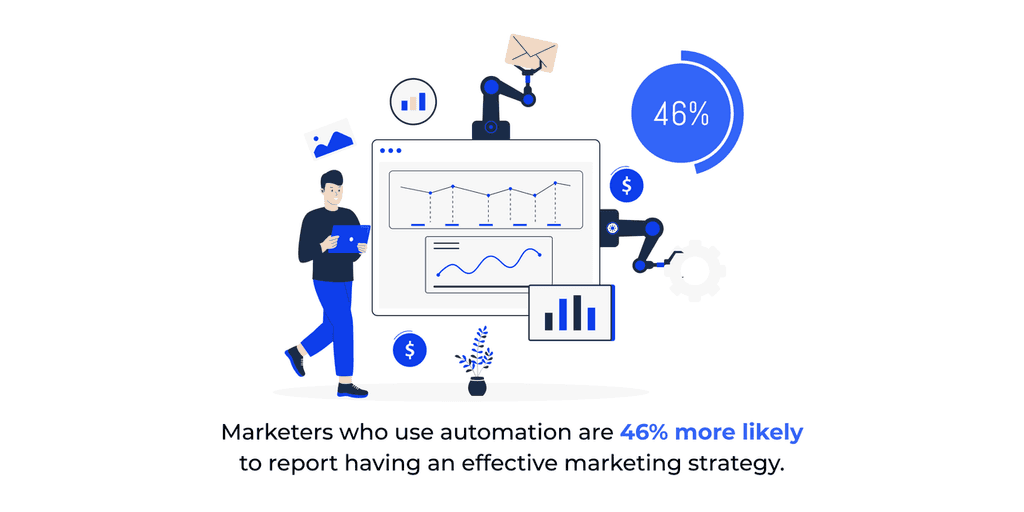
Nurture Leads with Marketing Automation
Implement marketing automation software to nurture leads through the funnel. Automated workflows can send personalized content and follow-up emails based on prospect actions, keeping them engaged and moving towards conversion.
Align Sales and Marketing Teams
Ensure that your sales and marketing teams are working together seamlessly to improve lead handoff and provide consistent messaging throughout the customer journey.
Simplify the Buying Process
Make it as easy as possible for prospects to make a purchase with a user-friendly website, clear call-to-action buttons, and a straightforward checkout process.
Test and Iterate
Regularly test different elements of your sales funnel, such as landing pages and email campaigns. A/B testing helps determine what works best for your audience and continuously improves your funnel’s performance.
Conclusion: Achieving Cost-Efficient Growth
Reducing Customer Acquisition Cost (CAC) is paramount for startups striving for sustainable and profitable growth. By understanding and managing CAC effectively, startups can allocate their resources more efficiently, ensuring every marketing dollar spent drives maximum value.
Implementing the strategies discussed—from knowing your target audience and investing in low-CAC channels to leveraging AI tools for high-quality content and sending hyper-personalized email campaigns—can significantly impact your ability to acquire customers cost-effectively.
Additionally, focusing on high-intent prospects and optimizing your sales funnel further streamlines the acquisition process, reducing waste and improving conversion rates.
Remember, the goal is not just to lower customer acquisition costs but to do so while maintaining or even enhancing the quality of customer acquisition.
This balance will help your startup achieve sustainable growth, build a loyal customer base, and establish a strong market presence.
As you embark on this journey towards cost-efficient growth, keep in mind that every challenge is an opportunity.
Each optimization you make, each strategy you implement, brings you one step closer to your goals. The path to success is paved with continuous learning and adaptation, and your startup is well-equipped to navigate this journey.
Stay focused, stay innovative, and stay determined. By continuously monitoring and optimizing your customer acquisition strategies, embracing new tools and techniques, your startup can achieve cost-efficient growth and thrive in a competitive landscape.

Reach more customers with your cold emails
Table of Contents
In a nutshell
Customer Acquisition Cost (CAC) is the total cost associated with acquiring a new customer, including marketing and sales expenses. For startups, managing CAC is crucial because it impacts profitability and scalability. A lower CAC means you can acquire customers more cost-effectively, ensuring sustainable growth and better resource allocation.
To calculate CAC, divide the total sales and marketing expenses by the number of new customers acquired within a specific period. For example, if you spent $50,000 on marketing and sales in a month and acquired 100 new customers, your CAC would be $500.
A "good" CAC varies by industry and business model. Generally, a good CAC is one that is lower than the Customer Lifetime Value (CLV). This ensures that the revenue generated from a customer over their lifetime exceeds the cost of acquiring them, leading to profitability.
AI tools can help reduce CAC by optimizing marketing campaigns, personalizing customer interactions, and improving lead scoring. Tools like GoCustomer can create hyper-personalized email campaigns at scale, ensuring efficient and targeted communication with prospects.
CAC and CLV are closely related metrics. CLV represents the total revenue a business can expect from a customer over their lifetime, while CAC is the cost of acquiring that customer. For a sustainable business model, the CLV should be significantly higher than the CAC.

Subscribe to our Newsletter!
Digital advice costs money but we send it to
your inbox for free.
Related Blogs
Time is Money, and We're About to Save You Both!
Book a quick demo of our email marketing tools and watch as we transform your leads into loyal customers.

![A loop illustration w-auto h-[70px]](/_next/image?url=%2F_next%2Fstatic%2Fmedia%2Fvector1.7738e6de.png&w=256&q=75 "GoCustomer Platform Image")

Get in touch
Subscribe to our weekly Newsletter and receive updates via email.