

Email Marketing
Published:
Email Marketing
Qasim Farooq
Share
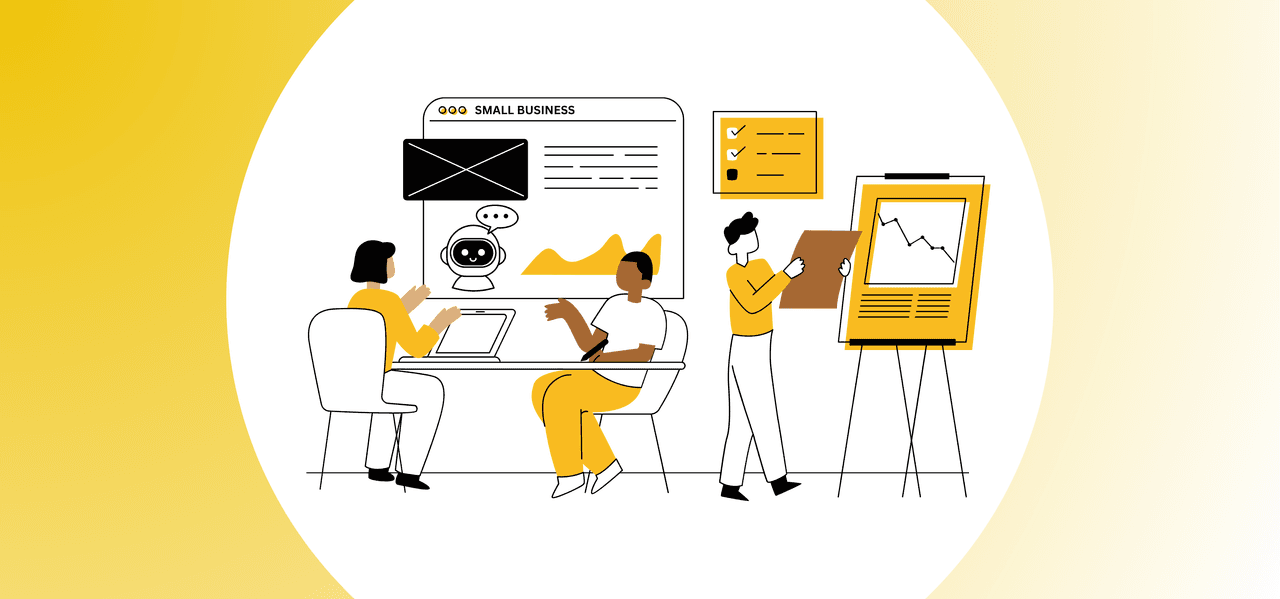
You’re running a business—probably wearing five hats before breakfast. There’s customer support to manage, inventory to track, sales calls to return, and oh yeah… you were supposed to send that newsletter yesterday. But let’s be honest—email marketing? It keeps slipping to the bottom of the list.
You’re not ignoring it because it doesn’t matter. You’re drowning in everything else. And when you finally sit down to write an email, you’re staring at a blinking cursor, wondering what to say, how to say it, and whether anyone will even open it.
Sound familiar?
Maybe your open rates are flat, click through rates are worse, or you’re just plain out of ideas. Maybe you're worried about hitting spam filters, writing misleading subject lines, or guessing wrong about what your audience wants.
These aren’t just email marketing challenges—they're blockers standing between you and real business growth.
Here’s the good news: you don’t have to tackle all of it alone.
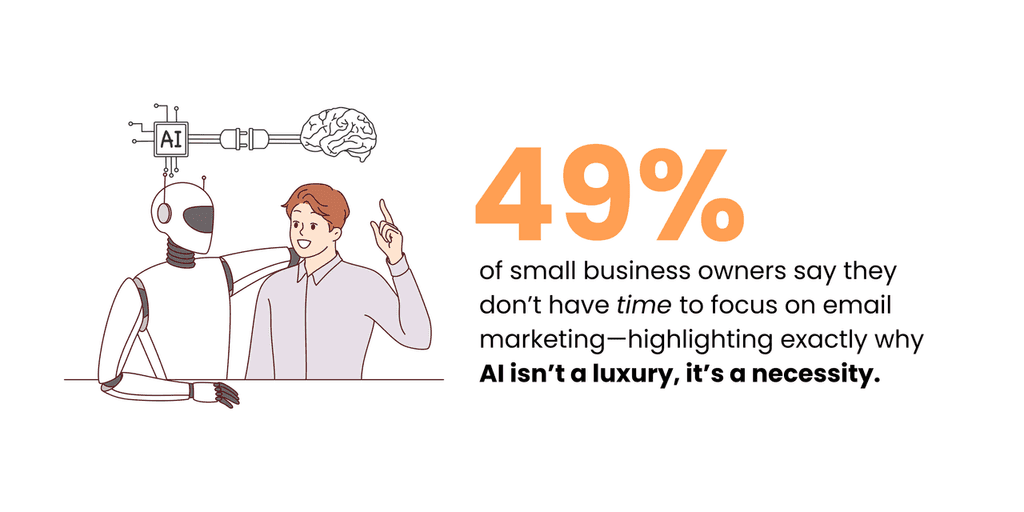
AI is changing the game for small business owners. It can help you send better emails, faster—without sounding like a robot and without burning out. From writing subject lines that grab attention to segmenting based on customer behavior and cleaning your list so you’re not marketing to ghosts—AI can do the heavy lifting.
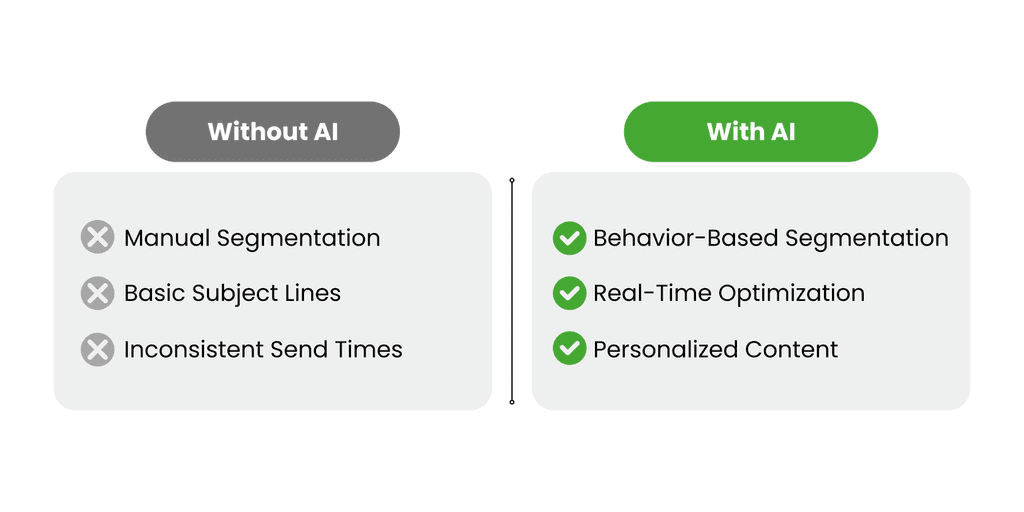
This blog breaks down the most common email marketing challenges for small business owners and shows exactly how AI can fix each one.
Step by step. No engineers needed. Just smarter tools, less guesswork, and more time for the work only you can do. Ready? Let’s get into it.
The Real Problem Isn’t Email Marketing—It’s the Grind Behind It
Let’s get one thing straight: the issue isn’t email marketing itself. The real pain is everything that comes before you hit send.
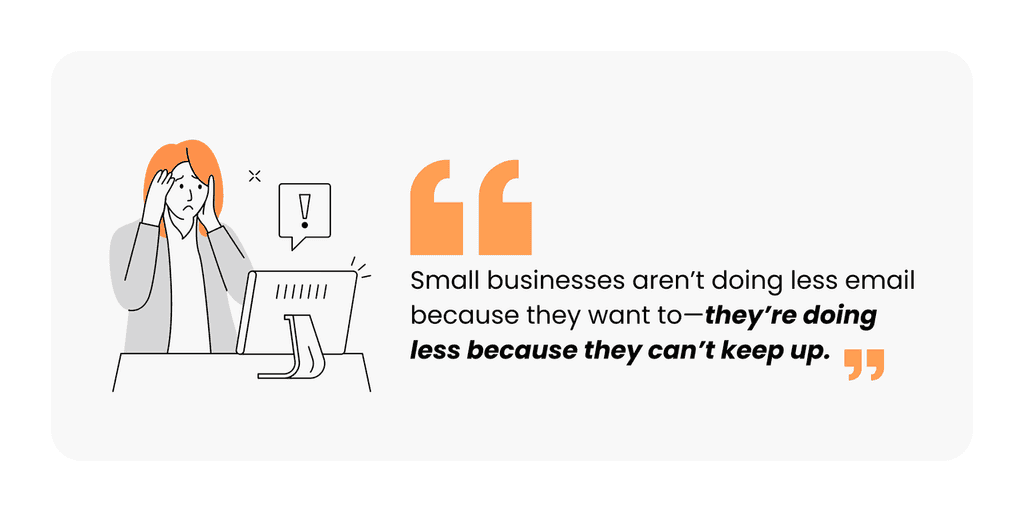
For small business owners juggling support tickets, website updates, and trying not to forget payroll—it’s not that you don’t believe in email marketing. It’s that your email marketing efforts are buried under a mountain of day-to-day chaos.
You’re not sending fewer emails because you’re lazy. You’re sending fewer because your marketing strategy is running on fumes. Finding time to brainstorm subject lines, write the copy, segment your email subscribers, and dodge spam filters? That’s a full-time job—and you already have one of those (or three).
The real email marketing challenges look like this:
Idea fatigue: You’re tired of trying to “get creative” when your to-do list is breathing down your neck.
Segmentation paralysis: You know you should personalize, but who has time to break down every behavior and past interaction manually?
Content production burnout: Even when you do sit down to write, you’re staring at a blank screen and a looming deadline.
And while all of this is happening, your click through rates suffer, your customer retention dips, and your list quietly fills up with disinterested subscribers.
This is where AI steps in—not to replace your voice, but to take some of the load off. The next section breaks down exactly how AI tools can help solve these email marketing challenges for small business owners—without the stress, the burnout, or the guesswork.
6 AI-Powered Email Marketing Moves That Small Businesses Can Actually Pull Off
No engineers. No bloated software. Just real solutions built for small teams with big goals.
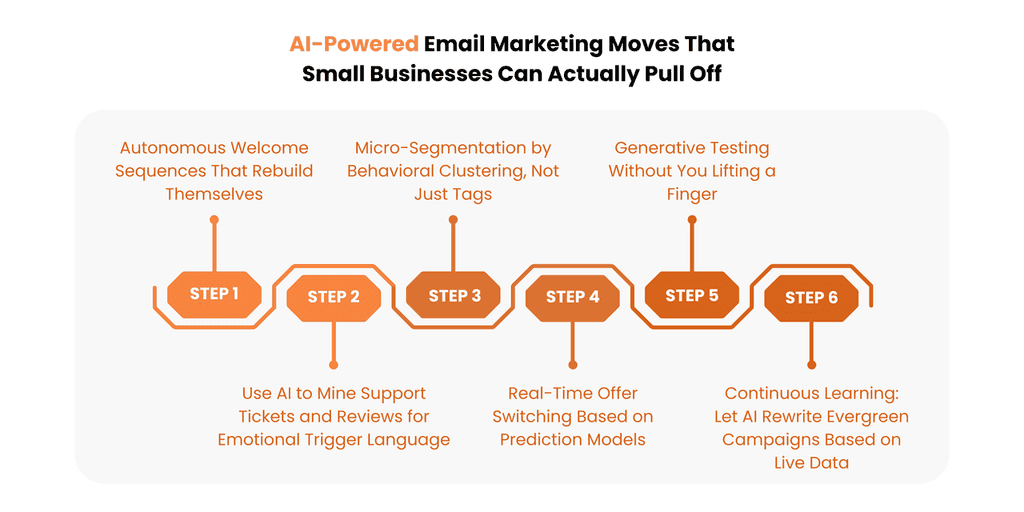
1. Autonomous Welcome Sequences That Rebuild Themselves
The welcome email is your first impression—and it shouldn’t stay the same forever.
With AI, you can automate a smarter email marketing campaign from the first click:
Every 500 new signups? Let AI review performance and rewrite the intro emails based on real engagement patterns. No manual rewrites. No outdated messaging.
New subscribers aren’t static. AI can shift the personalized communication based on current behavior—not just when they signed up.
And the cherry on top? Auto-sunset cold leads. No more manually tagging inactive folks. AI can clean your email subscription list by removing those who never engage, helping you avoid spam complaints and maintain sender reputation.
Smart, simple, and saves your sanity.
2. Use AI to Mine Support Tickets and Reviews for Emotional Trigger Language
Trying to “get into the customer’s head” doesn’t need to be a guessing game.
AI can comb through your customer feedback, chat logs, and product reviews to uncover what actually moves people. Not just what they say—they liked. But how they felt.
Here’s what you can do:
Let AI analyze real user language and pick out emotional keywords that speak directly to your target audience.
Turn those dry product bullets into persuasive copy that hits home—whether it’s a concern, a goal, or a dealbreaker.
Avoid spammy words and instead generate compelling subject lines that connect emotionally—without landing in junk folders.
This turns the raw data you already have into a goldmine of relevant content for your next marketing campaign.
3. Micro-Segmentation by Behavioral Clustering, Not Just Tags
Let’s be honest: tagging people based on “opened last 30 days” isn’t really email marketing. It’s a guess. And for small business owners trying to make the most of every send, guessing just isn’t good enough.
AI can take your email campaigns to the next level by analyzing actual customer behavior—not just activity logs. We’re talking real-time engagement patterns that help you group subscribers by how they act, not what they clicked once.
You can build micro-segments like:
Serial skimmers – people who open emails but never click
Late-night clickers – folks who always engage after hours
One-click wonders – high converters that only need one touch
These aren’t just fun names. They’re usable groups that AI identifies through behavioral clustering. And when you train your own GPT on past email marketing campaign data, it can even predict lifetime value behavior—helping you prioritize the people most likely to stick around and become loyal customers.
More personalized emails, fewer disinterested subscribers, and a marketing strategy that’s grounded in real data? That’s what smart segmentation looks like.
4. Real-Time Offer Switching Based on Prediction Models
Static offers are fine—if you're still emailing like it's 2012. But if you want your email marketing efforts to match how fast your audience moves, you need dynamic tools.
With AI-driven prediction models, the offer inside your email can change before the recipient even opens it. That’s right—offers tailored to their purchase intent, not your calendar.
Here’s how it works:
AI tracks behavior across channels to predict intent (clicks, browsing history, past interactions, etc.).
It then injects the right message: urgency-based for the fence-sitter, loyalty rewards for repeat buyers, or exclusive early access for high-value segments.
It also helps avoid spam triggers by removing unnecessary pushy language—without hurting conversion.
This approach helps improve click through rates, reduce spam complaints, and increase customer retention by keeping your messaging aligned with what people actually want—not what you think they want.
Bottom line: the same email looks different for different users. Because it should.
Also read: Strategies for Small Business Customer Acquisition and Lead Generation
5. Generative Testing Without You Lifting a Finger
A/B testing? Great in theory. Brutal in practice—especially when your sample size is small, your list is tired, and you barely have time to test two subject lines, let alone ten.
Here’s where AI comes in swinging.
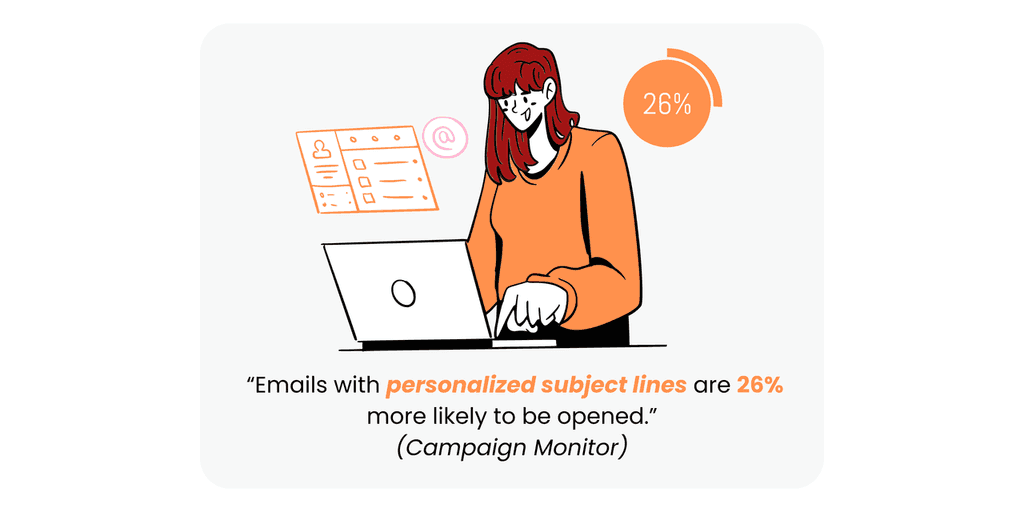
It can test multiple personalized subject lines live, kill the underperformers in minutes, and reroute the rest of the traffic to the best-performing option.
Same goes for call to action buttons, hero images, body copy—even layout variations.
It learns what works, then applies that knowledge automatically—without you ever touching a spreadsheet or setting up a new marketing campaign.
And since AI isn’t using random guesses but patterns based on real customer feedback and email metrics, it helps avoid misleading subject lines, reduces bounce rates, and strengthens your sender reputation.
No more “set it and hope for the best.” Just smart, fast decisions made while you focus on everything else.
6. Continuous Learning: Let AI Rewrite Evergreen Campaigns Based on Live Data
Evergreen doesn’t mean “set it and forget it.” It means “update it often enough to stay relevant”—but that’s where most small teams drop the ball.
That abandoned cart flow you built six months ago? Yeah, it’s probably collecting dust and pushing stale offers. Your once-performing email marketing campaign might now be hitting spam filters or getting ignored altogether.
Enter AI.
Instead of waiting until performance tanks, AI tools can:
Pull fresh customer feedback from reviews, support tickets, and chat logs.
Grab new blog posts, product updates, or seasonal offers.
Automatically rewrite or refresh your email content each week—without human effort.
That means your campaigns adapt to what people are actually saying, doing, and needing—keeping email marketing efforts relevant, timely, and aligned with customer behavior.
It also helps with sender's reputation, because emails that engage get delivered. Emails that get ignored? They slowly chip away at your credibility with email providers and email clients.
So if you're tired of remembering to refresh old flows, let AI handle it. You focus on growing the business. Let the machine keep your personalized emails sharp.
What Tools Make This Possible (Without a 12-Month Contract or an Engineer)?
You don’t need to be a tech giant—or even a tech person—to make this work.
There are AI tools built specifically for lean teams, small business owners, and medium sized businesses who want to take control of their digital marketing without drowning in code or long contracts.
Here are four that punch above their weight:
GoCustomer
GoCustomer uses AI-powered data enrichment agents like the LinkedIn Agent and Website Agent to hyper personalize emails in real time.
These tools pull current job titles, recent activity, and browsing behavior from public profiles and website interactions—so your emails reflect who someone is today, not who they were when they signed up. That means smarter, more relevant messages without any manual work.
It’s built for email marketers who want more than basic automation—offering real-time content updates, behavioral segmentation, and adaptive email workflows. Perfect for onboarding, lead generation, and keeping your subscribers engaged.
Snov
Perfect for cold outreach and growing your email subscription list. AI helps write personalized subject lines, optimize for click through rates, and track engagement patterns with AI-powered follow-up emails so you can ditch the guesswork.
Instantly
If your priority is speed, Instantly lives up to the name. Great for rapid testing of subject lines, dynamic follow-ups, and mobile responsive design. You’ll spend less time tinkering and more time watching numbers go up.
Kit
For eCommerce shops looking to increase customer loyalty and push out exclusive discounts automatically. Kit uses AI to watch buyer behavior and nudge them with perfectly timed offers—without spamming or over-emailing.
When you’re picking tools, here’s what actually matters:
Open APIs – so you can plug into your existing email service providers or CRMs
Training with your data – not someone else’s. That’s how you get actual personalization
Action-based triggers – like sending when someone hovers but doesn’t click
Data enrichment features – because more context = smarter emails
Bottom line? “No-code AI” isn’t a fantasy. It’s not just for techies or teams with engineers. It’s your next move if you want to fix your email marketing challenges without adding more to your plate.
You might like: Picking the Best Email Marketing Software for Your Small Business Success
AI Won’t Replace You, But It’ll Replace Your Email Stress
You don’t need more hustle—you need smarter tools. AI isn’t coming for your job, but it is here to fix what’s broken behind the scenes of small business email marketing.
When you’re juggling everything else, it’s easy to fall behind on testing different subject lines, monitoring sender reputation, or staying compliant with things like sender policy framework.
And let’s be honest—most of that isn’t why you started your business in the first place.
AI helps you clean up the chaos. It streamlines the opt-in process, reduces the risk of being flagged by internet service providers, and helps you avoid spammy words that land your emails in junk folders.
It pulls in real-time behavior from your website visitors, ensures mobile optimization, and adapts your messaging so you don’t lose touch with your audience—or fill your list with disinterested subscribers.
For the solo email marketer, or the team of two wearing ten hats, this isn’t about doing more.
It’s about doing smarter. AI helps with integrating data, crafting personalized emails, and building trust without burning out. Whether you’re offering early access, launching a new email service, or trying to achieve measurable ROI—this is how you finally get your time back.
And yeah, email marketing still works. Now it just works for you.

Reach more customers with your cold emails
Table of Contents
In a nutshell
AI enhances email marketing by automating tasks like content creation, audience segmentation, and send-time optimization. This allows small businesses to deliver personalized messages efficiently, increasing engagement and reducing manual effort.
Yes, many AI-powered email marketing tools offer scalable pricing models suitable for small businesses. These tools often provide free tiers or affordable plans that include essential features like automation and analytics.
When used thoughtfully, AI can maintain and even enhance personalization. It enables consistent, tailored communication without sacrificing the unique voice and values of your brand.
Most modern AI tools are designed to integrate seamlessly with popular email marketing platforms, requiring minimal technical expertise for setup and use.
AI provides deeper insights by identifying patterns and predicting outcomes, allowing marketers to make data-driven decisions and refine strategies for better results.
Subscribe to our Newsletter!
Digital advice costs money but we send it to
your inbox for free.
Related Blogs
Time is Money, and We're About to Save You Both!
Book a quick demo of our email marketing tools and watch as we transform your leads into loyal customers.

![A loop illustration w-auto h-[70px]](/_next/image?url=%2F_next%2Fstatic%2Fmedia%2Fvector1.7738e6de.png&w=256&q=75 "GoCustomer Platform Image")
Get in touch
Subscribe to our weekly Newsletter and receive updates via email.