

Customer Experience
Published:
Customer Experience
Qasim Farooq
Share
In a business environment that has traditionally remained revenue-centric, customer experience has often taken a backseat.
But a closer look at how businesses operate reveals that the significance of having a good customer experience extends beyond the obvious.
In fact, the ripple effect of poor customer experience can consume a business whole, as it impacts brand reputation, employee morale, and even operational efficiency.
We all remember Walmart's distasteful Juneteeth-themed Ice-cream in 2022, which led to much uproar and social media backlash, leading to a PR crisis for the brand. A classic example of how not knowing your customer needs can land you into trouble.
This also shows that one bad experience can spread fast like a virus. Because honestly, a negative review doesn’t just sit quietly in the digital landscape most businesses operate in. It gets shared, reposted, and before you know it, your brand image is taking a nosedive.
I’ve seen it happen, and you must have too - and it is not a pretty sight.
But it doesn’t stop there. What about the impact on your team? Having to consistently deal with unhappy, frustrated customers day in and day out, can really drain a person’s energy and therefore the overall productivity.
And then there’s the bottom line, which, let’s face it, is the bloodline of any business. How many times have we heard about customers abandoning their carts because they got fed up with a faulty checkout process or unclear guidelines?
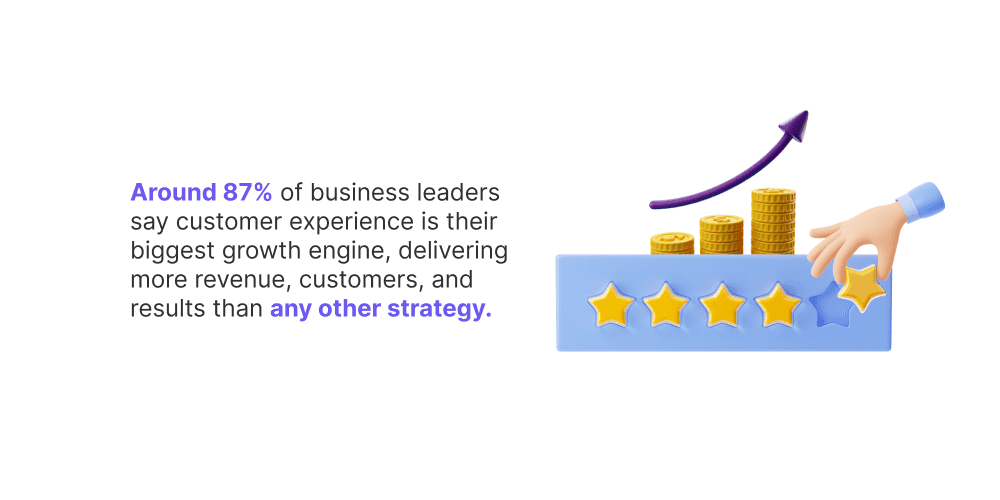
This sentiment is reflected in the 2024 study by Qualtrics which reveals that bad customer service puts about $3.7 trillion of annual sales annually at risk, with over half the customers saying that they would cut spending with a business after a bad customer experience.
Staggering, isn’t it? But not at all surprising in my opinion.
After all, in today’s cut throat business environment, where customers have an infinite number of choices, why should they stick around if they’re not happy? They won’t, and they don’t.
So, if you ask me, neglecting customer experience isn’t just bad strategy, it’s a recipe for disaster. Our job as marketers should therefore be to keep our customers satisfied, and their expectations met.
Because honestly, if we’re not making it a top priority, we’re not just missing out, we’re falling behind our competition.
So how exactly do we do that?
A good customer experience strategy is one that is customer centric. It understands what the customer wants, personalizes their customer journey and engages them proactively.
We’ll look into this in more detail.
But first, let’s understand what customer experience truly means in 2025.
Understanding Customer Experience in 2025: Why It Matters
Customers today care more about experiences than the product.
Think about it - what prompts you to buy the product from a specific brand? Is it it’s usability? Probably not. After all, there are a thousand other similar brands offering a similar product.
Why do people buy their smartphones from Apple? Why does it have the biggest market share of just over 27.75% (as of July 2024) - compared to the hundreds and thousands of other smartphone brands?
Well, it all boils down to the customer experience that they provide from purchase to after sale.
Apple stores are hubs of a premium retail experience, with knowledgeable staff and hands on
product displays - where customers feel valued and understood.
Moreover, post-purchase services like Apple Care and 24/7 online support serve to enhance customer satisfaction and trust in the brand, by addressing their concerns and queries in the most effective manner.
This exceptional customer experience is why 85% of customers who own an Apple product are likely to purchase another Apple product in the future.
So you see, customer experience can do wonders for your brand.
To drive this idea home, let’s list out some ingredients of a positive customer experience.
Easily navigable website where your customer can easily find what they are looking for.
Personalized recommendations and tailored content that makes every interaction feel like it’s customized just for them.
24/7 customer support providing timely and empathetic responses to any query or concern that your customer may have.
Smooth and consistent omnichannel customer experience across customer service interactions.
Proactive engagement throughout the customer journey to keep your customers informed and connected with your brand.
Effective incorporation of customer feedback into your overall business experience so they feel heard and understood.
You see, it’s that simple to incorporate good customer experience into your business strategy.
Now, what if I were to flip the script. What makes a bad customer experience and how does that affect your business?
Well a bad customer experience, though devastating for any business, is equally easy to identify.
A clunky website that’s very difficult to navigate
General content and product descriptions - that don’t quite hit the mark
Customer service representatives that are either not readily available or don’t understand the customer
General responses to customer queries that do not address customer pain points, or provide an effective resolution to customer problems.
Inconsistent customer experience across various channels - providing an abrupt and frustrating customer journey.
These are some of the points that can quickly lead to customer frustration. And these frustrations can stick with you. How often have we complained about a bad customer experience to our friends? I know I have.
And that's the thing with a bad customer experience. We’re all more likely to vent about a bad experience than rave about a good one.
That’s reason enough why I think businesses should make customer experience a serious part of their business strategy.
In the age of digital virality, you just cannot afford to leave a customer dissatisfied - because, honestly it can take years to build a brand reputation and just one experience for it to all come crashing down, in the eyes of your customers.
Let me quote an example.
A user shared a horrible customer experience they had with UPS on quora. The customer, a long time user of UPS, had insured a fragile, expensive shipment with UPS.
However, when the package was damaged, the company made it incredibly difficult for the customer to file an insurance claim.
The communication, on part of UPS, was poor, their customer support team was unhelpful and their responses were delayed and generic - not directly addressing the customer query.
All of this was a recipe for a poor customer experience. And that is exactly what pushed the said customer, a long time loyal customer, to vow never to use UPS again.
Now what could UPS have done differently? If i were them, I would have done the following:-
Proactive Communication and Empathetic Customer Support: I would've started off by first and foremost acknowledging that there exists a problem and reassuring the customer that their concern was being taken seriously. This would've made the customer feel heard and understood, which is an important aspect of any customer experience.
Streamlined and Expedited the Resolution Process: Further, to reduce further customer inconvenience, I would have put up the case on high priority and streamlined the resolution process. Also designating a dedicated representative for the task would have personalized the service and provided a single point of contact for the customer.
Post-Resolution Follow-Up: After resolving the issue, I as UPS representative would've reached out to the customer with an apology, and maybe a discount to make them realize they are valued as a customer.
Notice how all my efforts would have revolved around making things easier for the customer and converting the inconvenience to a positive customer experience.
This example highlights why customer experience is important and how a single negative experience can drive customers away permanently, and exactly why investing in customer experience matters so much in 2025.
But, how do you measure it?
How To Measure Customer Experience
You can’t improve what you can’t measure.
Therefore, measuring customer experience is essential to gauge how your business is performing in the eyes of your customers and to make the necessary improvements to your customer experience management.
For this purpose, there are a few metrics that you need to consider to get a better understanding of your customer experience outlook.
Let’s list them out and briefly touch on what each covers.

Gauging Brand Loyalty with Net Promoter Score (NPS)
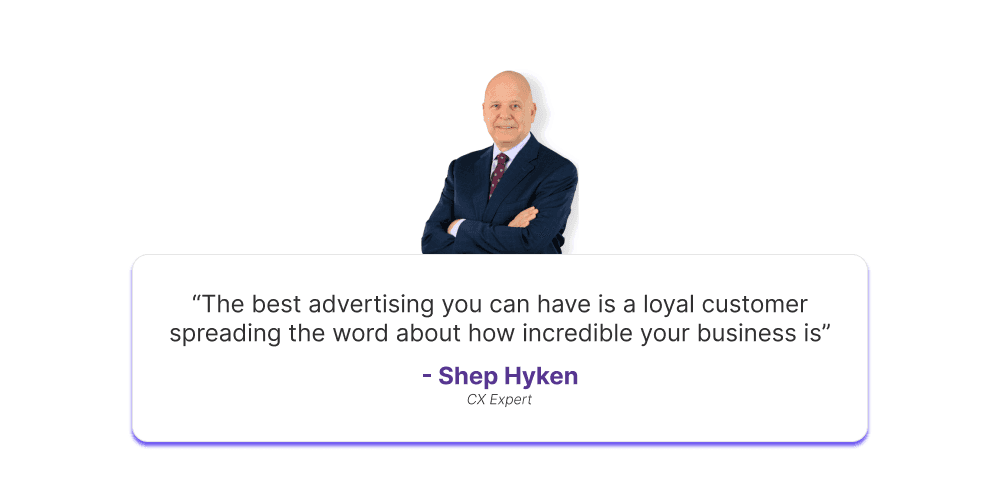
Net Promoter Score (NPS) seeks to quantify the response to a simple question: “How likely are you to recommend this brand to a friend?”
A high NPS score means that the said customer is a promoter and a loyal advocate of your brand. For example, if I like a particular brand - and I am likely to endorse it - I would get a high NPS score.
In contrast, a low NPS score would rank you as a detractor, who is not entirely satisfied by the services your business provides.
Now, how can businesses use these insights?
Well, having a low NPS score overall would signify that your customer expectations aren’t being met and that you need to tweak your customer experience strategy.
In this way, NPS not only gives you a better understanding of how your business is performing in the customer experience front but also indications of where improvement is needed.
Understanding Customer Sentiments with Customer Satisfaction Score (CSAT)
While NPS seeks to measure overall brand loyalty, customer satisfaction score is more immediate in its analysis.
To explain it in simple words, CSAT seeks to measure how happy your customers are with a specific interaction that they had with your business. This can include any aspect of your service - from support calls to a product purchase.
This instant and immediate feedback of customer satisfaction can be collected in multiple ways.
For example, say a customer just purchased a product from your company. After the purchase, you send them short customer satisfaction surveys to rate their purchasing experience with your brand. The customer feedback to this short survey - whether good or bad - would then determine your CSAT score.
This metric is incredibly useful for understanding how specific elements of your business are performing - and can also provide actionable insights by analyzing customer feedback.
For example, if a post customer support survey is consistently giving a low CSAT score that means your customer support service needs improvement.
So, in this way, CSAT can be a helpful metric to not only understand your customer experience performance but also enhance it to serve your customers better.
Measure Business Efficiency with Customer Effort Score (CES)
In my experience, the easier you make things for your customers, the better is their overall experience with your brand.
Customer Effort Score actually measures exactly that - how quickly your business can meet the needs of your customers.
So, whether the customer is making a purchase or engaging with customer support - how quickly they get what they want reflects in the customer effort score.
CES can help businesses pinpoint areas of friction, and consequently work on making interactions smoother and more intuitive.
Businesses can work to reduce CES through multiple means. Some practical steps would include streamlining online processes, making the user interface easier to navigate, integrating AI-driven customer support and providing a consistent omni-channel experience.
All of this is aimed to make the entire customer journey as pleasant and efficient as possible.
Gauge Financial Potential with Customer Lifetime Value (CLV)
Your customer isn’t a one time purchase. It’s a sum collection of all future purchases and interactions with your brand.
CLV gives you a long-term perspective on the financial value of your relationship with a customer - basically a measure of all the potential financial engagements they can have with your business based on how satisfied they are.
So, a high CLV score indicates that customers are satisfied and engaged, leading to repeat business and advocacy.
By keeping an eye on these four metrics, you can get a well-rounded view of how your business is doing with their customer experience strategy.
Having understood what customer experience means in the year 2025 and how you can actually measure it, let’s move on to the main discussion - the hidden costs of neglecting customer experience.
We have already touched on this aspect of our topic briefly, but for further clarity a deeper analysis is needed in my opinion.
So let’s start with the most obvious.
Financial Impacts of Neglecting Customer Experience
When thinking about the impacts of customer experience we need to think beyond the basics of whether customers are happy, whether they’ll come back, or whether they’ll recommend us to their close circles.
The impacts of neglecting customer experience go deeper. Like an onion, it has many layers to it. Let’s peel them off one by one.
Customer Churn
Let me start off by throwing a well researched statistic at you. Did you know that the cost of acquiring a new customer, or customer acquisition, is five times the cost of retaining an existing one? Infact, a 2025 research by Harvard Business Review states that this cost can go up 25 times, in certain cases.
25 times the cost of customer retention! Can you imagine?
Now let’s navigate back to what we were to discuss. The impact of a bad customer experience and customer churn.
Well, we’ve already established that a bad customer experience can lose you customers and impact your overall customer retention. But is it just the customer that you lose? Is it a one time cost? Well, no.
When a customer leaves, we’re not only losing their future business, but we’re also paying to replace them with a new customer.
This would include additional marketing expenses, outreach costs, sales efforts and onboarding costs. The sum total of all this can be 25 times more than had we only invested in customer retention.
That’s a heavy hit on the business revenue. Revenue that could have been used to improve the very experience that caused the customer to leave in the first place.
Decreased Lifetime Value
A business is only as big as the customers that stick around with it.
I’ve seen businesses take off strong but lose momentum and eventually crash, because they’re unable to retain their customers.
Zume Pizza is a very recent example of this. The startup had a lot of initial buzz around it - aiming to revolutionize pizza delivery using robots and AI. It also attracted significant investment of over $400 million.
However, despite the hype, Zume Pizza struggled with maintaining customer satisfaction. High costs, coupled with inconsistent product quality, led to declining customer retention.
And eventually, the Zume Pizza model came crashing down - shutting all operations in 2023.
A happy, loyal customer base is therefore very important - and you build that with exceptional customer experience.
A happy customer spends more, and spends longer. They’re also more receptive to upselling opportunities. In contrast, customers who aren’t satisfied don’t give us that opportunity. They either reduce their spending or leave altogether, thereby reducing overall customer lifetime value.
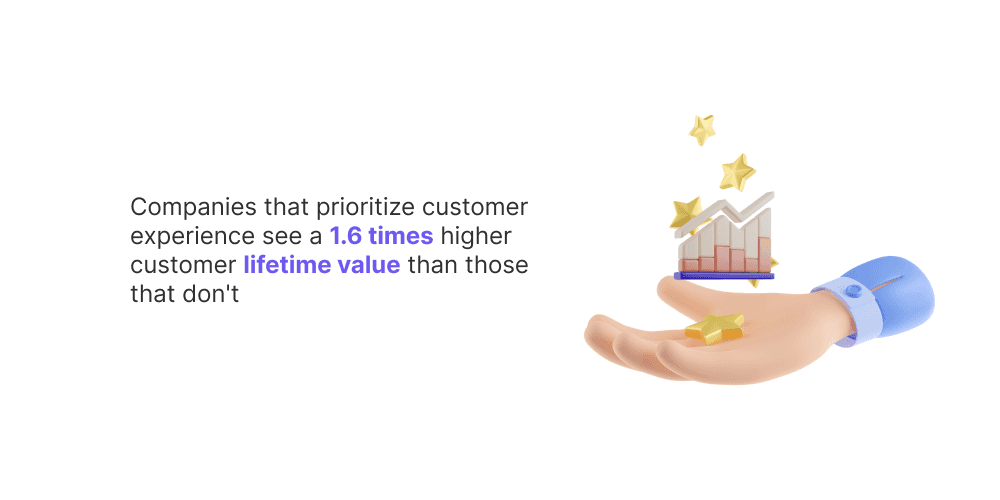
So, simply put, when we don’t focus on delivering a great experience, we’re leaving money on the table—money that builds up into losses over the years.
Also read: Boost Your Insurance Company Leads with Innovative Email Marketing
The Impact of Poor Customer Satisfaction on Brand Reputation
How often do you check reviews before trying a new product or service? I know I do. And if I see a pattern of complaints, it does make me think twice before hitting that buy button.
The truth is, your business is only as good as your happiest consumer.
As in the words of Scott Cook, the co-founder of Intuit:
“A brand is no longer what we tell the consumer it is - it is what consumers tell each other it is”
In today’s world, everyone has a voice. And let’s face it - when customers walk away unsatisfied, they don’t just keep it to themselves.
Poor customer satisfaction can have a domino effect on your brand reputation. We’ve all seen it happen. Remember the 2017 United Airlines incident?
United Airlines faced a major backlash after forcibly removing a passenger - a Dr. David Dao - from an overbooked flight. The video recording of the incident went viral leading to widespread criticism, a drop in stock prices, and a significant dent in the airline’s reputation.
This case study is a textbook example of how one poor customer service incident can quickly spiral out of control in the age of social media, and turn into a public relations nightmare.
So, the verdict is this: You cannot take risks when it comes to customer satisfaction.
By prioritizing customer satisfaction, brands can avoid this ripple effect and maintain a positive image that attracts new customers instead of driving them away.
Operational Inefficiencies Due To Poor Customer Experience Strategy
When a business neglects customer experience, it often ends up with operational processes that are disjointed and slow.
This can be a difficult correlation to understand, so let me break it down for you.
When teams aren’t aligned with a clear, customer-focused strategy, they tend to work in silos. Consequently, your business experience becomes a fragmented entity riddled with miscommunication, wherein customers are left bouncing from one department to another, without a clear resolution of their issue.
For example, imagine a support team unaware of what the marketing team is promising customers. If they’re not on the same page, customers might feel misled, leading to more complaints and longer resolution times.
Moreover, a lack of focus on customer experience also pushes businesses into taking reactive measures, instead of proactive ones. This means always firefighting ever-rising issues, which not only strains resources but also puts unnecessary pressure on employees - ultimately contributing to operational inefficiencies.
So, to wrap it all up, only does a neglected, inconsistent customer engagement strategy increase operational expenses, but it also drives customers away. And we already know how damaging and costly that can be.
The Strategic Shift: From Cost-Cutting to Customer Experience Investment
Here’s a quick question: what do you think is a business’s go-to strategy when it comes to strategizing for growth?
The first thing that comes to my mind - and probably yours as well - is to cut costs. Why? Because it’s a straightforward method: lower expenses, improve profit margins.
But over time, this approach can wear thin, especially when it comes at the expense of customer experience.
On paper, actions like trimming customer service budgets and reducing investments in employee training can save money, but they also erode the very foundation of customer loyalty.
With an understanding of customer experience we’ve developed so far, you know this is a risky game to play in 2025.
In 2025, businesses need a break from the tradition of cost cutting and make a strategic shift towards actively investing in customer experience.
After all, in today's environment, “Improve the customer experience and everybody wins”. These are not my words - this is the philosophy of Dharmesh Shah, the co-founder and CTO of HubSpot.
And it makes sense. Think about it. What would happen if we shifted our mindset from squeezing every penny to enhancing every interaction? We’ll enhance customer lifetime value, reduce customer churn, cut away the costs of replacing old customers with new ones and improve the overall brand reputation.
That is a win, every way you look at it.
So, in my opinion, the choice is very clear: Invest in customer experience now, or pay the price later.
Let’s dig into what that really means in practice - and how you can deliver a superior customer experience.
Staying Ahead of the Curve: 2025 Must Haves For An Exceptional Customer Experience Strategy
AI and Automation: A New Standard in Service
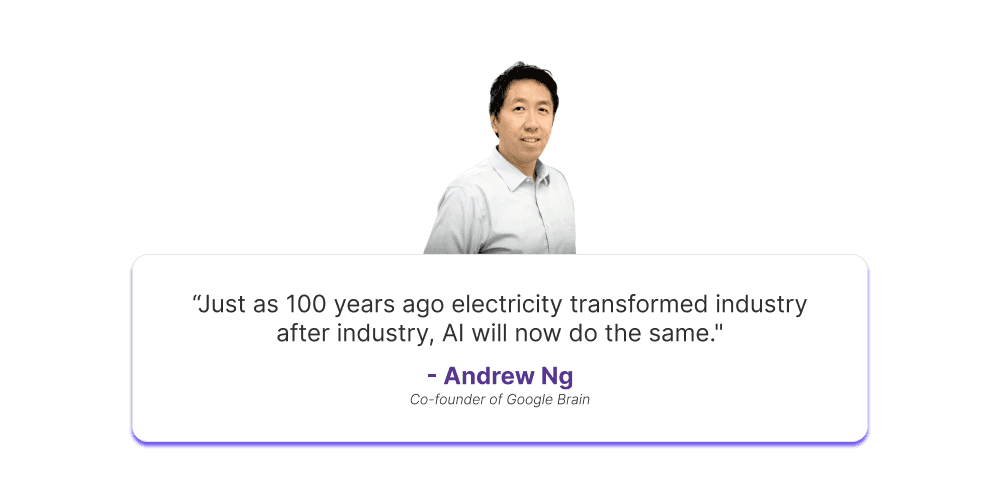
Automation is everywhere, in every industry, these days. It’s every tech entrepreneur’s favorite jargon - and a must have in every product-developer’s checklist.
I’m sure you’ve seen the phrase “AI-powered” pop-up in your own experiences with brands. From Samsung to Sephora - everyone is part of this bandwagon. And for good reason.
AI is the new standard in service, largely because of the immense benefits it offers. Learn more about how AI can improve customer experience.
And as someone who’s seen the difference firsthand, I can tell you that AI-powered tools go beyond just operational efficiency, they’re about enhancing customer journeys.
From chatbots that are available around the clock to efficiently answer customer queries, to AI predictive analytics that anticipate your customer needs and deliver proactive engagement - AI makes life easier for both you and your customer.
And having the right automation tool can make this integration effortless.
My personal recommendation would be Freshworks’ Freddy AI which not only leverages AI chatbots to automate customer interactions but also offers predictive analytics to identify potential customer problems, so that your customer service team can resolve them before they spiral into something big.
You might like: Customer Acquisition vs Retention: What to Focus on for Business Growth?
Hyper-Personalized Experiences: Beyond First Names
Marketing saturation is a concerning reality in 2025. With so much noise around, how do you stay connected with your consumer?
The answer lies in going beyond what almost 99% of your competition is doing - being generic in their outreach. Calling someone by name is no longer enough. You need to speak to their needs and concerns to get their attention.
I mean, speaking for myself, what catches my attention when purchasing from a brand is how closely they understand my preferences, and how well they tailor their content to address my pain-points.
Afterall, if it doesn’t directly relate with you, why would you bother paying attention? It’s human nature to want what we want.
So as businesses, we need to realize we are no longer selling to groups but to individuals. Each of our interactions should feel hyper-personalized for that specific individual. Sounds overwhelming? It isn’t.
With AI and data analytics, businesses can easily create these deeply personalized experiences, and cater to each customer individually. What you need is the right software to do the heavy lifting for you. And I have just the suggestion for you.
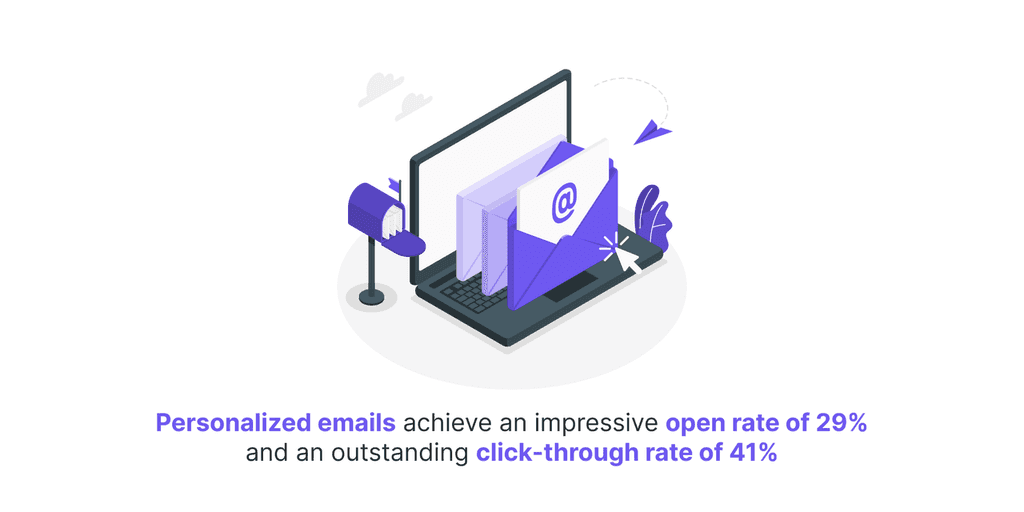
When it comes to delivering hyper-personalized experiences, our platform GoCustomer truly stands out. By seamlessly integrating detailed insights from LinkedIn and tracking interactions on your website, we create emails that hit the right note at the right moment for each of your existing customers.
I believe that this level of personalization doesn’t just help you effectively engage with your consumer in a crowded market, but also prompts your customer to keep giving you their business.
Proactive Customer Experience Management: Preventing Problems Before They Arise
Have you ever had an issue-less experience with a brand? Where you felt like this business was without any problems?
How does a business achieve that?
The answer: Proactively addressing issues before they become big enough to become a pain-point for your customer.
Instead of waiting for complaints to roll in, such forward-thinking businesses constantly monitor interactions and behaviors to anticipate problems.
Recently, a package I ordered got delayed - but before I reached out to the business with a complaint, the business reached out to me with an apology email and a discount. This didn’t just pacify my grievance but also made me repeat a purchase with them.
This was proactive customer engagement in all its glory.
Customers appreciate when a brand takes the initiative to ensure their experience remains positive, even when things don’t go as planned.
And therefore proactive engagement is another must have in your arsenal of customer experience strategies.
Conclusion
In this write up, I’ve tried to plead the case of customer experience as best as I could.
The facts have been laid out. The examples are there for you to learn from. And a strategy has been outlined. And the verdict is clear: Investing in customer experience isn’t just a smart strategy, it is a necessity. And one that you cannot afford to ignore or neglect.
From my perspective, overlooking customer experience is like cutting corners that can lead to bigger problems down the road. We’ve all seen how a single negative review can spread, or how poor experiences can frustrate customers to the point where they walk away.
And therefore, by focusing our energy on a customer-centric strategy, we not only save ourselves from hidden costs but also build a profitable, long lasting relationship with our customers.

Reach more customers with your cold emails
Table of Contents
In a nutshell
Neglecting the customer journey can lead to significant consequences, including decreased customer satisfaction and higher churn rates. When businesses fail to map out and optimize the customer journey, they often overlook key touchpoints where customers may experience frustration or confusion. This neglect can result in a poor overall experience, reducing customer retention and ultimately impacting the bottom line.
A positive customer experience fosters loyalty and encourages customers to continue doing business with a brand. When customers feel valued and have their needs met throughout their journey, they are less likely to switch to a competitor. This is why focusing on CX is a powerful strategy for increasing customer retention, which is often more cost-effective than acquiring new customers.
A positive customer experience can significantly enhance a company's reputation. Satisfied customers are more likely to leave positive reviews, provide favorable customer feedback, and recommend your brand to others. This not only attracts new customers but also strengthens your brand’s image in the marketplace, making it easier to retain existing customers and maintain a competitive edge.
A positive customer experience fosters loyalty and encourages customers to continue doing business with a brand. When customers feel valued and have their needs met throughout their journey, they are less likely to switch to a competitor. This is why focusing on CX is a powerful strategy for increasing customer retention, which is often more cost-effective than acquiring new customers.
Customer feedback is essential for understanding the effectiveness of your customer journey. By analyzing feedback, businesses can pinpoint specific areas where customers are encountering difficulties or where expectations are not being met. This insight allows companies to make informed adjustments to the customer journey, ensuring that it meets customer needs more effectively and enhances overall satisfaction.

Subscribe to our Newsletter!
Digital advice costs money but we send it to
your inbox for free.
Related Blogs


Time is Money, and We're About to Save You Both!
Book a quick demo of our email marketing tools and watch as we transform your leads into loyal customers.

![A loop illustration w-auto h-[70px]](/_next/image?url=%2F_next%2Fstatic%2Fmedia%2Fvector1.7738e6de.png&w=256&q=75 "GoCustomer Platform Image")

Get in touch
Subscribe to our weekly Newsletter and receive updates via email.