


Email Marketing
Published:
Email Marketing
Qasim Farooq
Share
Email marketing rarely tops the priority list at fintech startups. It’s either written off as a low-return channel or tossed on the back burner because no one has the time to run it properly.
Makes sense when you're moving fast, chasing product-market fit, and juggling growth metrics, a weekly newsletter or drip sequence doesn't exactly scream urgent.
But here's the real problem: even when fintechs do send emails, most of them go nowhere.
Why is it so hard to break through the noise in a space flooded with alerts, dashboards, and customer data?
The truth is, email marketing hasn’t failed fintech, it’s just been missing the right engine. AI is changing that.
With the right tools, startups can now automate workflows, personalize at scale, and adapt messaging in real time without needing a 10-person marketing team to pull it off.
This blog breaks down how fintech startups are using AI to turn email from a time sink into a growth lever. From smarter targeting to self-optimizing campaigns, here’s how they’re finally making email marketing worth the effort.
Where Smart Fintech Email Campaigns Still Fall Short
Let’s be honest. Most fintech startups either ignore email marketing or treat it like a compliance checkbox. And for the ones actually trying? They’re stuck in a weird loop. Lists are segmented. Emails are personalized. Still... nothing happens.
Everyone’s Segmenting. Everyone’s Personalizing. Still No Clicks.
You’ve got the CRM system humming. Your audience is sliced into neat little segments. You’ve even swapped out “Dear user” for first names. But your email campaigns are still getting ghosted.
That’s because everyone’s doing the same thing. And your target audience has seen it all before. Financial services email marketing is packed with newsletters that look polished but feel cold. It’s not that personalization doesn’t work. It just needs to go deeper than merge tags and cookie-cutter templates.
The Inbox Is Smarter Than You Think (And So Are Spam Filters)
The inbox used to be a friendly place. Now it’s like trying to sneak past airport security. Email clients flag anything that looks even a little too promotional. Spam filters love catching emails that sound like, well, emails.
So while you’re obsessing over the perfect subject line, your campaign might not even be making it to the inbox. That killer CTA? Wasted if your email’s sitting in junk next to a fake Rolex ad.
And the kicker? Even when your fintech email campaign gets delivered, people scroll past if it looks like part of a mass send. If it doesn’t feel personal, it’s invisible.
The “Value Email” Myth
Everyone’s out here talking about offering value. But just because you think your content is helpful doesn’t mean your subscribers do. A list of “money-saving tips” or “industry news” might be useful to you—but is it relevant to a user trying to figure out why their crypto wallet keeps draining?
The best email marketing campaigns for financial services don’t just send tips. They solve actual problems. If your fintech email content doesn’t tie back to behavior, goals, or pain points, it’s just filler.
High Opens, Zero Conversions. What Gives?
Here’s the most frustrating part. You craft a compelling subject line. You see a strong open rate. And then? Silence.
No clicks. No replies. No movement.
This happens because the content doesn’t do enough to move the reader. It might be well-written, but it doesn’t feel urgent or personal. You got attention. But you didn’t earn action.
That’s where AI starts making a real difference—not by flooding inboxes with more messages, but by making every message count.
How Fintech Startups Are Using AI to Break the Plateau
Email marketing used to feel like throwing stuff at the wall. Now, smart fintech startups are finally flipping the game. They’re not sending more emails. They’re sending better ones—with help from AI.
This isn’t about having more tools. It’s about using the right ones to talk to the right people at the right time.
That’s what separates a successful email marketing campaign from one that just clogs up the inbox.
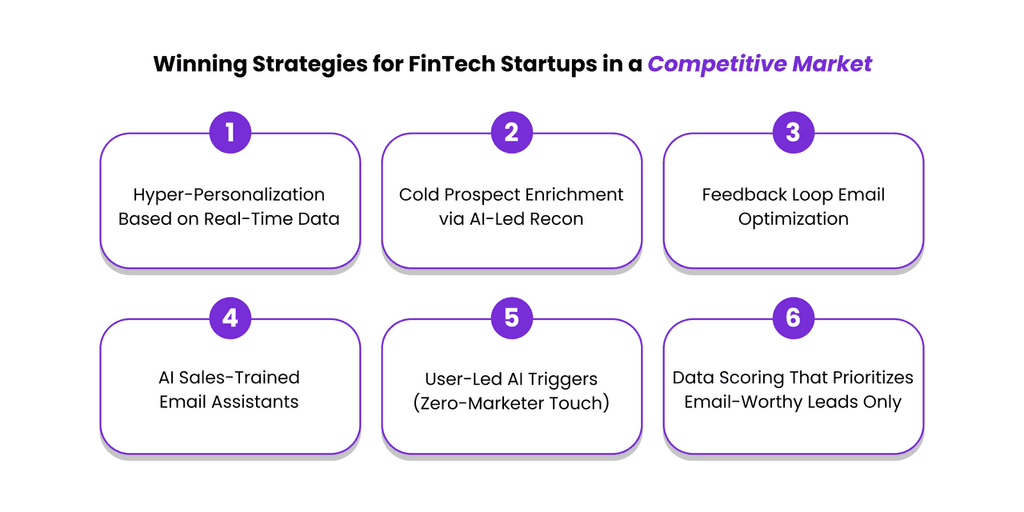
Hyper-Personalization Based on Real-Time Data
You’ve heard the word personalization a hundred times. But AI is giving it actual teeth. Instead of guessing what someone might want, startups are using real-time financial data to tailor every message.
If someone’s savings suddenly drop, the system doesn’t wait for a marketer to notice. It sends a budgeting email. If someone spikes their credit usage, they might get a message about responsible lending.
These aren’t scheduled emails. They’re triggered responses based on actual behavior. That’s what makes them land.
Dynamic content blocks are part of the playbook now. One user might get a product update. Another sees a referral offer. Both came from the same campaign, but the experience is totally different.
ZEN.COM’s Smart Personalization
ZEN is a great example of getting this right. When a customer support issue gets resolved, they don’t just send a generic “how did we do” email. They send a message that references the specific problem the user had.
It feels like a follow-up from a human, not a help desk robot.
That kind of detail matters. It shows users that you’re paying attention. And it helps build trust in a space where people are handing over sensitive financial information.
This is how fintech services are turning AI from a buzzword into a real email marketing approach. Not with flashy tech, but with smarter communication that actually earns attention.
Cold Prospect Enrichment via AI-Led Recon
Here’s where most fintech email marketing efforts go sideways—cold outreach that sounds like it came from a template. In the fintech industry, where decision-makers are bombarded with pitch emails, generic won’t cut it.
AI-led prospecting flips the script.
Instead of wasting time manually researching leads, GoCustomer uses AI agents that scrape LinkedIn and company websites to build ultra-relevant messages.
These agents pull public data—like recent job changes, new tech integrations, or company milestones—and turn it into context you can actually use.
So when your next fintech email campaign goes out, it doesn’t sound like spam. It sounds like you did your homework.
Let’s say a company just raised a Series B. AI catches that event, tags the CFO as a key contact, and preps a message that speaks to their new challenges hiring pressure, budget expansion, cashflow planning. That’s email marketing for fintech that feels personal, not automated.
And because this is built into your email marketing strategy, you can plan multiple campaigns based on signals like funding rounds, hiring spikes, or a shift in tech stack. No need to slow down or hand it off to a BDR. AI does the recon, so you can focus on results.
That’s how fintech companies are using AI to power smarter, more targeted email campaigns—without burning time or headcount.
Feedback Loop Email Optimization
Let’s say your last five emails got opened but never clicked. Or worse, they didn’t get opened at all. Now what?
Old-school marketers would just tweak the subject line and try again. But AI takes a different approach.
Modern email marketing platforms can now monitor engagement signals across your list and automatically apply suppression logic to weed out cold leads.
If someone hasn’t opened, clicked, or scrolled through the last few messages, AI pauses them from future sends to protect your email deliverability.
That’s a big win. Because if your list is full of inactive subscribers, your best-performing content might never reach the inbox.
Here’s a real use case: an AI tool monitors for a 3-signal dropout pattern—no open, no click, no scroll—and then automatically removes that user from upcoming sends.
This keeps your list clean, improves email campaign performance, and helps your messages reach potential customers who are actually listening.
And it’s not just suppression. AI can suggest when to re-engage, when to pause, and when to drop. That kind of decision-making can greatly enhance the impact of your financial services email marketing without constant manual review.
This is how fintech startups are cleaning up their email marketing efforts—by letting the data decide what happens next.
AI Sales-Trained Email Assistants
Here’s where things get fun. Instead of spending your day writing outbound copy, AI does the heavy lifting.
Sales-trained email assistants, powered by GPT, can sit on top of your CRM system, scan consumer data, and draft full sequences in seconds. These agents aren’t just trained on product specs—they know your tone, your funnel stages, and your ideal customers.
They pull info from past interactions, purchase history, and industry triggers to create personalized emails that feel one-on-one. Not one-to-many.
When these tools are plugged into your RevOps system, they make your entire email marketing approach more agile. Test variations.
Track click through rates. Swap out copy daily. And most importantly, get faster responses without blowing up your team’s workflow.
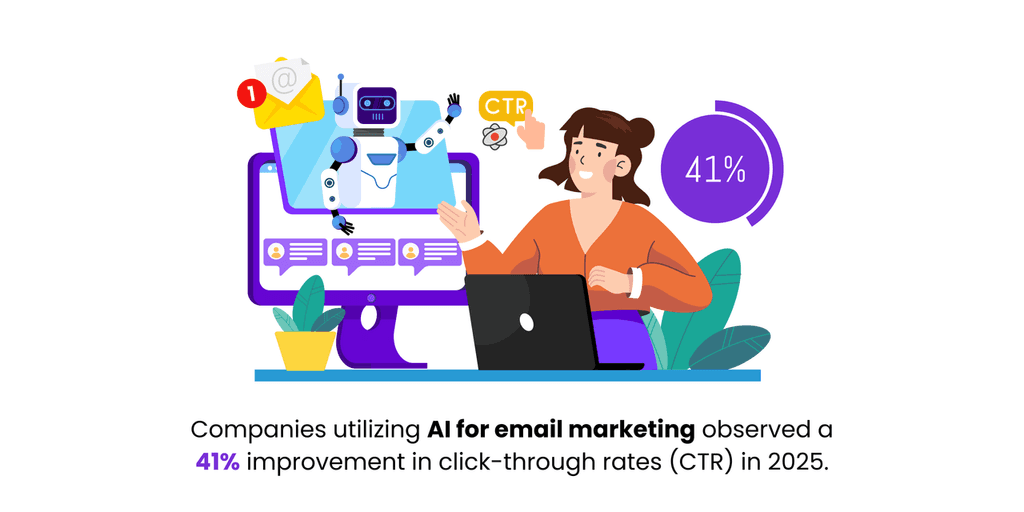
For fintech services trying to reach new leads at speed, this combo of smart automation and rich targeting is gold. It improves time-to-response, tightens sales cycles, and ensures you’re always sending the right message to the right audience.
Email marketing for financial isn’t about writing more. It’s about writing smarter. These tools make that possible.
Also see: 10 Email Marketing Blogs Every Marketer Should Follow in 2025
User-Led AI Triggers (Zero-Marketer Touch)
Let’s face it. Not every fintech startup has a full-blown marketing team building custom workflows. That’s why user-led automation is one of the smartest moves in fintech email marketing right now.
Here’s how it works.
At onboarding, you let users pick what kind of email communications they want—product updates, budgeting tips, market insights, or even personalized reminders. Then AI takes over. No one’s manually mapping out flows. The system reads preferences, watches behavior, and adapts in real time.
One user might spend aggressively and get nudged toward saving tools. Another might cut back and receive content on smart investing. It’s all built around real activity—consumer data, not assumptions.
Take a budgeting email flow as an example. Instead of building 12 versions, AI evolves the flow based on a user’s actual spending habits.
They overspent this week? Send a tip about tracking categories. They nailed their savings goal? Deliver a reward or upsell offer.
This kind of personalized email marketing strategy keeps your target audience engaged without constant manual input. It also supports financial advisors and service teams by delivering value automatically.
It’s a win for lean teams that still want to build trust and educate customers at scale.
Data Scoring That Prioritizes Email-Worthy Leads Only
Ever feel like you’re emailing people who are never going to buy? That’s because you probably are.
Most email campaigns waste a chunk of their budget and energy on unqualified leads. AI changes that by applying data scoring models that flag tire-kickers before they ever hit your send list.
Think of it as a filter that saves your team time and protects your sender score.
AI analyzes purchase history, time-on-site, scroll depth, demo activity, and even funding news to figure out which contacts are actually worth emailing. Then it prioritizes only those with real potential, so you’re not flooding inboxes with irrelevant messages.
It works especially well when paired with tools like website heatmaps, CRM behavior tracking, and third-party data enrichment. You can throttle outreach based on lead quality, cutting back on low-intent traffic and doubling down where it counts.
This kind of targeting doesn’t just improve conversion rates. It also reduces unsubscribe rates, boosts email performance, and keeps your email marketing efforts focused on your actual ideal customers.
For fintech companies with tight resources, this is how you get more out of every send and make informed decisions about where to invest next.
Also read: Steps To Setting Up Email Marketing For The Financial Services Industry
Inbox Reputation is Tanked? AI Can Patch That, Too
If you’re in the financial services space and your emails aren’t getting delivered, it’s not just annoying—it’s expensive. Poor email deliverability kills ROI before your campaign even starts.
Good news: AI can help clean it up.
It starts by spotting the trouble early. Spam traps, bot-triggered clicks, and false positives from corporate filters—AI can pick up on these patterns before your sender reputation takes a nosedive.
Then it gets tactical.
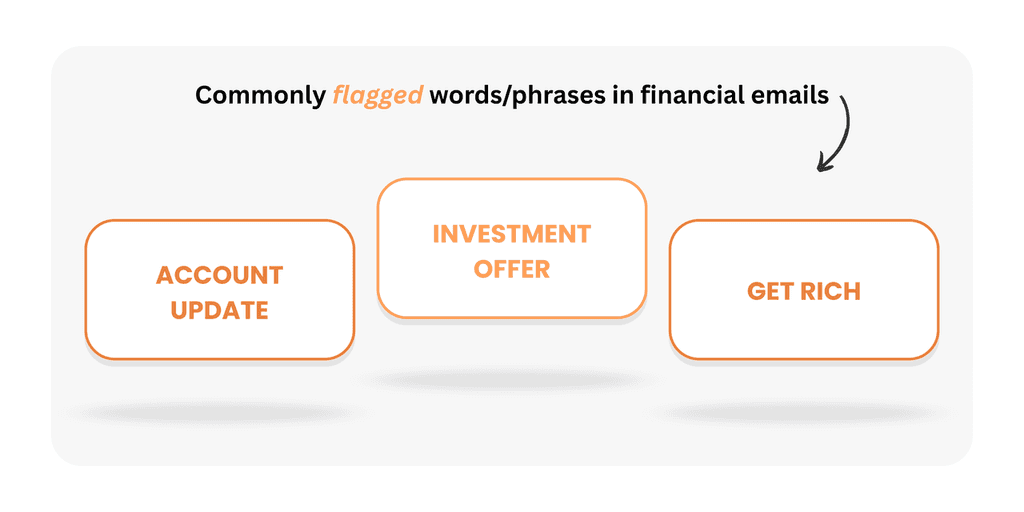
Smart tools can rotate your sending domains and IP addresses automatically based on risk signals. They manage warm-up logic, throttle volume, and even switch formats when needed.
When inbox placement looks shaky, AI can trigger a fallback plain-text email sequence to sneak past the filters and keep your message alive.
That’s a smart play in email marketing for financial brands. You’re handling sensitive topics, often tied to financial information and related services. Getting flagged as spam isn’t just bad for conversions—it damages trust.
AI helps you stay ahead of deliverability issues, maintain your reputation, and make sure your email marketing campaigns actually reach the inbox where they belong.
Because if no one sees your message, it doesn’t matter how good your content strategy is.
The Tools Fintech Startups Are Using to Power AI Email Campaigns
AI isn’t some mysterious black box anymore. It’s showing up in tools fintech startups are already using—or should be using to build smarter, faster, and more relevant email marketing campaigns.
Here’s what’s powering the shift.
CRM + AI Email Platforms
The backbone of most successful email marketing strategies starts with the right CRM platform. But when you layer in AI, you get real horsepower.
Platforms like ActiveCampaign, Iterable, Customer.io, and GoCustomer aren’t just sending emails. They’re using AI to track behavior, automate timing, personalize content, and improve email deliverability based on what’s actually working.
GoCustomer, in particular, stands out for fintech services. It combines LinkedIn and website tracking with AI-generated email flows perfect for startups looking to scale without building a massive marketing team.
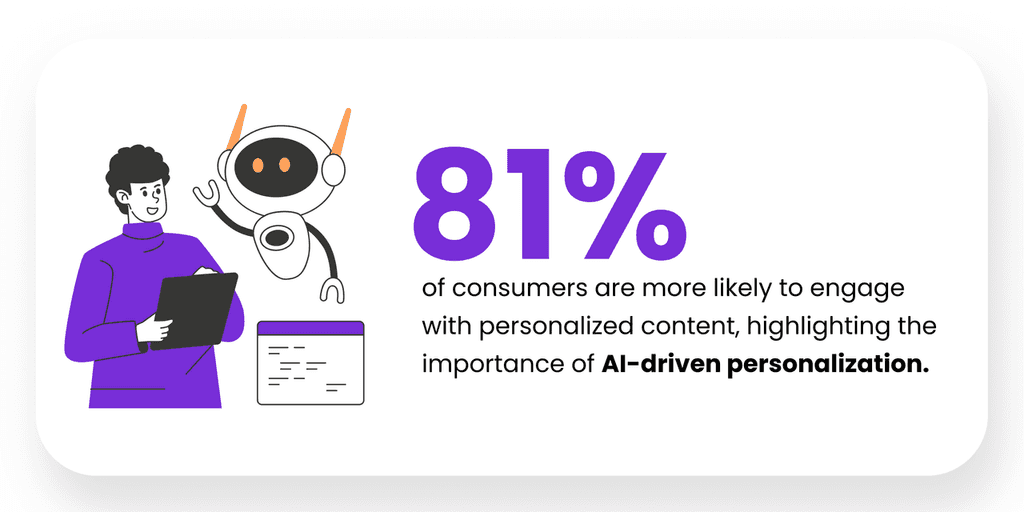
AI Copy Generation Tools
Writing at scale is hard. Writing well at scale is harder. That’s where AI-powered content tools come in.
Jasper, ChatGPT, and Writesonic are helping fintech companies speed up content production without sacrificing voice or clarity. These tools pull from product data, past emails, and consumer data to create compelling content that feels human not templated.
Used properly, they help you push out personalized emails, tweak subject lines, and experiment with tone and messaging across different segments.
Data + AI Orchestration
Now let’s talk backend. This is where the real targeting happens.
Segment, Mixpanel, and Amplitude connect your product behavior to your email marketing platform. Combine that with in-house ML models, and suddenly your campaigns are reacting to things like feature usage, drop-off points, or spending behavior in real time.
This orchestration layer is what enables marketing automation that actually feels personal. It helps fintech startups nurture leads, flag high-value potential customers, and deliver educational content to the people who are ready for it.
You’re not just sending emails. You’re building systems that adapt—so you can talk to the right person, at the right time, with the right message.
You might like: How Tax Professionals Can Leverage Email Marketing to Grow Their Business
Final Thoughts: AI Isn’t a Shortcut. It’s a Force Multiplier
Let’s be honest. AI won’t fix bad content. If your emails are boring, irrelevant, or loaded with spam trigger words, no tool is going to save you. But if your campaigns are close—if your targeting is tight and your content is thoughtful. AI can help you punch way above your weight.
This is where email starts to work the way it was always supposed to.
AI cuts through the clutter, automates what used to take hours, and makes your messaging sharper across multiple channels. You’re not just blasting emails, you’re reacting to real purchasing preferences, behaviors, and signals from people who are ready to engage.
For marketing for financial services, this shift matters. You're dealing with sensitive financial information, strict compliance rules, and growing concerns around data security. One wrong move can cost trust. But done right, AI helps you stay precise, stay relevant, and stay compliant—all at scale.
You don’t need to chase a dozen new tools. You need to use what you already have with more intention.
AI just makes it easier to do that—and a lot harder to ignore the results.

Reach more customers with your cold emails
Table of Contents
In a nutshell
AI enables fintech companies to analyze customer behavior, segment audiences, and personalize content, leading to more effective and targeted email campaigns.
Benefits include improved customer segmentation, personalized messaging, enhanced engagement rates, and streamlined campaign management, all contributing to better ROI.
Benefits include improved customer segmentation, personalized messaging, enhanced engagement rates, and streamlined campaign management, all contributing to better ROI.
Yes, AI can assist in monitoring email content and ensuring compliance with regulations by detecting potential violations and suggesting necessary adjustments.
The future involves more advanced personalization, predictive analytics, and integration with other marketing channels, leading to more cohesive and effective campaigns.

Subscribe to our Newsletter!
Digital advice costs money but we send it to
your inbox for free.
Related Blogs


Time is Money, and We're About to Save You Both!
Book a quick demo of our email marketing tools and watch as we transform your leads into loyal customers.

![A loop illustration w-auto h-[70px]](/_next/image?url=%2F_next%2Fstatic%2Fmedia%2Fvector1.7738e6de.png&w=256&q=75 "GoCustomer Platform Image")

Get in touch
Subscribe to our weekly Newsletter and receive updates via email.