


Email Marketing
Published:
Email Marketing
Qasim Farooq
Share

Ever feel like you’re talking to a brick wall?
You send the email. You wait. Crickets. No clicks. No commissions. Just a sad little “sent” notification and maybe one lonely open… from yourself (yep, we’ve all done it).
That’s the struggle for most affiliate marketers. You’ve got a list, a product, and a decent pitch but somehow, the conversions don’t show up. And the whole thing starts to feel like you’re duct-taping a strategy together while blindfolded.
Here’s the real kicker: 65% of marketers say generating traffic and leads is their biggest challenge, so why isn’t it working?
Because email marketing has too many moving parts.
Because writing emails that actually convert is hard.
Because staying organized and hitting “send” on time isn’t as easy as gurus make it look.
Sound familiar?
That’s where AI flips the game.
No, not chatbots that write robotic nonsense. Real tools that help you:
Personalize your emails based on what your subscribers actually do (not just their first name),
Warm up your domain before you send your first pitch,
Automate sequences that convert leads while you’re binge-watching Netflix.
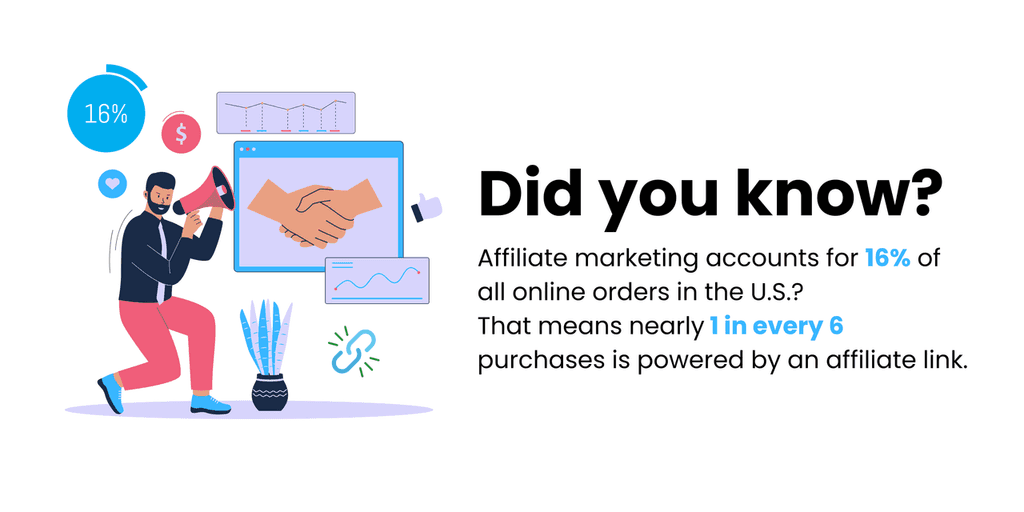
This blog walks you through the entire process step by step. From building a list of real buyers (not just freebie hunters) to running email campaigns that basically sell for you.
And yes, we’re plugging AI into every part of it. Because done right, it doesn’t just save time it helps you sell more.
Let’s break it down.
Step-by-Step Email Marketing Strategy for Affiliate Marketers Who Want Results
Let’s cut to it: affiliate email marketing isn’t about sending a few promotional emails and hoping for clicks. It’s about building trust, sending the right message at the right time, and knowing your audience better than they know themselves.
If you’re tired of running campaigns that barely convert—or worse, land in spam—this step-by-step guide is built for you.
Whether you're selling affiliate products from Amazon, ClickBank, or your favorite niche program, these steps will help turn your email list into a real revenue stream.
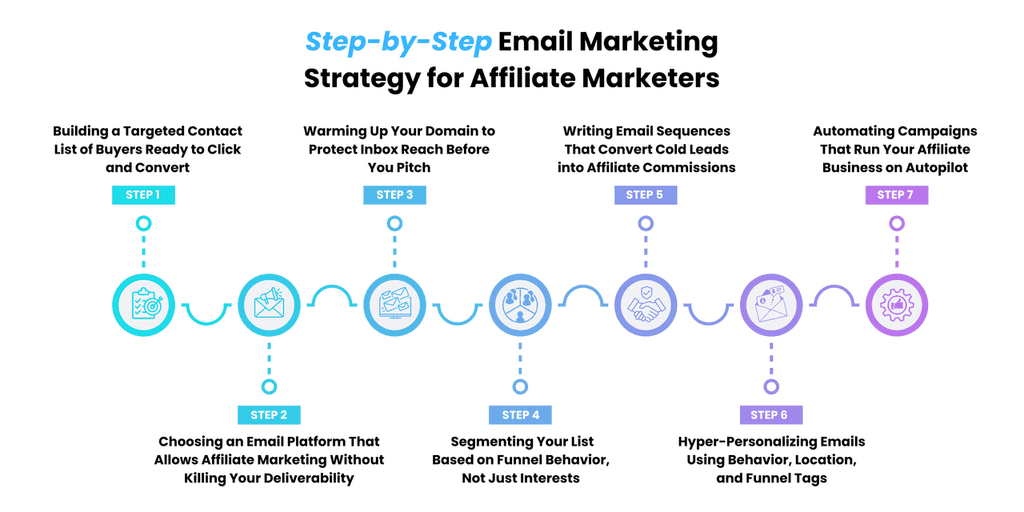
Step 1 – Building a Targeted Contact List of Buyers Ready to Click and Convert
Forget vanity metrics. A big email list with low engagement is dead weight. What you want is a responsive list—a group of people who open, click, and actually buy from your affiliate promotions.
Why a smaller, responsive list wins every time
Let’s say you have 500 subscribers who trust your recommendations and regularly click your affiliate links. That list will outperform 5,000 cold leads who never read past your subject line. Why? Because engagement beats size. Every. Time.
High-engagement lists:
Boost your sender reputation
Improve deliverability with your email provider
Get more affiliate sales with fewer emails
Create product-qualified lead magnets
Want people who actually care about your affiliate products? Start with lead magnets that pre-qualify them.
Example #1: A quiz titled “Which Digital Camera Is Right for You?” → Leads directly into an Amazon affiliate link for camera gear.
Example #2: A “3-Day Keto Meal Plan” PDF → Naturally recommends keto supplements through an affiliate program.
These aren’t just freebies—they’re filters. If someone downloads your meal plan, they’ve basically raised their hand to say, “Yes, I’m interested in this kind of product.” That makes future email campaigns 10x more powerful.
Squeeze page strategy that converts
Here’s the squeeze page playbook that actually works:
One clear CTA—don’t ask them to download a PDF and follow your Instagram and sign up for a webinar.
No distractions. Remove navigation, sidebars, or anything that gives them an exit.
A/B test your headlines with small ad budgets before scaling.
Send intent-filtered traffic only—YouTube review videos, bottom-of-funnel blog posts, and niche TikToks drive the right kind of clicks.
If your traffic is coming from “how to” content or reviews, those visitors are already in buying mode. You just need to capture their email.
Step 2 – Choosing an Email Platform That Allows Affiliate Marketing Without Killing Your Deliverability
The worst thing you can do? Choose an email marketing platform just because it’s free… and then find out they’ve banned your account for adding an affiliate link.
Not all ESPs are affiliate-friendly
Many email service providers quietly tolerate affiliate marketers—until they don’t. You don’t want to build your business on a platform that’ll pull the plug the moment you start converting.
Here are four email marketing tools that do work with affiliate programs:
GetResponse – Yes, they allow affiliate links, but you’ll need to go through their vetting process first.
AWeber – Welcomes ethical affiliate marketers with clean lists and strong engagement.
Sendlane – Ideal if you’re running affiliate email marketing campaigns tied to ecommerce or info products.
GoCustomer – A solid choice for automation tools, detailed analytics, and AI-powered personalization (great for building trust and improving engagement).
How to vet your email marketing platform
Don’t guess. Ask.
Contact support and ask directly: “Do you allow affiliate links in promotional emails?”
Test their deliverability with tools like GlockApps or Mail-Tester. If your emails aren’t landing in primary inboxes, nothing else matters.
Set up your sending domain properly:
SPF
DKIM
DMARC
If none of that makes sense, use your platform’s setup wizard or get someone to do it. These authentication records tell inbox providers your emails are legit—and without them, you’ll land in spam or not be delivered at all.
Choosing the right email marketing software sets the stage for every campaign that follows. Pick wrong, and you’ll spend more time fixing problems than driving affiliate sales.
Also read: AI Email Marketing in 2025: Leveraging AI for Unmatched Engagement and Conversions
Step 3 – Warming Up Your Domain to Protect Inbox Reach Before You Pitch
Affiliate email marketing works—if your emails actually land in the inbox.
But if you’re running affiliate campaigns from a brand-new domain and dropping affiliate links in the very first message… you’re toast. Inbox providers will bury your emails faster than you can say “click-through rate.”
Why affiliate domains get flagged fast
Affiliate marketers deal with higher scrutiny from email providers. Your domain is new, your list might be untested, and your first few emails scream “sales pitch.” Bad combo.
Without a warm-up, your affiliate email marketing campaign will crash before it even starts. Poor deliverability = no clicks = no affiliate sales.
Start with non-promotional emails
Before you even think about dropping a link to an affiliate product, focus on building trust. Send basic, no-pressure messages to introduce yourself and get some engagement going.
Warm-up content ideas:
Welcome message – “Thanks for signing up!” keeps it simple and personal.
Poll – Ask about specific interests so you can start segmenting right away.
Quick tip or story – Provide valuable content with no call to action or link.
This sets the tone, builds your sender reputation, and signals to your email marketing platform that you’re not sending spammy promotional emails.
To automate the warm-up, tools like Warmup Inbox and Instantly simulate real user interaction over 2–3 weeks. That helps you avoid getting throttled by inbox providers and improves your chances of reaching real subscribers based on behavior and engagement.
Transition into affiliate promotions carefully
Once your domain has some positive engagement history, then you can ease in affiliate promotions.
Follow the 60/40 or 70/30 content-to-promo split:
60–70% of your emails: tips, how-tos, product comparisons, or exclusive discounts
30–40%: targeted affiliate links tied to those topics
That balance keeps your list warm, builds trust, and gets your offers in front of people who actually care.
For affiliate marketers serious about long-term inbox placement, this warm-up phase isn’t optional—it’s the difference between sending emails and getting results.
Step 4 – Segmenting Your List Based on Funnel Behavior, Not Just Interests
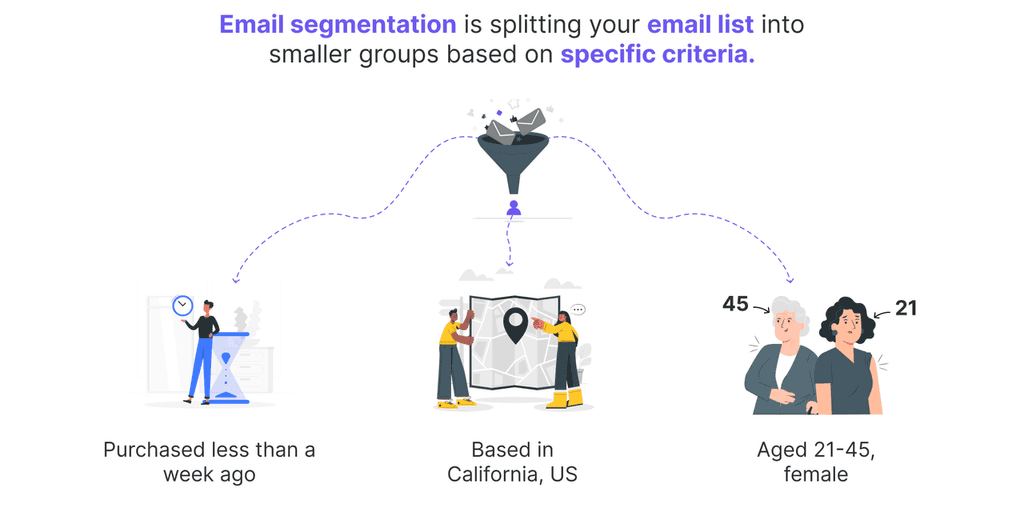
Good email marketing for affiliate marketers doesn’t stop at “Hey {first_name}.” If you want real results, you need to segment your list based on what people actually do—not just what they say they like.
That’s how affiliate email marketing campaigns become targeted, personal, and profitable.
Start segmentation at the opt-in level
Your lead generation funnel begins with the first click. So if someone downloads a Free Shopify Course, they’re not the same as someone who grabs your Dropshipping Checklist.
These subscribers need different content, different affiliate offers, and completely different email campaigns.
That’s why smart affiliate marketers create:
Multiple landing pages for different lead magnets
Unique sign up forms that tag users based on entry point
Custom drip campaigns tailored to each product path
From day one, this sets the stage for segmented email campaigns that feel 1:1—even if you're sending to thousands.
Use real-time behavioral segmentation
Instead of guessing what people want, watch what they do:
Opened but didn’t click? Follow up with more context or social proof.
Clicked but didn’t buy? Offer a bonus or exclusive deal to nudge the action.
Bought? Trigger an upsell sequence or send related affiliate products.
This kind of user interaction data is gold. You can track it with most email marketing software or advanced email marketing tools that support automated workflows and real-time data tagging.
Pre-qualify without overwhelming your audience
You don’t need long surveys to know who’s who. Just ask subtle questions inside your emails:
“Is this your first time trying [X]?” → send beginner tips + starter affiliate offer
“Already using a similar tool?” → send comparisons or upgrade options
The goal is to fine-tune your messaging for maximum value based on specific audience needs.
Tag, track, and trigger with precision
Modern affiliate email marketing platforms like GoCustomer let you:
Assign behavior tags based on click-through rate and browsing history
Send emails triggered by past purchases
Set up conditions like “If no click in 3 emails → shift to nurture flow,” referencing email frequency best practices.
This level of automation helps you send the right message to the right subscriber—which means more conversions, fewer unsubscribes, and better customer satisfaction.
With smart audience segmentation, you’re not just collecting emails. You’re creating personalized journeys that boost affiliate marketing success across various channels and platforms.
Step 5 – Writing Email Sequences That Convert Cold Leads into Affiliate Commissions
Let’s get one thing straight: value for the sake of “value” isn’t a strategy. Sending tips with no direction or goal won’t grow your affiliate income. Every email in your affiliate email marketing campaign needs to do something—build trust, get a click, sell a product.
The secret? Give every email a job, and build your sequence like a mini sales funnel.
Here’s a simple 5-part affiliate email sequence that works:
For more tips on crafting persuasive emails, check out these seven powerful strategies.
Email 1: Build relatability and frame the problem
Start with a story. A struggle they can nod along with. No pitch—just empathy and setup.Email 2: Deliver a “mini win” and tease the offer
Give them a quick tip that solves part of the problem. Then hint at something even better—your affiliate product.Email 3: Case study or personal results
Real-life proof. Show how you (or someone else) solved the same issue using the affiliate product you’re about to recommend.Email 4: Offer with social proof or bonus stack
Hit them with the offer. Include testimonials, limited-time bonuses, or exclusive discounts to boost urgency.Email 5: FAQ + FOMO
Handle objections. Answer common questions. Remind them what they’ll miss out on if they wait.
This isn’t fluff. It’s a proven structure that affiliate marketers use to convert cold leads into commissions without sounding salesy.
Technical tips to improve performance
Write for mobile—most people check promotional emails on their phones.
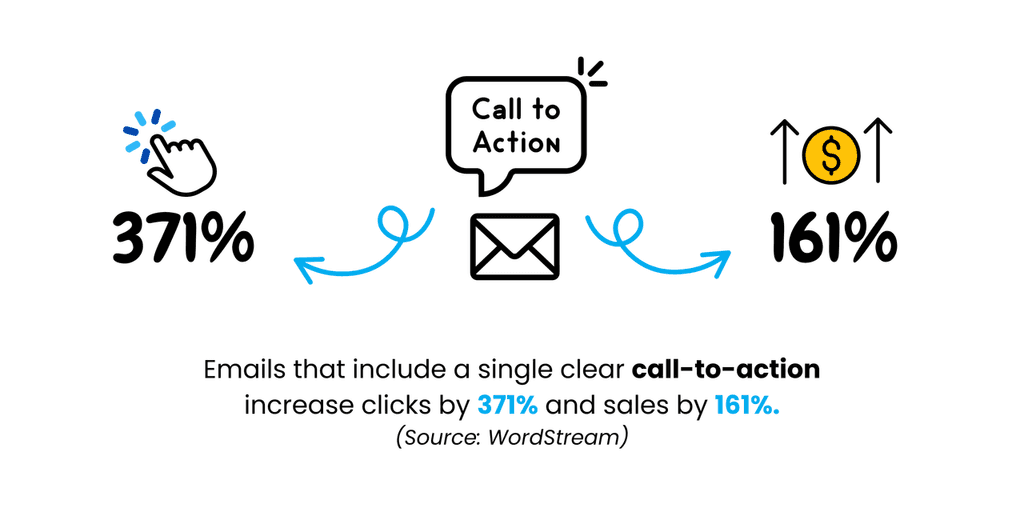
Use short paragraphs, white space, and bold benefit-first CTAs like “Get the Free Trial” or “See How It Works.”
Avoid spammy phrases like “guaranteed income,” “get rich quick,” or “make money fast.” Your email provider is watching.
Always include:
Unsubscribe link
Physical mailing address
Affiliate disclosure (Yes, this is a requirement. Skip it and you’re risking your account.)
The more transparent and structured your affiliate email marketing strategy is, the better it performs—and the more your audience trusts you.
Step 6 – Hyper-Personalizing Emails Using Behavior, Location, and Funnel Tags
Everyone’s talking about personalization. Most settle for “Hey {first_name}.” That’s not personalization—it’s a placeholder.
Real personalization in email marketing for affiliate marketers means crafting content based on what your audience actually does—not just what field they filled out in a sign-up form.
When done right, this kind of personalized content dramatically improves click-through rate, boosts engagement, and leads to more affiliate sales.
Here’s how to personalize like a pro:
Clicked Product A but didn’t buy?
Send a side-by-side comparison vs. a competitor product. Highlight pricing, features, and affiliate bonuses.Clicked 3+ emails in 5 days?
Move them to your hot leads segment. Trigger your best-converting affiliate promotions or early access to exclusive deals.Inactive for 14+ days?
Don’t just ghost them. Trigger a fun re-engagement quiz, a freebie, or a low-barrier offer to get them back.
Personalization isn’t just about name-dropping—it’s about sending the right message to the right subscriber based on user interaction, funnel stage, and specific interests.
Tool to Help
Want to take it even further? Use GoCustomer.
GoCustomer’s AI-powered enrichment pulls in real-time data like:
LinkedIn activity
Company details
Geo-location triggers
Funnel behavior signals
That means you can write emails like:
“Hey John—noticed you’ve been looking into email marketing platforms. This one’s trending in Austin right now…”
That’s hyper personalized content powered by automation tools and real insight—no guessing, no spammy generalizations.
You can even set up automated workflows:
“If clicked affiliate offer but didn’t buy → wait 48 hrs → send product comparison”
“If inactive for 21 days → shift to re-engagement drip campaign”
With the right tools and tags in place, your affiliate email marketing campaign doesn’t just react—it adapts. And that’s how you drive most conversions with less effort.

Step 7 – Automating Campaigns That Run Your Affiliate Business on Autopilot
Let’s be real—sending the same email manually over and over isn’t a business strategy. It’s busywork. And it doesn’t scale.
If you want real affiliate marketing success, automation is what gets you there. Set up the system once, and let it do the heavy lifting—while you focus on testing affiliate programs, creating content, or just taking a break.
Build evergreen sales machines
Every automated campaign should follow a logical path:
Welcome → Educate → Present offer → Follow-up → Waitlist or Cross-sell
This is how you nurture new customers who come through your opt in forms and turn them into long-term buyers of your affiliate products.
Most email marketing platforms now come with customizable templates, so you can launch faster without starting from scratch. These templates help you create email campaigns that look polished, stay on-brand, and convert without extra design work.
Stack email flows by buyer journey
Here’s a simple automation stack that works for most affiliate programs:
Freebie opt-in → Free checklist, guide, or quiz to segment and qualify
Starter product → Low-barrier offer for quick wins
Mid-ticket offer → More in-depth solution or tool
High-ticket webinar → Big value, big pitch, big commission
Each step uses email templates that are triggered automatically based on behavior. So while you're sleeping, your system is encouraging users to move further down your funnel.
Use branching logic that reacts in real time
This is where automation tools give you a serious edge.
Set up rules like:
If clicked affiliate link but no purchase → wait 2 days → send case study
If no click in 3 emails → shift to a slower nurture sequence
If purchased → tag and send upsell sequence
Combine this with detailed reporting, and you’ll know exactly which actions are working—and which ones need a tweak.
Track performance and adjust
Don’t set and forget. Even great automation flows need maintenance.
Watch these:
Bounce rate over 2%? Pause and clean your list.
Click-through rate falling? Swap subject lines, update your offer, or bring in other tools to refine targeting.
Low conversions from a sequence? Test new opt in forms or traffic sources and feed better leads into your funnel.
The point of automation isn’t just speed—it’s maximum value from every subscriber interaction.
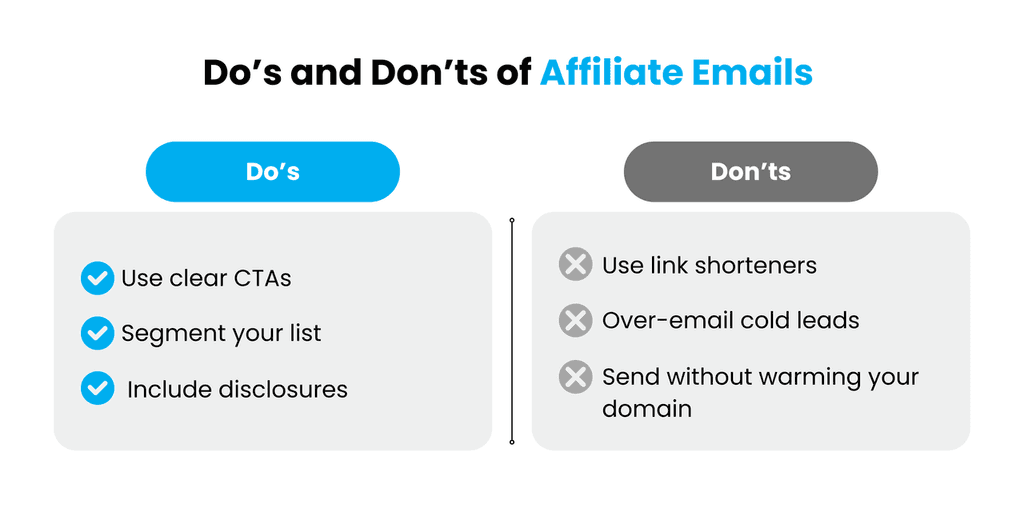
Pro-Level Tips Most Affiliate Email Marketers Miss
This is where most affiliate marketers leave money on the table. These aren’t hacks—they’re fundamentals that get ignored way too often.
1. Send from your own domain
Never launch serious email marketing campaigns from Gmail or Outlook. Use a real domain, authenticated with SPF, DKIM, and DMARC. It builds credibility and improves inbox placement.
2. Skip shortened links like bit.ly
They tank trust and trigger spam filters. Instead, use branded links or redirection tools that work seamlessly with your affiliate programs.
3. Seed your own list
Sign up for your emails from Gmail, Outlook, and Yahoo accounts. See where your messages land. Monitor formatting, subject line impact, and deliverability from the inside.
4. Back up your list weekly
You never really “own” your ESP account. They can shut you down overnight. Export your list regularly. Store it securely. It’s the core of your affiliate marketing business.
5. Test more than just the offer
Try split testing your:
Subject lines
Customizable templates
Time of day
List segments
Call to action formats
Sometimes, tiny tweaks make a massive difference in click-through rate or sales.
Final Thoughts
Affiliate email marketing isn’t just about writing clever emails—it’s about building a real system. One that attracts new subscribers, educates them, builds trust, and guides them toward the right affiliate offer at the right time.
You’ve now got every piece:
A targeted list built through opt in forms
A vetted platform that allows affiliate links
A domain warmed up and ready
Sequences designed to convert
Smart segmentation based on behavior
Automation flows that run on autopilot
And with platforms like GoCustomer, you can track user interaction, access detailed reporting, and build smarter sequences using real-time data.
Want more tips to grow faster? Keep testing. Keep refining. And treat every email campaign like it's the only one that matters.
That’s how you win long-term in affiliate marketing—with systems, not stress

Reach more customers with your cold emails
Table of Contents
In a nutshell
Start by creating valuable content or lead magnets, such as exclusive discounts or informative guides, to encourage users to subscribe. Use opt-in forms on your website and landing pages to collect emails. Ensure compliance with regulations by obtaining explicit consent from subscribers.
Several email marketing platforms support affiliate marketing, including GetResponse, AWeber, and Sendlane. These platforms offer features like customizable templates, automated workflows, and detailed analytics to help manage and optimize your campaigns.
The frequency depends on your audience and the content you provide. It's essential to maintain a balance to avoid overwhelming subscribers. Regularly monitor engagement metrics like open rates and click-through rates to determine the optimal sending frequency.
Focus on providing valuable content that addresses the needs of your audience. Use compelling subject lines, clear call-to-action buttons, and personalize emails based on user interaction and past purchases. Avoid overly promotional language and ensure transparency by disclosing affiliate relationships.
Avoid sending unsolicited emails, neglecting to segment your audience, and failing to provide value in your content. Additionally, ensure that your emails are mobile-friendly and that you comply with all relevant regulations.

Subscribe to our Newsletter!
Digital advice costs money but we send it to
your inbox for free.
Related Blogs


Time is Money, and We're About to Save You Both!
Book a quick demo of our email marketing tools and watch as we transform your leads into loyal customers.

![A loop illustration w-auto h-[70px]](/_next/image?url=%2F_next%2Fstatic%2Fmedia%2Fvector1.7738e6de.png&w=256&q=75 "GoCustomer Platform Image")

Get in touch
Subscribe to our weekly Newsletter and receive updates via email.